Civil Unrest in Ethiopia

by

Editorial Policy

Published on

Last updated on

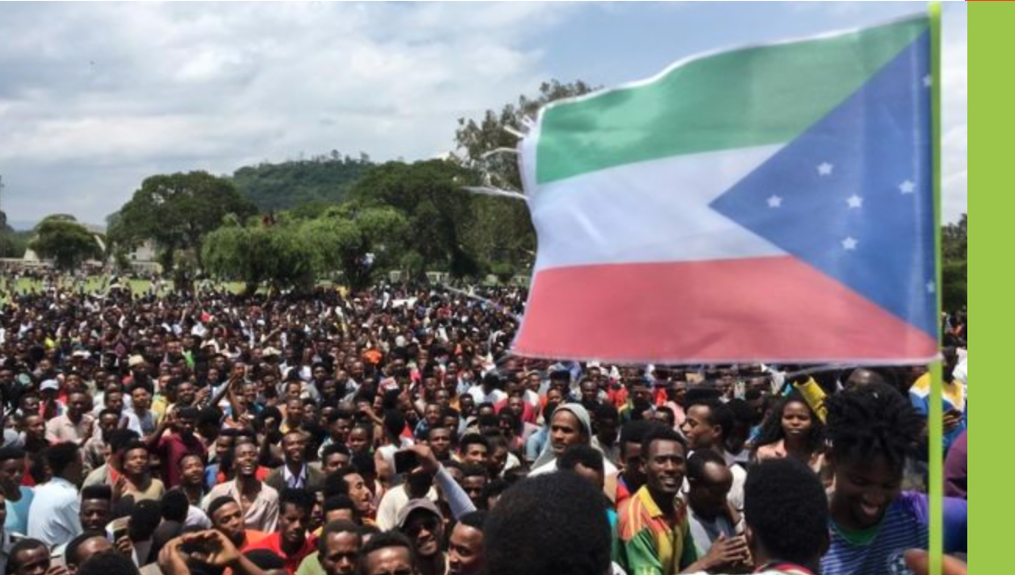
Photo: Ethiopian Observer

[V]iolent protests and unrest in Ethiopia’s southern region of Sidama Zone have resulted in the deaths of 34 people. Much of the tension surrounds the Sidama Liberation Movement, a political organization that aims to ensure Sidama peoples’ (an ethnic group in the region) national self-determination within Ethiopia. A majority of the bloodshed occurred during a protest Friday, July 19, that was headed to meet the federal police in reaction to the killing of a young man the day before. Federal police opened fire on the protesters when they arrived, resulting in 14 deaths.

According to the Ethiopian Observer,  the following days resulted in widespread violent protests across the region, targeting non-Sidama ethnic communities. Several houses, government buildings, a factory and vehicles were damaged in fires, and shops have also been looted.

Sidama is known for high-quality unique varietals on small pieces of land, delivered to processing sites resulting in “mixed heirloom” blends. Even in light of the unrest, representatives from green coffee company Trabocca, who work directly with Ethiopian farmers, tell Fresh Cup that the region’s coffee community and crop itself will be unaffected.


Share This Article

Fresh Cup Staff

Join 12,500+ coffee leaders and get top stories, deals, and other industry goodies in your inbox each week.

This field is for validation purposes and should be left unchanged.


Other Articles You May Like

The World’s Largest Urban Coffee Farm Could Hold the Key to Brazilian Coffee’s Future

When we think of coffee in Brazil, we generally huge plots of land used for monoculture farming. Cafezal Urbano coffee farm takes a different approach. 
by Alexander Eliscu | June 10, 2026

India’s Coffee Is 70% Robusta. Why Does Its Specialty Industry Avoid Drinking It?

India is the world’s fifth-largest robusta producer. Yet its roasters have largely turned their backs on the crop that defines their country’s coffee geography.
by Sohel Sarkar | June 3, 2026

How the World’s Largest Rainforest Became Brazil’s New Coffee Frontier

Public research, agroforestry, and Indigenous stewardship have helped turn Amazonian robusta into one of Brazil’s most compelling sustainable coffee models.
by Isabelle Mani | April 24, 2026

How Mozambique Used Coffee To Reclaim the Deforested Gorongosa National Park

In Mozambique, the Gorongosa Coffee Project is planting coffee among indigenous trees to restore a rainforest. In the process, it’s also fostering economic development for the local population.
by Daniel Muraga | March 18, 2026