[G]reat barista skills and proper handling and storage can transform good ingredients into very good cups. However, is good good enough? I asked around town and eventually sat down to interview Chelsey Walker-Watson, a partner at Slate Coffee Roasters in Seattle. Chelsey can often be found tending to her guests at one of Slate’s three coffee bars.
[Read Sarah Dooley’s deep look at milk here.]
What were the questions you asked yourself as a specialty coffee roaster when choosing which milk to align with your coffee program?
We knew that we simply wanted to choose a milk or farm of exceptional quality that met the standards that we were aiming for in sourcing, roasting, and brewing our coffee. We asked ourselves not only what would taste the best, but where does the milk come from? Who are the people producing the milk and caring for the animals? What are they doing to support quality? How are the animals fed? How is the milk processed? Specialty coffee retailers and baristas take such a careful degree of attention to highlight producers, cultivars, processing methods, and we memorize details of a coffee’s origin. However, that same level of meticulous transparency and care with sourcing is often absent when selecting milk, which frankly comprises the bulk of most coffee beverages that we serve. Moreover, Slate’s espresso menu is very focused, as our largest beverage is an eight-ounce espresso paired with steamed milk, and we knew that if we were going to highlight such simple coffee offerings that our ingredients must be exceptional.
Which milk did you end up selecting and why?
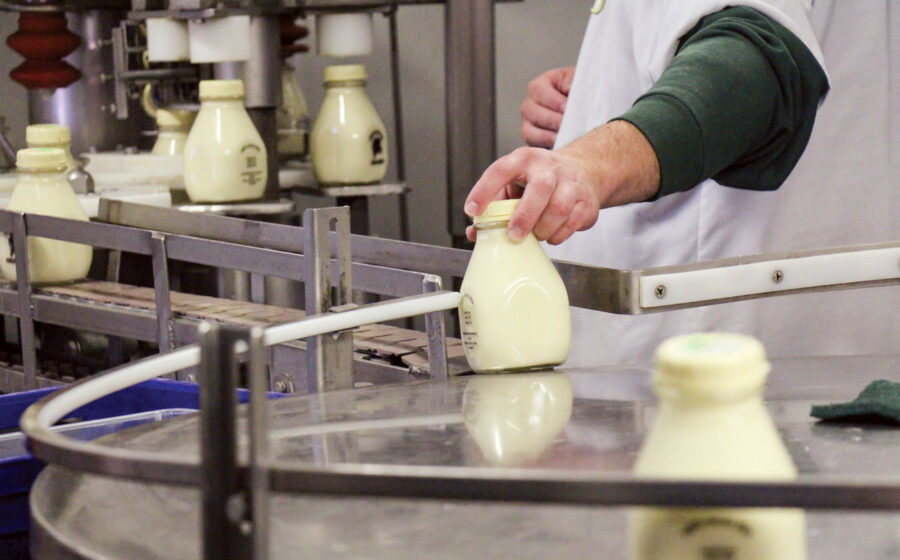
We chose Pure Eire, a local dairy from Othello, Washington, produced by Richard and Jill Smith, both of whom are experienced, passionate, and happy to serve as resources to baristas serving their milk. We love that the cows are eating a natural diet, that the milk is buttery and non-homogenized, and that we can taste differences in the flavor of the milk as the seasons pass. The milk is also vat-pasteurized, leaving many of the healthy enzymes and bacteria intact that your body needs to digest the milk.
Ultimately, it is also the most delicious milk that we have ever tasted. There is a noticeable flavor difference compared to conventional milks, as Pure Eire tastes very sweet, buttery, clean, and is often reminiscent of melted ice cream.

How would other cafés approach the adoption of similar milks?
When a coffee business looks at changing their milk program to a high-quality, locally-produced milk, in transitioning that to their menu they will need to adjust their prices and correspondingly the way in which baristas engage with their guests. Typically, conversations regarding milk center on fat content, temperature, and perhaps foam. I think that switching to specialty milk necessitates a change in conversation and a focus on what makes the milk just as unique as the coffee in terms of origin and processing.
We have a modern, non-traditional coffee menu, so many items provoke conversation before a guest orders. However, for a coffee shop serving more standard offerings, I think that listing it on the menu would be helpful.
—Sarah Dooley is an owner of Milk & Coffee Co.