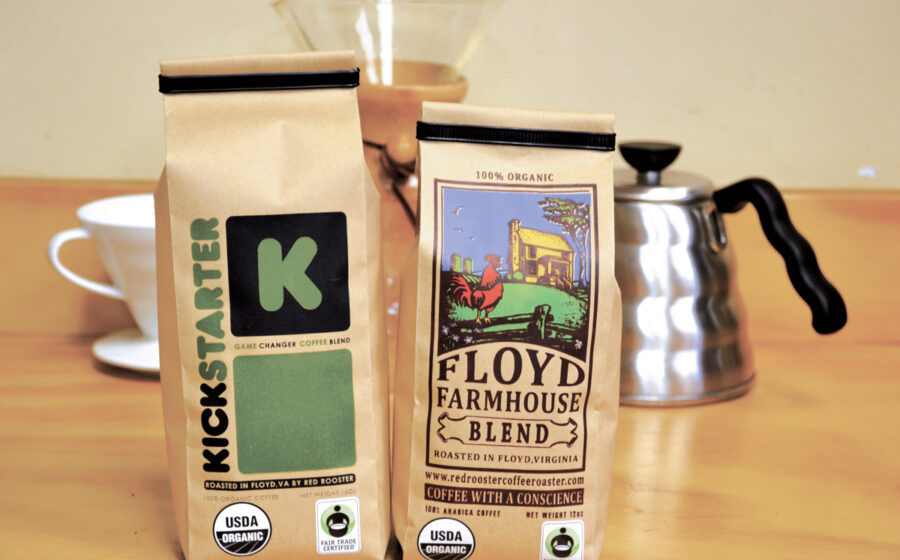
When Haden Polseno-Hensley and his wife Rose McCutchen opened Red Rooster Coffee Roaster four years ago, private labels weren’t part of their business plan. Polseno-Hensley didn’t even know what the term meant. But before Red Rooster was six months old, they produced a co-branded private label for a local winery to serve and sell in its tasting room. Now, at the top of the website, right beside the wholesale tab, is a tab for private labels and coffee gifts.
Cafés have plenty of great reasons to buy a private label coffee, which is a coffee roasted by another company but bearing the branding of the café. When, though, should a roastery offer this as a service? Beyond roasting, what does a private label require? What potential clients are there other than coffeehouses?
One Of A Kind
Polseno-Hensley decided to pursue private-label roasting when he realized he’d unintentionally solved the most significant problem facing a small roaster working with clients who want a small amount of coffee: overcoming ordering minimums.
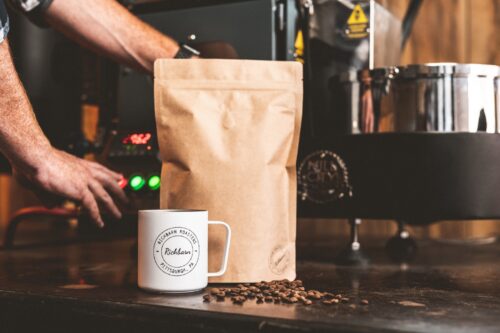
Some of Red Rooster’s private label clients buy just 100 bags of coffee, a minuscule amount that could never work out math-wise with most printers. Working with a local screen printer, Polseno-Hensley can meet that demand.
“It’s become a fundamental part of our business, just by happenstance by the way we have our bags printed,” he says. “It allows more flexibility because we don’t buy in numbers of 10,000 or 20,000 labels, and we have short runs of 150 to 500 bags printed at a time.” To develop the design for the bags, Red Rooster works with a local designer who creates beautiful wood-block-inspired illustrations (Red Rooster uses a similar design for its own bags).
That setup is a micro version of what Dillanos Coffee Roasters does for its clients. Lon LaFlame, Dillanos’ marketing director, says they have a team of design pros who do this work for their clients. Often, coffeehouses come to the process with a minimal understanding of their brands and ideas of what they want to present to customers.
Knowing how to create an identity—at least one represented on a bag—and possessing a passion for the detailed work that goes into that undertaking (or having a consultant on call for this) is a requirement of a roastery creating private labels. The back and forth between the client and designer and the work between the roaster and the client to choose a blend can take several weeks.
Unique Offerings
Stone Creek Coffee in Milwaukee’s standard private label client is a wholesale client who wants to augment his offerings with a private label blend. This is very common for Red Rooster as well.
Phil Lenaghan, Stone Creek’s director of wholesale, says these private label clients are often more than happy to co-brand with Stone Creek. While co-branding can be a benefit, Lenaghan stresses that you need to have “the right partner.” Stone Creek prints labels in-house and has a designer on staff.
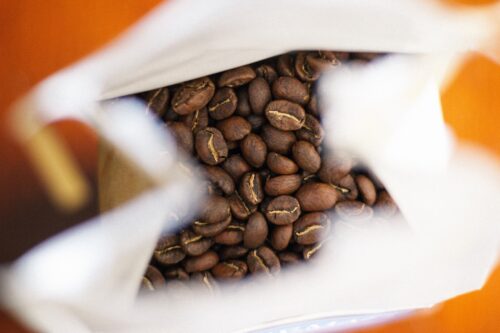
Just as it’s essential to choose a café that will treat and prepare your beans right, it’s vital to find private label clients who respect the beans. “It’s more detrimental to have our name on there if they’re going to have our coffee sitting on a shelf for six months somewhere,” he says. For Lenaghan, working with people who share your values is best.
Both Dillanos and Stone Creek offer menus of blends for clients to choose from for private label collaborations. This allows an easy process for both the roaster and client and guarantees the coffee profile can be delivered. Both brands also formulate a custom blend with clients, which Polseno-Hensely does for all of his clients.
Private labels don’t need to fit into the wholesale model either. Red Rooster regularly works with clients who want to provide coffee as a gift. These are the people who want to buy 100 bags in one go. These clients can be a company looking for an addition to their holiday gift baskets or a couple who wants to send wedding guests home with a bag of coffee. At Stone Creek, these clients range from marketing firms and health systems to booksellers and painting companies. These are almost always one-offs, with possible repeats the following year.
Regular private label purchasers for Red Rooster include companies that use the coffee at their offices and like to have it on hand to give as a gift. Among these private labels, Red Rooster is proud of its collaboration with the online funding website Kickstarter. “It’s a win-win as far as I’m concerned,” Polseno-Hensley. “They want to show that they support a small artisan company that’s probably meaningful to their clients. And, of course, I’m thrilled to have my name on a Kickstarter bag of coffee.”
Cory Eldridge is the editor at Fresh Cup.
This article was originally published on September 17, 2014 and has been edited to meet Fresh Cup’s current editorial standards.