Photo: Chris Ryan.
Coffee Wastewater
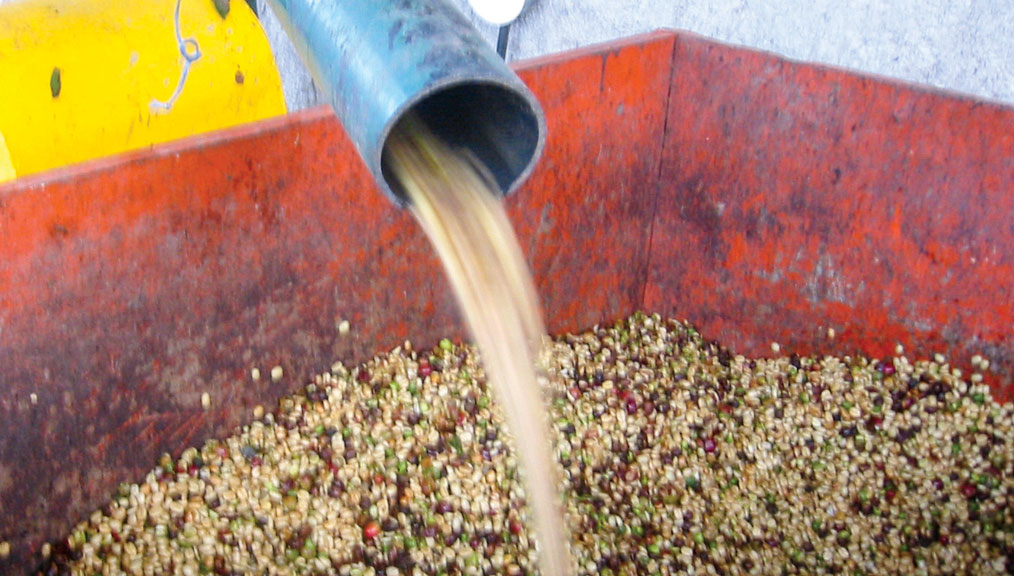
[W]e don’t like to think of coffee as an industrial agriculture process that affects the environment, but it is. One of coffee’s greatest environmental impacts is through the milling process. To get the fruit off the bean, most coffee is processed using lots and lots of water. Cherries are sorted, pulped, rinsed of their fruit, and fermented in water, all steps that infuse the water with a lot of organic matter. According to a report in the SCAA’s Chronicle, it can take from thirty-five to sixty liters of water to process a pound of coffee.
That water, all too often, is then sent into streams and rivers untreated. The organic matter, like sugars and pectin, is broken down by bacteria in the water, a process that uses up the water’s oxygen. The lack of oxygen chokes aquatic life, killing entire ecosystems. At its worst, the wastewater can emit large amounts of methane, a natural gas that contributes to global warming. The water then becomes fetid and undrinkable without major treatments, something many communities in coffee countries can’t afford.
The Netherlands-based certification agency UTZ has been a leader in addressing this problem. Through a program started in Central America in 2010, farmers have filtered the water to trap much of the organic matter in tanks, sending cleaner water downstream (even with best practices a lot of organic matter enters the watershed). Methane production then occurs in the closed tanks instead of open streams and rivers. The methane is harvested for cooking fuel, replacing firewood. The project has been expanded to African and Asian coffee-producing countries to help rectify this major source of pollution produced by coffee. Check it out at utz.org.
A Different Coffee Filter
[W]hile we think of coffee countries as rich in water, many coffee regions suffer dry seasons that leave farmers and their families reliant on restricted, often unhealthy water sources. Shoe company Tom’s famously made safe water part of its coffee program’s one-for-one plan. A new coffee subscription service, Libra Coffee, will provide high-strength filters to families in the communities where Libra owner Eric Medina sources coffees. The filters, Medina says, can provide 100 people safe water for five years.
—Cory Eldridge is Fresh Cup‘s editor.