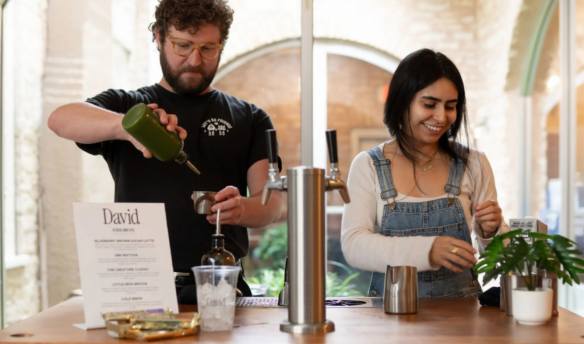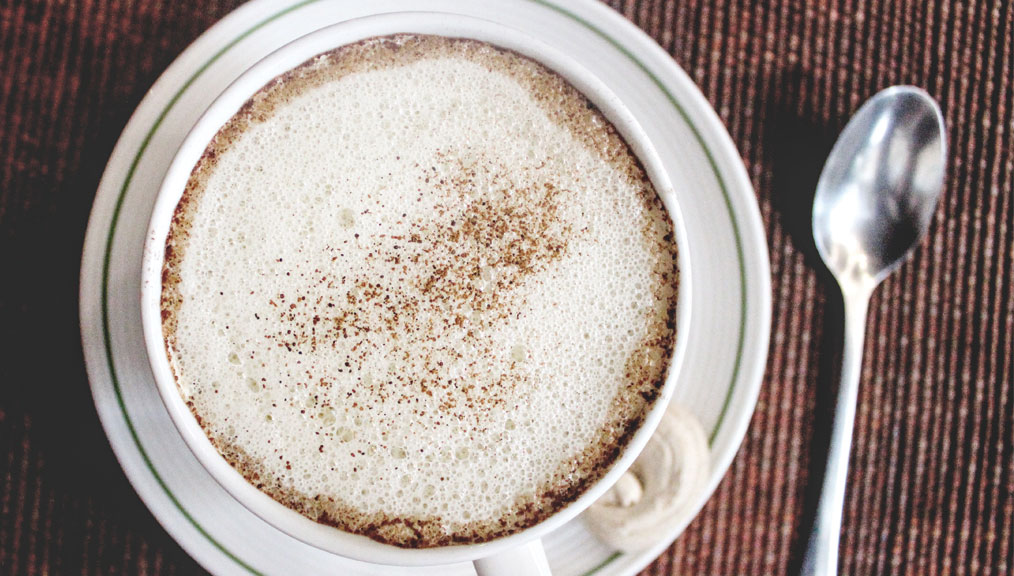
Photo: Bryan Burgos.
[O]n a recent visit to San Francisco, I awoke early and walked to Philz Coffee. It was nearby, and had great reviews and photos of beautiful croissants on their Yelp page. When I entered Philz, I ordered a large cappuccino and a chocolate croissant from the man behind the register.
He smiled at me, “Your first time here?”
I glanced over his shoulder to see large, branded containers of coffee beans, reassuring me I was in the right place. “Yeah, why?”
“Sorry, you have to order over there,” he replied, pointing to the opposite end of the counter where a barista was stationed. “She can help you out. Oh yeah, and we don’t have cappuccinos.”
The girl at the bar kindly mentioned that they specialize in drip coffee, indicating a detailed board of various origins and flavor profiles.
I ordered what she recommended and ended up really enjoying my experience and the coffee. Though I started my morning with my heart set on a milk and espresso, I was instead guided through a niche experience, leaving more satisfied than I would’ve been with an average cappuccino from another shop.
Many businesses assume growth means menu expansion—and sometimes it does. But streamlining menu options can be an equally viable option. On Philz’s website, their mission statement reads, “Philz Coffee focuses on making the best drip coffee.” They made their mark as connoisseurs of drip coffee through a focused menu, creating a unique draw for the shop.
Your menu is a means of serving customers, predicting new items they might like, and also responding to common requests.
When it comes time to assess your menu, start by polling your employees and reviewing sales records. Just because something is slow to sell doesn’t mean it needs to be automatically removed. However, if that item is holding up funds, has the chance to expire, or requires special tools and training to prepare, it may be time to remove it.
If you have a tea on the menu that’s rarely ordered and you aren’t attached to, take it off the menu. Maybe that tea was ordered with a specific customer in mind, or in response to a flavor trend. If it’s not excellent and doesn’t fit the brand, consider it your weakest link.
Making cuts isn’t the only answer to menu evaluation. Thoughtful additions can also enhance your shop’s offerings. Before adding to your menu, ask your employees if a particular beverage gets requested often. Also, take into account the current trends, what your competitors are doing, and what you can add that enhances the character of your shop (does the new item make sense when placed alongside your other offerings?).
When expanding your menu, start gradually. Present a specialty or limited-time menu and put feelers out to see how well those new items do before making them regular menu items. Consider how much training is required to teach staff how to make each new beverage, what the shelf life is of the ingredients, and whether you may have to purchase additional equipment in order to add that item. If an item generates positive response and can be seamlessly added to your current workflow, it’s likely a good fit for your menu.
Making cuts isn’t the only answer to menu evaluation. Thoughtful additions can also enhance your shop’s offerings.
Part of a successful menu—regardless of size—is how well it reflects your clientele. Your menu is a means of serving customers, predicting new items they might like, and also responding to common requests. Matcha tea is on a surge right now, but that doesn’t mean that every café needs to stock it. Gradually testing items allows helpful feedback with little investment.
Watching your customers is also a helpful way to gauge how to adjust the size of your menu. The menu should act as a guide for your customers. Big menus leave customers overwhelmed and may, unfortunately, have them walk out without ordering. If you notice dazed looks when people walk in, it might be a sign that you need to cut back your offerings.
When evaluating your menu, ultimately staying true to your vision and your brand is huge. Sure, I can’t get a cappuccino at Philz, but I also don’t have twenty options for drip coffee at the café down the street. Know why customers come to you and why they go to your competitor. If you can carefully add or remove items on your menu while sharpening the focus of your business, customers will keep choosing to walk through your door, instead of your competitor’s.
—Nicholas Lozito is the owner of Misty Peak Teas.