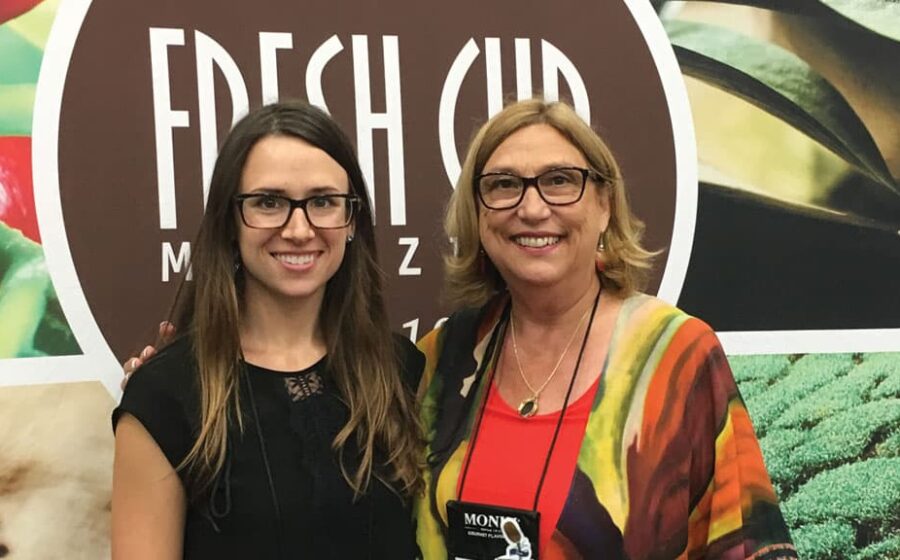
[J]an has been with Fresh Cup since the beginning, when the magazine was produced in the basement of her home. She took over leadership of the company after Ward’s death, and has been fearlessly leading the publication ever since.
How did you and Ward meet?
A friend invited me to go camping on the Deschutes River and said, “I’ve got a friend that will pick you up.” This was totally a blind date, but I didn’t get it. Ward called me, and he said, “Hey, I think it’d be nice if we met before we go on the Deschutes.” I agreed to lunch, and that’s how we met. Ward was so fun. He had a magnetic personality—everyone either loved him or hated him.
How did the magazine get started?
Ward was working with Oregon Hospitality News. He came home one day, and Matt Brandenburg, who was one of our advertisers [with Torani], said, “Hey, what about doing a coffee magazine?” I encouraged the idea—he was making so little money, it wasn’t like he was going to make any less.
We started the magazine in my daylight basement with a little Mac Plus, the cube with a little floppy disk. Ward had a relationship with Boyd’s Coffee because of Oregon Hospitality News, so we went to them for advertising. We asked them to buy the back cover of the magazine for all twelve months and give us the money up front, which they did.
How was the magazine produced at that time?
We would cut and paste. Articles and ads were typed and printed, then cut and rolled out. We used a small printing company in Portland, housed in a small garage for the first few copies.
Ward’s son Brad would deliver magazines to coffeehouses or anyone that was selling coffee. There was a little coffee stand in the Benson Hotel, and we took magazines there. From that, Chad Wadhwani saw the magazine at the Benson, and put his daughter into business with twelve coffee houses in China. He was inspired to get into the coffee business because of Fresh Cup Magazine.

Was there a turning point from “survival mode” to having stability as a company?
When we brought in NASCORE (North American Specialty Coffee Retailers Exposition). That gave us the opportunity to spend more time with advertisers, building those relationships.
Ward was really creative in how to get businesses going, but he wasn’t really good at keeping businesses going. With me there, helping him with the finances and controlling that part of it, we were great. The financial part of it was always me, the creative part of it was always him.
Ward would also do crazy things just to get attention. At a Coffee Fest show once, he went around wearing a box wrapped in white paper, like a refrigerator—this was his way of collecting leads. He went around and let people put their stickers and promotional things on him. It was brilliant!
What challenges did you face being a woman in the early days of the coffee industry?
When we started, the coffee industry was still a good ol’ boys club. I received inappropriate invitations far too often. It was frustrating. The food industry was almost exclusively men.
So much has changed for women in coffee in the last twenty-five years. The Café Femenino Foundation was started to help women and children, to give them money for the things they need—it goes right to the women so they can control it. When men see that women are starting to bring money into the village, it cuts down on the abuse that happens. If you install a well, the girls can go to school instead of spending all day getting water. It’s a really great organization; I’m happy to be a part of it.
What are some of the thoughts and feelings that come to mind when you reflect on the last twenty-five years?
The last twenty-five years have been completely wonderful. It’s been amazing to see all the new products come on to the market. When we first started, people said to me: “How are you going to talk about coffee after the first month?” Nobody thought there was anything to talk about. It’s been hard sometimes, the economy got so bad, and sometimes you feel defeated. But I’ve loved the relationships. It’s been a fabulous ride. Being a magazine, we get to see it all, not just one part of the industry. It’s an industry of entrepreneurs. Not all industries are like that. Coffee is a product that everyone can relate to.
What’s next for Fresh Cup?
I see us expanding, trying new things, and forging new relationships. I’d like to have people in place that love the industry, that want to make this company succeed, because I’m not always going to be here.