Coffee in Africa is generally associated with luxury, and most often consumed by the upper and middle classes, younger generations, and urban aficionados with disposable incomes. Although the continent produces 12% of all coffee grown globally, with Ethiopia and Uganda alone accounting for 6% and 4%, respectively, most of that coffee is exported.
That means domestic consumers must contend with high retail prices. The majority of people in Africa consume cheaper and readily available alternative beverages, such as tea and hot chocolate, while occasionally sipping coffee on special occasions. Even still, that coffee is most often instant.
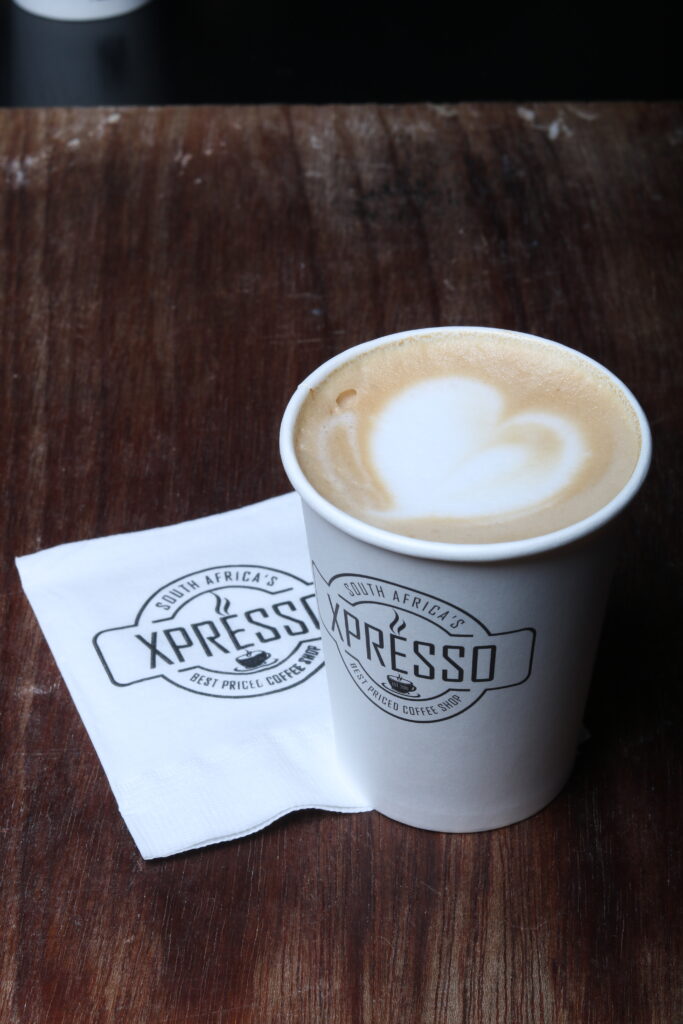
In 2016, two South African entrepreneurs wanted to provide a more affordable solution. Husband-and-wife duo Clyde and Nicolene Elhadad founded Xpresso Café, a coffee takeaway chain with a simple concept: Every item on the menu retails for just 10 South African rand (about 85 cents), almost a third of what major coffee chains charge. This price applies not only to brewed coffee, but also to pastries, pies, sandwiches, and other food items.
The concept was an instant success. Within weeks of opening their first store, the couple launched two more locations. Today, the chain has expanded to 78 locations across South Africa. While the price has since increased to R14 per item (about 85 cents), it remains considerably cheaper than most other coffee chains.

“Our mission is to grow the coffee culture in South Africa so everyone can enjoy a great cup of coffee every day,” says Clyde Elhadad. “Our brand shows that we can build a community through the love of coffee … We have a big and a small concept—big being the menu and items available, and small being the price we charge for those items.”
The R14 Pricing Philosophy
According to Jolandi, Xpresso’s general manager, coffee culture in South Africa was just beginning to flourish when Xpresso was founded. At the time, espresso, cappuccinos, and lattes were still new experiences for many consumers.
Xpresso’s low-cost model helped make those experiences more accessible to many. Although its baseline price has increased over time—beginning at R10 in 2016, later rising to R12, and now, after nine years, at R14—the chain’s goal has stayed the same: to keep prices as low, fair, and accessible as possible.

“Affordable pricing is fundamental to our brand,” says Jolandi. “We believe good coffee and quality food should be enjoyed by everyone—not as a luxury, but as a daily comfort. This philosophy isn’t simply a business decision; it’s the foundation of who we are and why customers return to us.”
While many coffee shops focus on creating a sit-down, lifestyle-driven experience, Xpresso specializes in grab-and-go convenience. This allows customers to enjoy a bite or a beverage quickly, without the time or cost associated with a sit-down cafe. In addition to traditional coffee, Xpresso offers a variety of other drinks, including popping boba and seasonal flavored drinks like pumpkin spice lattes.
Jolandi says that Xpresso’s customers are notably generous, and believes this is because of the chain’s prices. “Our pricing philosophy creates positive social impact,” she notes. “Because our products are accessible, many customers feel encouraged to pay it forward, buying a drink or a treat for someone less fortunate as a simple, affordable act of kindness.”
How To Keep Costs Low
With the rising cost of green coffee beans, it has become increasingly challenging for Xpresso to keep its prices low. However, it still remains significantly more affordable than most premium coffee chains in South Africa. Bean Tree Cafe and Starbucks, for instance, typically charge between R45 and R50 for espresso drinks such as americano and lattes.
To maintain control over its pricing model and keep things sustainable, the chain established its own roastery, Jackass Coffee Roastery, in Cape Town. It sources green coffee from around the world, including from Ethiopia, Uganda, Rwanda, and Brazil, and supplies all Xpresso locations nationwide.
“South Africa produces very little coffee locally, so we rely on imported beans, which makes us vulnerable to currency fluctuations and global commodity prices. Additionally, many of our employees start with little or no work experience, so we invest in training and skills development,” says Jolandi.
According to Impact Amplifier, coffee production in South Africa remains very low, with roughly 200 hectares of cultivated land in regions like KwaZulu-Natal and Mpumalanga. The country’s annual output is approximately 120 tons, a striking figure when compared to the 24,000 to 40,000 tons of coffee it consumes each year.
This means local production satisfies only about 1% of the country’s demand, making significant imports necessary to fulfill the growing local need. Jolandi thinks the government could do more to support local production and make coffee more sustainable and affordable in the long term—especially as coffee consumption is forecasted to grow further.
The Model Impact
Coffee consumption in South Africa has changed significantly since Xpresso was founded. People are drinking coffee on the go more often instead of sitting in cafes. Flavored drinks such as hazelnut cappuccinos, toffee caramel lattes, and pumpkin spice lattes are becoming very popular. Cold and iced drinks are also in higher demand, especially in warmer months.
Affordable pricing is enabling more people, including lower-income customers, to enjoy cafe-style drinks, giving them the ability to treat themselves. Overall, South Africans are drinking coffee more frequently, more creatively, and in more accessible ways than when Xpresso first started. According to the Marketing All Products Survey (MAPS) report by Eighty20, approximately 21.7 million South Africans, out of a total population of about 64.7 million, are avid coffee drinkers, with 19.8 million of them now starting their morning routines with a cup.
For Xpresso Café, catering to those customers remains a core goal, even as its pricing philosophy comes with challenges.

“Many of our suppliers are local but rely on imported products, and frequent price hikes make it difficult to keep our coffee and treats affordable while maintaining quality,” Erlank says. “To address this, we are developing our own factory and bakery, similar to how we opened our own Jackass Coffee Roastery, to manufacture products ourselves.”
Today, the chain provides a source of employment and livelihood to around 450 families, and imparts key skills for working in the coffee sector. More generally, the business also contributes to the growth of coffee culture in South Africa thanks to its wide-ranging menu and continual expansions.
“At Xpresso Café, we’ve created a space where quality coffee is accessible, fast, and part of daily routines,” Jolandi says.