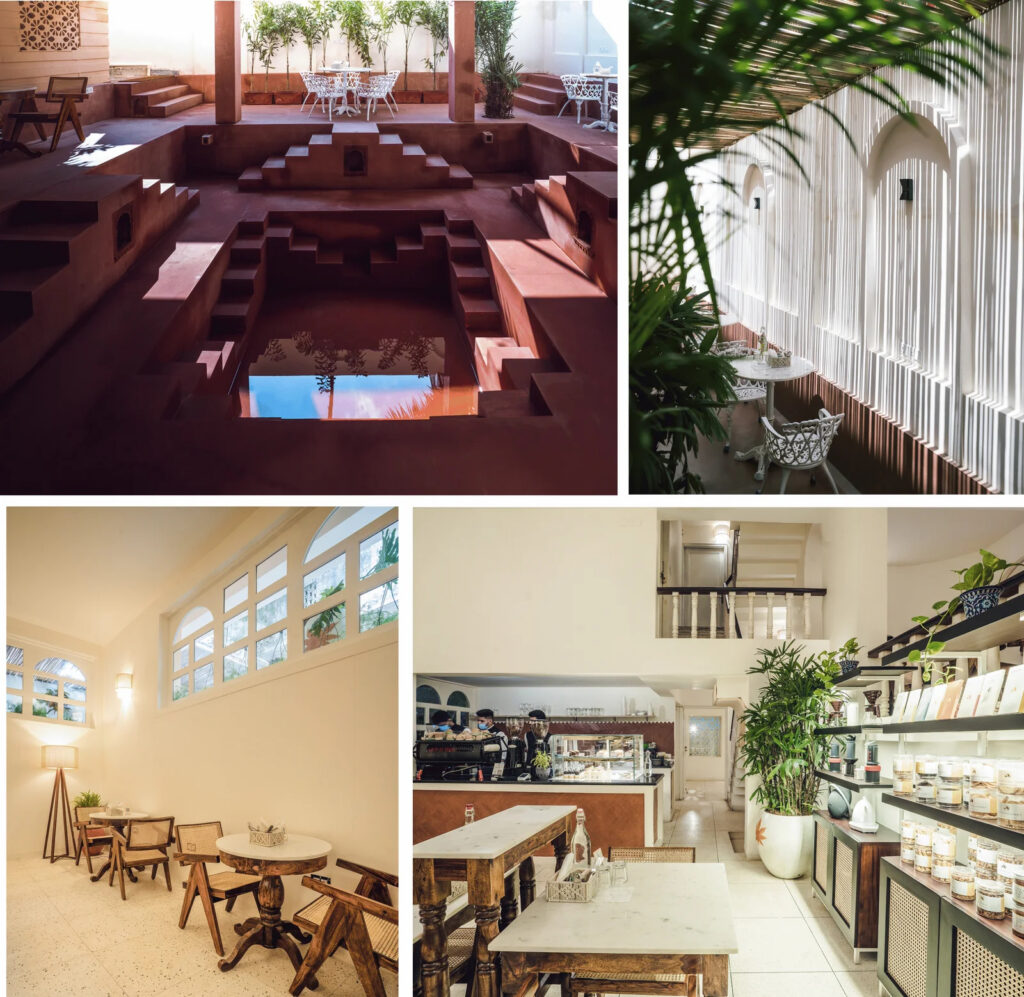
In 2022, Nishant Sinha opened two new locations of his specialty coffee brand, Roastery Coffee House, on the same day. The new sites opened in the north Indian cities of Lucknow and Jaipur, both of which are classed among the country’s “smaller” cities. But for Roastery Coffee House, small is relative. Each location measures around 5,000 square feet, with full table service and no takeaway cups.
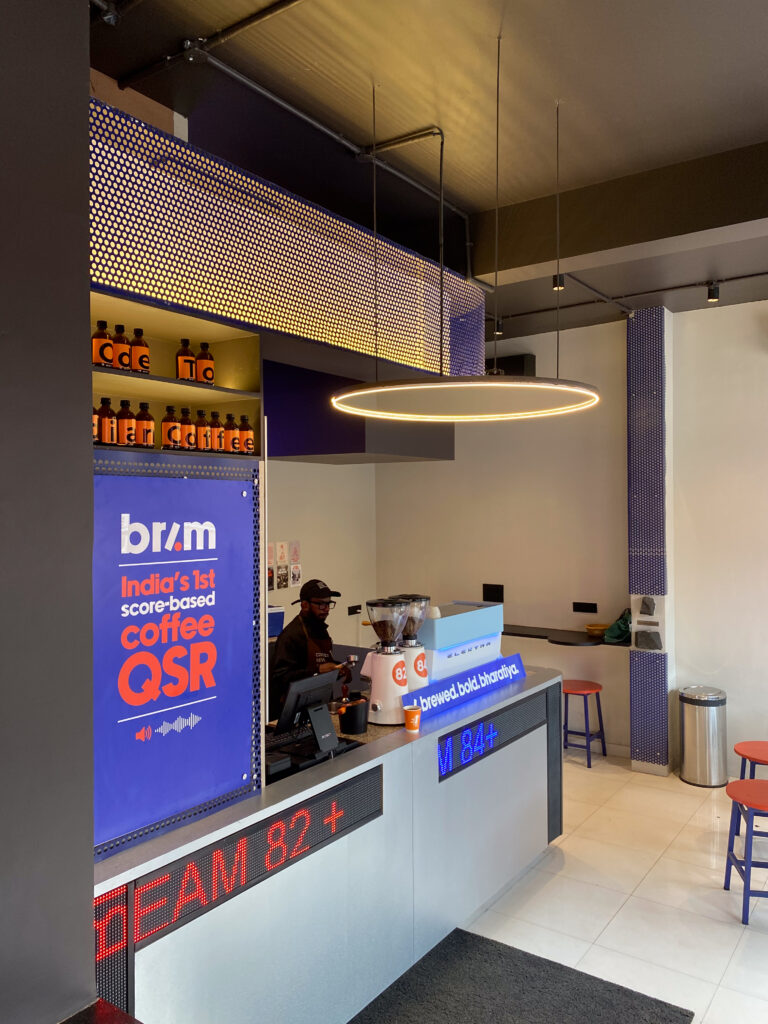
Meanwhile, in Nagpur, a central Indian city of 3.5 million people, Mithilesh Vazalwar has spent the last eight years building Corridor Seven Coffee Roasters into a local institution, hosting coffee tastings, cupping events, and raves. More recently, he launched Brim, a quick-service coffee brand, with five outlets already open in Nagpur.
Both roasters are thriving in India’s Tier-2 cities—the mid-sized markets that sit just below the major metros in terms of population and infrastructure. The former is setting up a handful of carefully crafted hospitality-focused cafes across many cities, and the latter is going deep into one city, evolving the business model from community cafes to convenience-driven takeaway spots as it grows.
While specialty coffee roasters and cafe owners fight for space in saturated markets like Mumbai and Bengaluru, a growing number of roasters are finding unexpected success in India’s secondary cities. Lower rents, less competition, and a demand-supply gap that still favors cafe owners are creating conditions for experimentation that wouldn’t be viable in large metro areas.
What’s emerging from these secondary cities isn’t a single model, but a diverse ecosystem of coffee businesses—one that’s united less by format than by a shared instinct for community-building.
Opportunity in the Margins
When Sinha launched Roastery in 2018, he followed the conventional route: He opened up spaces in the southern city of Hyderabad first, then in Kolkata in the east. Both cities are classed as Tier-1 markets, and are home to 7–10 million people each. Then, he started eyeing Tier-2 cities. First, he opened a cafe in Noida, a rapidly growing satellite city of Delhi, with a population of about 8 million. Then he followed that with the Lucknow and Jaipur locations.
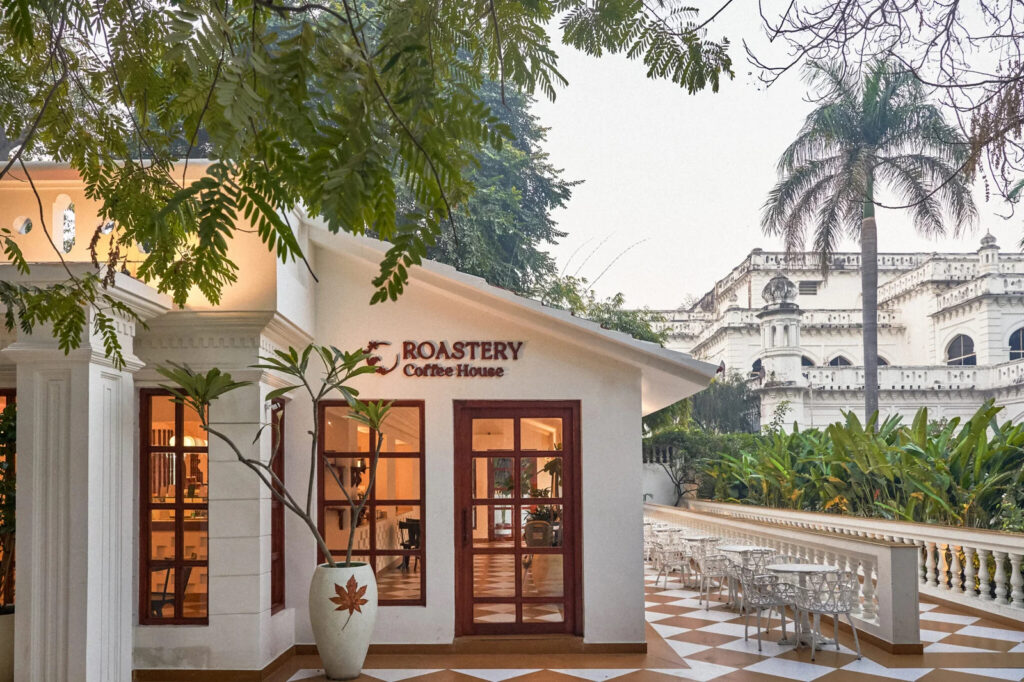
Before entering Lucknow, Sinha did what he describes as “extensive on-ground research.” He talked to locals about whether they brewed coffee at home or went out for coffee, and what that experience looked like. “We figured out that there is a set of people who like to drink this kind of coffee,” he says. “And if we give it to them in the right atmosphere, at the right price, with the right kind of hospitality, they’ll definitely come.”
His revenue numbers proved that instinct right. Roastery Coffee House’s Tier-2 spots now outperform his Tier-1 locations. The competitive intensity in major cities like Mumbai, Delhi, and Bengaluru—whose populations range between 13 and 27 million people—means customers have abundant options, which compresses cafe margins.
But less competition does not necessarily mean lower awareness of specialty coffee. “When you go to Tier-2 cities, the competition is low,” Sinha says. “Maybe people are less aware, but the difference is not very high because now access to information is very easy. You may not have access to specialty coffee, but if you want to find out what it is, you can find out within minutes.”
Vazalwar of Corridor Seven takes that logic one step further, arguing that awareness of specialty coffee in Nagpur may actually exceed that of many larger cities. He’s spent years laying that educational groundwork, from hosting five-course coffee omakase experiences to cupping sessions open to the public. “The city is so enthusiastic about what we’ve been building, and they’ve been rallying behind us so positively, that they are very far into the education side of things when it comes to coffee,” Vazalwar says.
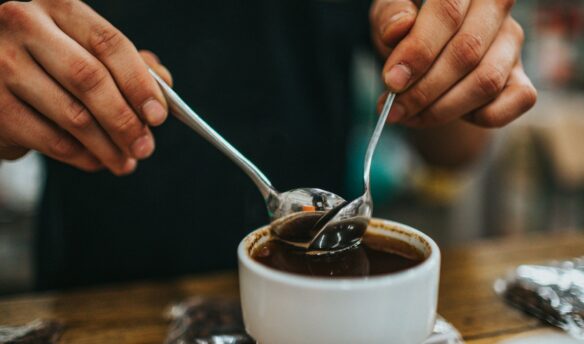
Sunalini Menon, who spent two decades with India’s Coffee Board before becoming an industry consultant, has seen this dynamic play out firsthand. On a recent visit to Jaipur and Udaipur, she found cafes hosting cupping workshops, art shows, and local musicians. In many of these spaces, the roasting machines are visible to customers, and baristas brew in front of patrons—in one cafe, Menon even observed guests being invited to brew their own cups.
She credits the uptake of specialty coffee in these cities to three factors: the novelty of the experience; the opportunity to understand coffee through workshops and tastings; and, above all, community.
“When I go to cafes in Bengaluru, I always see people working on their laptops. In Jaipur, it was a lot of conversation and laughter,” she says. “In smaller towns, the community feeling, the community formation is very high. In cities like Bengaluru, you don’t have the time—you are always rushing from one job to another.”
It’s a distinction Vazalwar has built his business around. Since 2018, Corridor Seven hasn’t spent any money on marketing or advertising. “These events and the community growth have been one of our key strengths,” he says.
What’s Driving Growth
Menon traces the small-city uptake of specialty cafes to a generational shift. Younger Indians who traveled abroad or through India’s coffee-growing south gained first-hand experience of high-quality coffee, and carried that taste home with them.
Sinha sees two additional forces driving a growing consumer base in Tier-2 cities.
The first is that fewer young people are leaving these cities for major metropolitan areas in the first place. Remote work and improved local opportunities mean the consumer base in cities like Lucknow and Jaipur is simply larger than it once was. Younger people are also being exposed to cafe culture through social media—and when that culture appears in their own cities, Sinha says, “people jump at it.”
The second major factor is the returning migrant. Holiday seasons make this trend starkly visible: While Sinha’s Delhi and Hyderabad cafes see sales dip during Diwali, as residents travel home, his Lucknow and Jaipur cafes spike as returning migrants introduce family and friends to the cafe culture they’ve encountered in bigger cities.
“In cities like Mumbai, Bengaluru, and Delhi, the demand is 100, and the supply is 120, so people have options,” says Sinha. “But in Tier-2 cities, the demand is 100 and supply is only 50.”
Two Models, One Market
What cafe owners do with the opportunity presented in Tier-2 cities varies considerably.
Sinha’s model is built around hospitality. Roastery’s 15 stores are spread across six cities and are deliberately located off the main street—“tucked away in residential neighborhoods,” as he puts it. There are no mall locations, no airport kiosks, no takeaway cups. “We are not doing a convenience-based cafe business. We are doing a hospitality- and experience-based coffee business.”
He has no interest in opening cafes every few kilometers in the same city, he says. The maximum number of Roastery locations in any one city is currently three standalone cafes, and Sinha says he’d readily open a single new store in Bhopal, Raipur, or Indore—all smaller cities—before adding a second one in a city where he’s already present.
Vazalwar started from a similar place. In Corridor Seven’s early days, he offered customers brews without milk and sugar, and told them that if they didn’t like it, it was on the house. “I had made space to give people an experience rather than only focus on the commercial part,” he says.
Over the first seven years, Vazalwar gradually introduced three sit-down cafes in Nagpur, and also operated as a roaster, supplying cafe partners across India. Currently, 65% of Corridor Seven’s business comes from cafes, and 35% from the roastery.
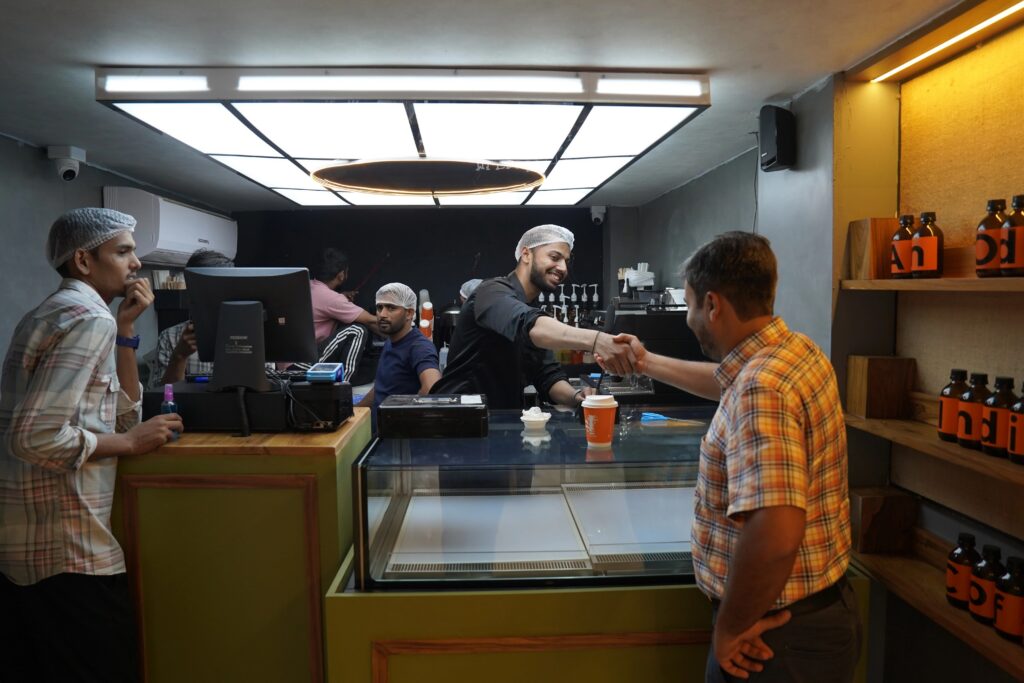
Now, with the quick-service brand Brim under the Corridor Seven flagship, he is making a deliberate bet on a different future—one led by takeaway culture. “We see people wanting a good cup of coffee at every corner, and they don’t want to pay extra money for the beautification cost. So those days of building a consumer sit-in experience are there, and it’ll be there, but for a lot of people, they’ve moved away from it,” he says.
What Comes Next
Looking forward, Sinha believes that the next differentiator in coffee will be hospitality and customer experience. “We have cracked the coffee. We will keep innovating there; so will other brands. But what will differentiate a coffee house business is how you make your customer feel,” he says. In a market where a cup of coffee costs 200–250 rupees ($2.20–2.70) and is accessible to India’s sizeable number of middle- and upper-middle-class consumers, the experience around the cup becomes the product.
Vazalwar sees it differently. He thinks specialty coffee is on the verge of becoming genuinely functional, something people reach for without thinking, rather than an occasional indulgence. “I think the trend will be that coffee becomes a mad functional beverage that nobody can function without. And people will want convenience. So it’s going to be a takeaway culture,” he says.
Menon is not convinced the convenience model will translate as smoothly. “In darshinis [small, self-service breakfast joints that also serve South Indian filter coffee], people have always stood and drunk their filter coffee,” she says. “But drinking an espresso standing or walking down the road? I don’t know.” The format makes business sense and may well succeed in India, she adds, but it depends entirely on whether the consumer mentality in these cities shifts toward the grab-and-go habit more familiar in Western markets.
But perhaps the most telling measure of where things are headed comes from Menon’s own memory. “I remember going to Surat [a western Indian city with a population of 6.5 million] 20 to 25 years ago, and the only thing I saw were roadside sugarcane juice stands,” she says. “Today, there is excellent specialty coffee there. In Tier-2 and Tier-3 cities, this is going to become the norm.”
What she’s describing is already visible: Specialty coffee is no longer a metro phenomenon waiting to trickle down. It’s developing its own logic, and in some cases, moving faster than the cities that were supposed to lead the way.