In 1995, when Nishant Gurjer returned fresh out of engineering college to his family’s coffee estate in the southern Indian state of Karnataka, the first thing he did was a SWOT (strength, weakness, opportunities, threats) analysis. The estate was growing a mix of arabica and robusta, but after conducting his analysis, Gurjer concluded that he needed to make a change.
“I realized I can be an average arabica producer because of my climatic conditions, or I can be a fabulous robusta producer. I chose the latter,” he says.
Within the next two years, Gurjer had converted Sethuraman Estate into a 100% robusta operation. By 2005, the estate was selling coffee to buyers in the U.S. and Europe, but through a third-party exporter—Gurjer had no brand of his own. In 2008, he changed that, founding Kaapi Royale Coffee and becoming an exporter himself, marketing his robusta directly to buyers in Portland, Seattle, Vancouver, and London.
Despite having buyers worldwide, Gurjer says there still wasn’t much interest in his coffee domestically. “I remember talking to a lot of specialty houses who said, ‘We don’t do robusta at all,’ or, ‘If we do robusta, it is only for commercial reasons, supplying to a company cafeteria or a restaurant.’”
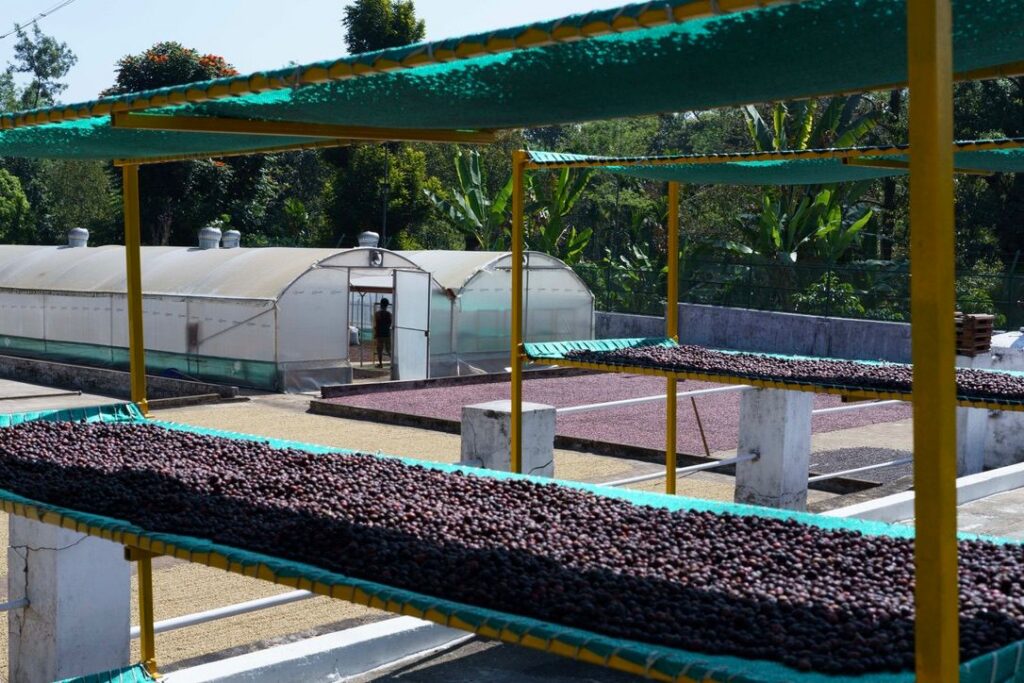
This lack of interest was despite the fact that Sethuraman Estate had received the world’s first R-certification from the Coffee Quality Institute (CQI)—the industry’s benchmark for fine robusta—in 2012. It has accumulated 19 such quality certifications since, more than any single robusta farm globally, Gurjer says.
India is the world’s fifth-largest robusta producer, and robusta accounts for roughly 70% of the country’s coffee output. Yet even as India’s specialty coffee industry has evolved over the past decade, its roasters have largely turned their backs on the crop that defines their country’s coffee geography. That is beginning to change—but slowly, and not without resistance.
Written Off Before It Was Tasted
To understand why robusta has largely been snubbed by India’s specialty coffee industry, it helps to look at how specialty coffee came to be defined in the first place.

The Western specialty movement took shape in the 1970s and 1980s, and was built around arabica. Its development was driven largely by the then-Specialty Coffee Association of America (which has since merged with its European counterpart, and is now known as the Specialty Coffee Association). Central and South American producers—whose climates favor arabica almost exclusively, and who historically supplied the bulk of coffee consumed in the U.S.—helped shape the early narrative.
Over time, the definition hardened: Arabica was specialty, and robusta was not. Robusta, grown primarily in Asia and Africa, was written off as less refined and lower in quality.
In India, robusta—known for its bold flavor, bitter and nutty notes, and higher caffeine content—had long been prized in South Indian filter coffee. The strong, aromatic coffee is made by filtering a thick brew through a traditional metal filter, and mixing it with milk and sugar. But even as this humble style of coffee became the preferred choice for many Indians, the country was also quietly developing specialty-level robusta growing standards and practices.
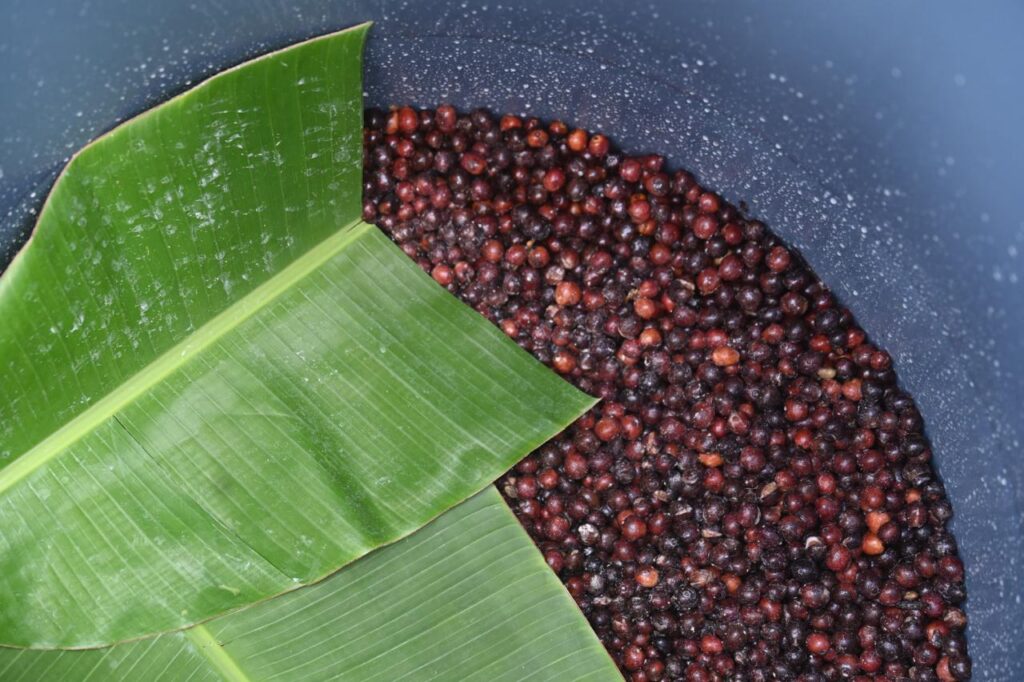
Sunalini Menon spent two decades at the Coffee Board of India, and helped establish standards for robusta cupping in the country. As she points out, India was producing high-quality robusta as early as 1972, before the specialty coffee movement had gathered momentum. That coffee was monsooned robusta, a variant of Monsoon Malabar: the globally recognized Indian specialty coffee made by exposing sun-dried beans to humid monsoon winds, which gives them an earthy, chocolatey flavor and a mellow body. “At that time, we never had the word ‘specialty,’” she says. “But today, I can say that monsooned robusta is specialty coffee.”
Washed robusta followed in the early 1980s, Menon says, when “washed [robusta] was unheard of in the world market.” India’s Coffee Board also insisted on fermentation as an integral step in washed coffees at a time when Brazilian producers—dominant in the global coffee trade, and largely reliant on dry natural processing—were arguing that it was unnecessary. Then, in the late 1980s, the Coffee Board took a more deliberate step, formally launching Robusta Kaapi Royale. The washed robusta grade classed fermentation as a defining and non-negotiable step; it would later be scored as fine robusta under the CQI’s own standards, in 2010.
But even still, producers like Gurjer had trouble getting their robusta coffees recognized. Gurjer started attending SCAA events in the U.S. in 2008, but found his robusta samples dismissed before anyone had even tasted them. Later, Indian specialty roasters and cafes followed suit. “A lot of what is happening here mirrors what was happening in the Western world 20 to 25 years ago,” he says. “Everyone got into it with ‘Let’s do arabica.’”
Good Enough for Espressos, Not Good Enough To Stand Alone
Akash Ovian, managing director of the Bengaluru-based specialty roaster and exporter Naivo Coffee Company, identifies the origin of this anti-robusta sentiment. “The specialty movement in India was inspired by what was happening outside India, and everybody outside India was saying 100% arabica; it was there on every label,” he says. “Some of the early guys who started this concept in India, like Blue Tokai and others, also marketed [their coffee] as 100% arabica. And everybody who followed in their footsteps did the same thing.”
For Ovian, this bias isn’t just an import from the West; it reflects something real about the difference between arabica and robusta. Arabica, he argues, offers more complexity, sweetness, and range of flavor than robusta, regardless of processing. “Even if somebody is pro-robusta, if you actually drink it and trust your palate, you have to accept that arabica is superior,” he says.
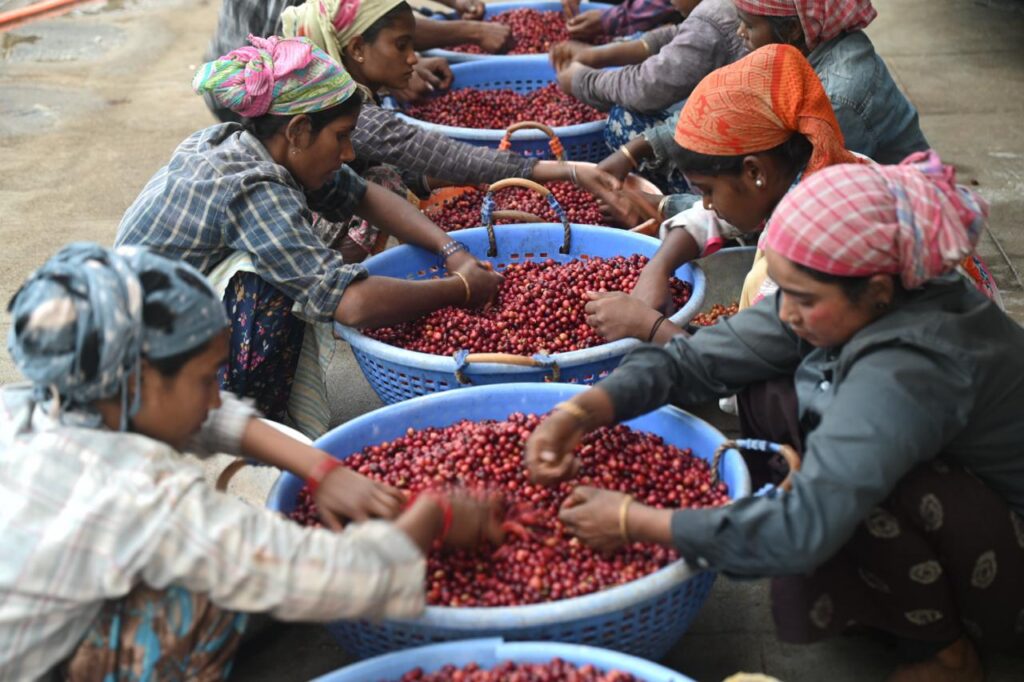
On the supply side, growers had their own reasons to turn away from robusta. Arshiya Bose is the founder of specialty roaster Black Baza Coffee in Bengaluru, and a researcher who spent years working with smallholder farmers in Coorg in southern India. Fifteen years ago, she says, the price gap between arabica and robusta was so wide, and the premium for processed robusta so small, that investing in additional post-harvest steps made little financial sense.
Farmers often sold robustas as whole coffee cherries, she says, skipping the additional processing steps that would turn them into parchment coffee (beans with the outer skin and pulp removed). The price difference between cherry and parchment was minimal, barely justifying the effort of processing, while arabica continued to command far higher prices.
Bose remembers encountering just one grower in Coorg who was fermenting his robusta, not because there was a market for it, but because it fetched a marginally better price at auction. “He wasn’t marketing it as fermented,” she says, referring to the traditional washed process, where coffee beans are soaked in tanks to break down the fruit residue. “Nobody was using that language yet.”
And yet, for all that it was overlooked, Indian robusta was never truly absent from the world’s cups. For decades, it flowed primarily to Europe, Italy above all, where it disappeared into espresso blends. Indian robusta was a popular component of Italian-style espresso, Gurjer says, “because it brings a lot of body to the coffee without making it taste bitter. Some of the robusta from other origins don’t have the same smoothness.”
The Cup That Changed the Room
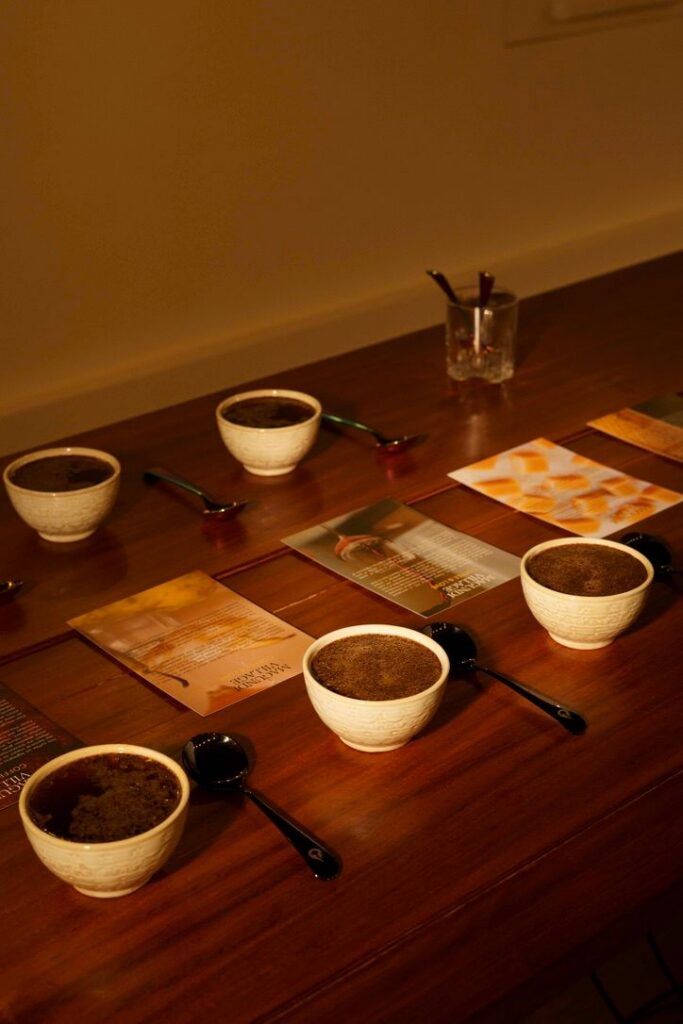
Today, perceptions and attitudes around robusta are beginning to change. In 2021, St. Margaret Estate, a fourth-generation family farm in the southern Indian state of Karnataka, was among four farms invited to showcase their coffees at a tasting event hosted by Blue Tokai, one of India’s first specialty roasters.
Lynn Mascarenhas, who now runs St. Margaret Estate, says it was their first year doing specialty processing. She did not think to mention that every coffee she brought was robusta; it hadn’t occurred to her that it needed to be addressed. “I never thought people had preconceived notions about robusta,” she says. It was only after the tasting, when she mentioned that St. Margaret was a 100% robusta farm, that the room reacted. “People came back saying, ‘No way these are robustas. They tasted exceptional.’ They were just not ready to believe it,” she says. Some attendees thought she was joking.
For Mascarenhas, the moment was validating, but it also made clear how much work lay ahead of her if St. Margaret’s robusta was to find a place in India’s specialty market.
In recent years, acceptance of robusta has slowly increased. Climate pressure on arabica, growing global interest in fine robusta, and a younger generation of coffee drinkers who are less wedded to the arabica-equals-quality equation have all contributed to its newfound status. In 2024, robusta coffee prices hit record highs globally, briefly overtaking arabica. Growers are also favoring robusta for its resilience to pests and diseases, and its greater tolerance for weather variability compared to arabica.
“People have started realizing that rather than putting all my eggs into one basket, if I have 400 acres, I can grow good robusta on 200 acres and good arabica on 200 acres,” Gurjer says. “The shift towards more production of robusta is definitely on. Now the question is how much of it gets converted into specialty robusta.”
Increasingly, Indian roasters are coming around to stocking specialty robusta. “In the last 12–18 months, more domestic roasters are buying; not a lot of coffee, but reasonable amounts on a regular basis,” Gurjer says. A cafe he sells to in Hyderabad serves only specialty robusta. “The push isn’t coming just from roasters and cafes in the big cities,” he says. “Smaller cities are seeing a lot of action.”
Not all parts of the market are moving at the same pace, however. Ovian, whose company wholesales primarily to cafes and restaurants, says cafes remain resistant to standalone robusta, partly because of its longstanding reputation as a lower-grade commodity crop and partly due to economics. Many Indian roasters now price fine robusta on par with specialty arabica, making it a harder sell to a cafe owner navigating tight margins, who could get a more familiar product for the same cost.
“From my experience, I find it very difficult to sell robusta to cafes,” Ovian says. Bose at Black Baza agrees. “Cafes will always ask for 100% arabica,” she says. “They want to produce a premium product for their customers, and that itself is one very clear way to marginalize robusta.”
Fermenting a New Future
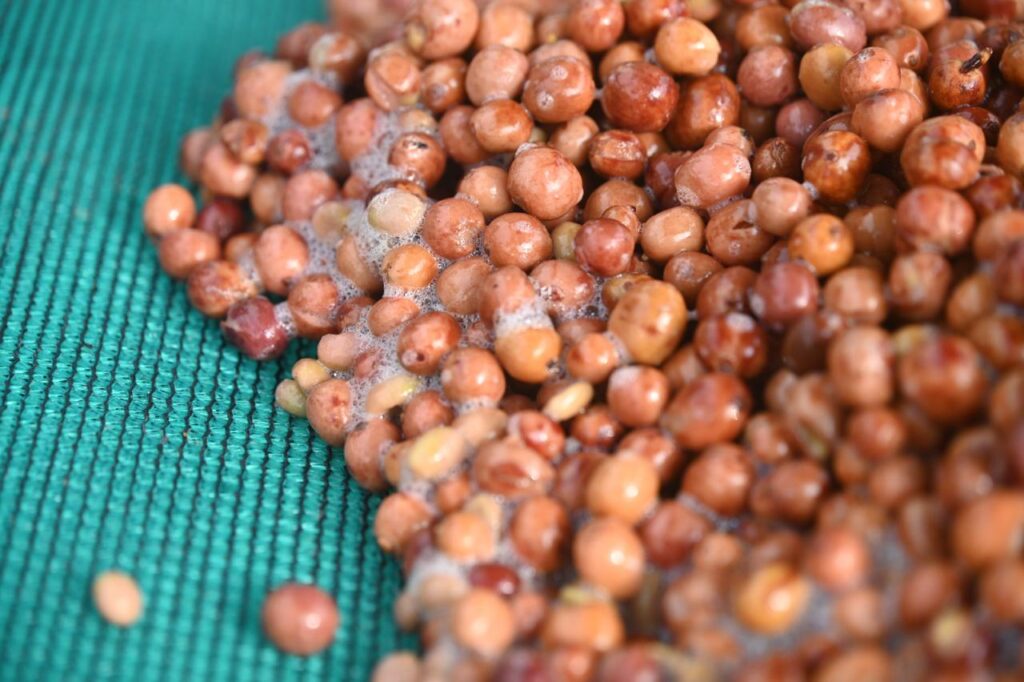
Some growers are pressing ahead regardless. At St. Margaret, Mascarenhas has moved well beyond the basics she started with in 2021. She is now experimenting with controlled fermentation—using specific bacterial cultures and frozen cherries to slow and shape the process, and to coax notes like raspberry, thyme, rosemary, and plum out of her robusta. “These are flavors I don’t think are easy to get from robusta at all,” she says.
A coffee fermented with a beer yeast sourced from Cologne yielded what she describes as a candied, maple-syrup-like sweetness. A lot fermented with koji tasted of pear and plum.
For now, these coffees remain experiments. Growers are dedicating small sections of their estates to fine robusta, and roasters are buying it in equally small quantities. At St. Margaret, only a quarter of the estate is currently devoted to fine robusta. “Everything is a nano lot,” Mascarenhas says. The rest remains commercial robusta for export and South Indian filter coffee.
Naivo Coffee Company’s fine robusta offerings, meanwhile, currently represent less than 1% of the robusta that the company handles. “If someone is doing 30 to 40 tons of robusta a year, maybe one ton they are experimenting [with fine robusta],” Ovian says.
Where fine robusta is finding traction, he adds, is among home brewers willing to experiment and pay arabica-equivalent prices for the experience. “In retail channels, particularly ecommerce, we are seeing fine robustas moving, not as fast as arabica, but better compared to wholesale.”
Mascarenhas has seen something similar: After the Blue Tokai event, she began hosting regular tastings. “After every event, some customer or roaster would get in touch asking if they could buy,” she says.
Each year following harvest, Mascarenhas also convenes a cupping session that brings together fine robusta producers across Karnataka, the state that produces 70% of India’s coffee. Last April, 30 coffees from seven estates were cupped blind by Q-graders, farmers, and cafes. The best lot from each estate was then showcased.
The goal is practical and communal: Smaller farms that cannot market widely can refer buyers to one another when their own quantities run short. “If my coffee is sold out, I can always tell a buyer there’s a farmer in Coorg or Sakleshpur with a similar lot in the quantity they’re looking for. They’re still getting fine robusta,” Mascarenhas says.
India’s Robusta, On Its Own Terms
The question now is where India stands within a global robusta renaissance that is moving fast. Ovian recounts a conversation with a German buyer he works with. He approached the buyer with a specialty robusta that was mild, nuanced, and subtly sweet. The buyer’s response was blunt: “That’s not why I want robusta. I need it to be bitter. That’s what it’s contributing to my blend. If you give me a robusta that’s mild and nuanced, it’s not doing its job. Why would I pay more for it?”
This exemplifies one of the key challenges facing today’s growers: The robusta market India built over decades values the crop for exactly the qualities that fine robusta is trying to move beyond.
Nevertheless, there are more examples globally of producers succeeding with distinct, specialty robustas. Uganda, which is the birthplace of robusta, and Vietnam, its largest producer, are both positioning themselves as fine robusta leaders.
But what India has, Menon argues, is something no other country can replicate: a profile that’s all its own. It may not have the big brightness that you see in Ugandan robusta, but it brings flavors to the table that makes it distinct from other robustas—and from arabica. That, she says, is the point. “I don’t want it to resemble arabica in its totality. I want it to be different, unique. I want it to be a standalone.”
All photos courtesy of Lynn Mascarenhas unless otherwise noted.