Between 1977 and 1992, Mozambique experienced a devastating civil war. More than one million people lost their lives during the conflict between the Mozambique Liberation Front (FRELIMO, government) and the Mozambican National Resistance (RENAMO, opposition), and much of the country’s infrastructure was destroyed.
So were many of its natural spaces, like Gorongosa National Park. The park was used as a hideout by the opposition rebel group, and its wild animals were hunted for food and ivory to near extinction, in part to finance military operations. Additionally, slash-and-burn agriculture was practiced in the park and its buffer zone, further damaging the land. (Buffer zones are “areas outside and adjacent to a protected property’s boundaries that contribute to the protection, conservation, management, integrity, authenticity, and sustainability of the property,” according to UNESCO). At Gorongosa, these areas serve approximately 200,000 people.
Gorongosa National Park is located at the southern tip of the Great Rift Valley in central Mozambique, and was a rich biodiversity hotspot before the war’s devastating impact. It wasn’t until 2004, 12 years after the war’s conclusion, that efforts to restore the park began.
In the process of transforming this area of more than 3.2 million acres, Mozambique created the opportunity for social, economic, and ecological recovery. And that couldn’t have happened without coffee.
A Brief History of Coffee in Mozambique
As part of a broader effort to restore the country and its national parks, the Mozambican government formed a partnership with the philanthropic Carr Foundation. That partnership gave rise to the Gorongosa Restoration Project (GRP) in 2008. The objectives of the project were to conserve biodiversity, reintroduce wildlife, and support local communities through sustainable development.
A suggestion to use coffee as a reforestation crop led to the creation of the Gorongosa Coffee Project in 2014 as part of the restoration efforts—a new agricultural activity and supply chain in the area.
Mozambique’s coffee sector was almost nonexistent when these restoration projects began. Although coffee was introduced to Mozambique by the Portuguese in the 15th century, the colonialists decided to produce coffee primarily in neighboring Angola, and designated Mozambique for tea production instead. When the Portuguese left the country centuries later, in 1975, coffee production—and agriculture in general—entered a complicated phase.

The civil war began two years later, crippling agriculture, displacing people, and destroying farms. By the late ’80s, annual coffee production in the country had dropped to 1,000 metric tons. According to the United Nations, intermittent conflicts have displaced more than 700,000 people since 2017, further impacting coffee production.
By 2019, the country produced only 827 metric tons of coffee, according to UN reports. Natural disasters in Mozambique have also affected coffee production. For example, Cyclone Kenneth destroyed 90% of households on Ibo Island in 2019, where Coffea racemosa was thriving. Also known as “Ibo Coffee,” it is a rare, low-caffeine coffee species that contributes to the country’s small national volumes, thanks to its drought and pest resistance.
Two years later, in 2021, Tropical Cyclone Eloise hit northern Mozambique, destroying farmlands (including coffee farms), and displacing thousands of farmers in the process.
A Coffee Project Begins
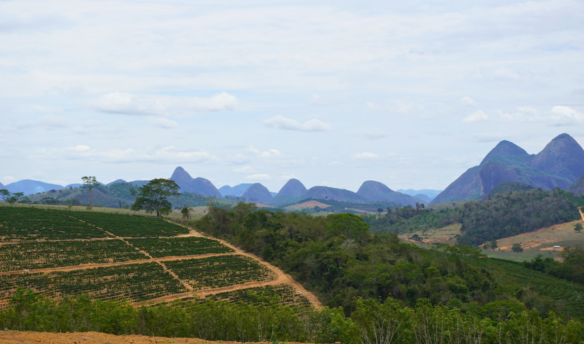
After its establishment in 2014, the Gorongosa Coffee Project harvested its first crop of coffee in 2018. Currently, the initiative focuses on 494 acres in three specific regions of the park (Canda, Tambarara, and Sandundjira) and eight communities, selected based on their unique micro-climatic conditions and suitability for coffee farming. Each region has a wet mill, and the project also collectively operates a dry mill facility, a roastery, and a packaging line to cater to local market demands.
Coffee was new to the region, and farmers needed time to get acquainted with a crop they had never dealt with before. Prior to the project, none of the farmers had ever tasted coffee.
To help them adapt, the project offered comprehensive training programs (in coffee quality, post-harvest techniques, and cupping). Additionally, GRP provides farmers with seedlings and farming inputs like fertilizer. It also provides financial opportunities (like forming farmers into semi-autonomous local loan and savings groups) to enhance access to credit and savings opportunities.
“Today, the coffee project has grown from picking a few bags of coffee to filling complete shipment containers, and from working with just 10 initial growers to engaging over 1,000 in the Mount Gorongosa area,” says Camille De Boissel, the associate director of Gorongosa Park’s Regenerative Agriculture Institute. “The project not only supports sustainable livelihoods but also exemplifies the synergy between nature conservation and economic development.”
According to De Boissel, it was Pedro Muagura—a warden at Gorongosa National Park, who drew on his expertise in forestry, agriculture, and wildlife management—who first had the idea for reforesting the park using coffee. Muagura proposed that by planting coffee alongside native trees, the project could restore the forest, produce shade-grown coffee, and provide resident communities with a viable source of income. He procured some seeds and established a small nursery on Mount Gorongosa, ripening the moment for the development of coffee.
Later, the project helped establish the Mozambican Association of Coffee Growers, as well as Produtos Naturais da Gorongosa (PdG), a for-profit arm to market Gorongosa coffee locally and internationally.
“PdG serves as the market connector while reinvesting all profits into the GRP,” says De Boissel. “This cycle ensures that the economic benefits derived from coffee and related ventures directly support conservation and community development efforts.”
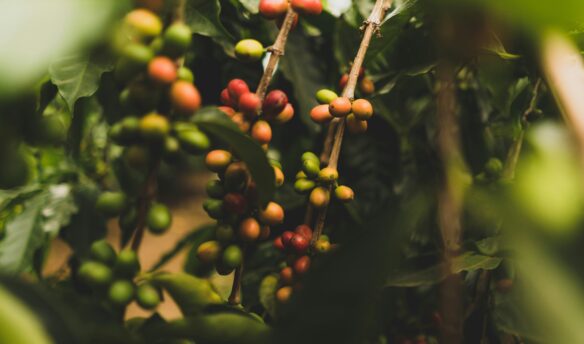
To meet its objectives, the project cultivates arabica coffee under the shade of indigenous trees and intercrops with subsistence crops like beans, bananas, and pineapples. This approach provides multiple income sources to the farmers. It also supports ecological health.
According to De Boissel, researchers at GRP have shown that when coffee plantations reach eight years of age, they become 60% similar to natural forests, and are therefore suitable for birds, insects, and crawlers. Coffee plots also support bats, especially the endemic Gorongosa horseshoe bat. Additionally, these coffee plantations provide habitats for 82 bird species, 22 of which are forest-dwelling species that only inhabit mature, stable, and undisturbed forest interiors. These birds disperse seeds from 51 native tree species in the park.
The project has also decreased traditional slash-and-burn farming, which leads to significant deforestation and soil erosion, among other ills, encouraging natural regeneration of trees and native plants within the coffee plantations.
Overcoming Challenges
In the early stages of the project, De Boissel says the primary challenge was convincing farmers that coffee could bring positive change, which required helping them shift their mindsets. This is because, she explains, most farmers had previously relied solely on subsistence agriculture to meet their needs.
“The coffee project began from the ground up, with every aspect being developed, improved, and adapted over time,” De Boissel says. “The initiative started modestly, with a demonstration plot showcasing coffee cultivation under shade, intercropped with pineapples and bananas. This initial ‘showcase’ aimed at building confidence among farmers and proving the viability of coffee farming in the region.”
But there are still hurdles to overcome. “Today, the project continues to navigate challenges such as the highly volatile coffee market, fluctuating prices, and uncertain political stability in the region,” De Boissel says.
But she’s encouraged by the rapid progress the project has made, both in revitalizing the forest and bringing in income for farmers. “Last year, the top 10-performing farmers earned over $1,000 from coffee sales alone, excluding production costs. On average, annually, coffee farming contributes approximately $400 per harvest to household incomes,” De Boissel says.
The project is also aimed at addressing gender equity issues. Mozambique ranks 120 out of 183 in the United Nations Development Programme’s Gender Inequality Index. Women have fewer employment and educational opportunities, and typically lack ownership of the means of production.
At Gorongosa, nearly 50% of the growers are women. Amidst a period of unrest in 2015 and 2016, these women showed outstanding bravery, according to De Boissel. The coffee project had been put on hold, even though the young coffee seedlings needed watering. At night, the women would sneak into the coffee nurseries to irrigate the remaining seedlings, ensuring the project’s survival and continuity when stability resumed.
The Fruits of Success
The coffee project has significantly improved the infrastructure in the region. New roads have been constructed, opening up previously isolated areas where coffee is now cultivated.
This development has connected communities to markets, creating new income-generating opportunities for residents. Additionally, the roads have facilitated greater access to essential goods, services, and opportunities, supporting development and improving the quality of life.
“Coffee for the future is a reality,” De Boissel says, because “the income generated from coffee harvests is transforming lives, empowering farmers to invest in their families and communities. Some farmers are using this newfound income to build homes, purchase motorbikes, or support education.”
While the domestic coffee market faces challenges, given Mozambique’s colonial preference for tea, consumer habits are gradually evolving. With increased production, more people are being introduced to coffee, fostering new local markets. According to De Boissel, 346,000 tons of coffee were processed last year.
“By staying true to its core purpose [of reforestation] while aspiring to reach global recognition, Gorongosa coffee can achieve a harmonious balance between socio-economic development and environmental stewardship, setting a powerful example for sustainable coffee production,” she says.
Cover photo courtesy of Piotr Naskrecki