This article was researched and written by Fresh Cup in partnership with our sponsor, UPOURIA.
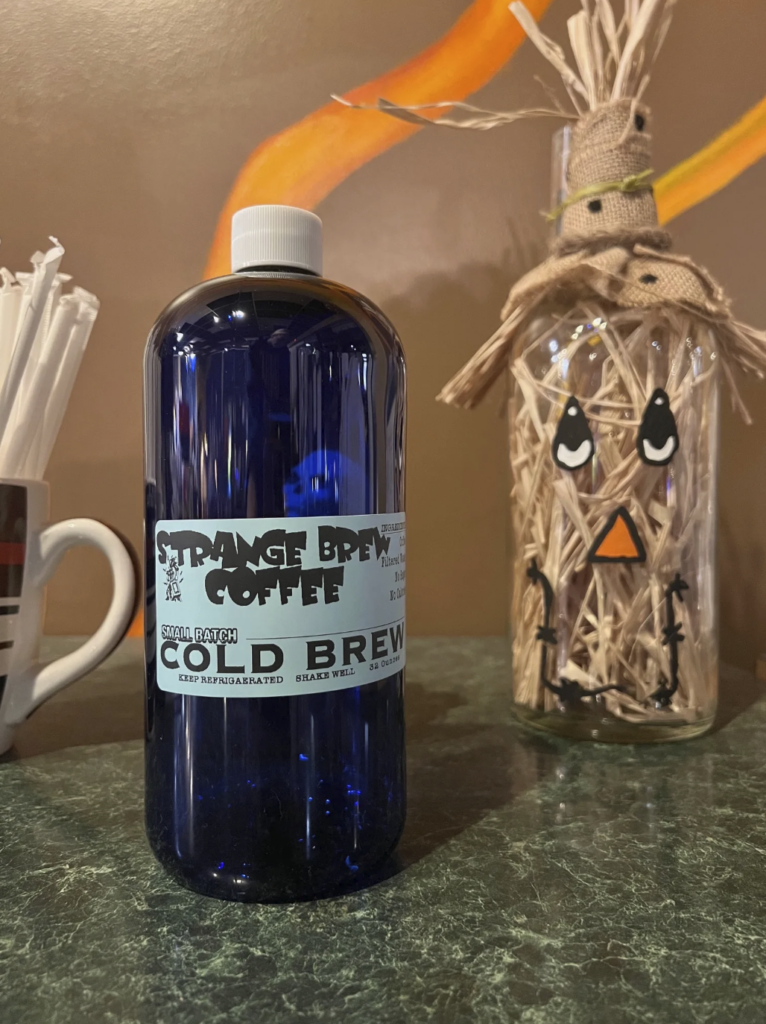
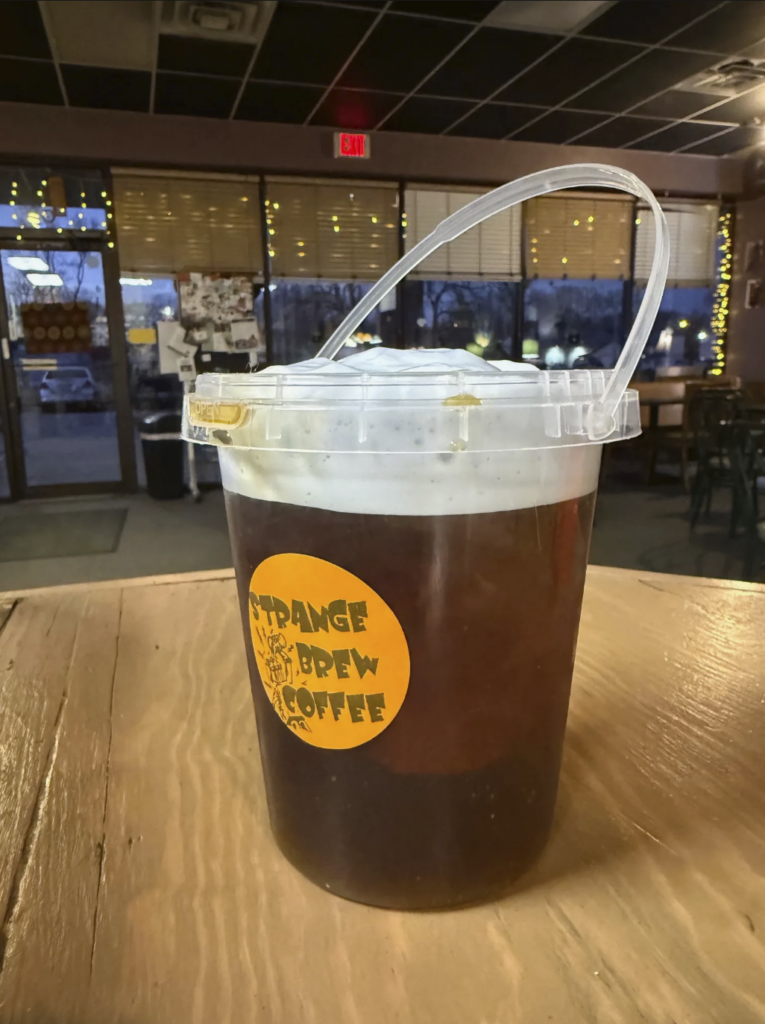
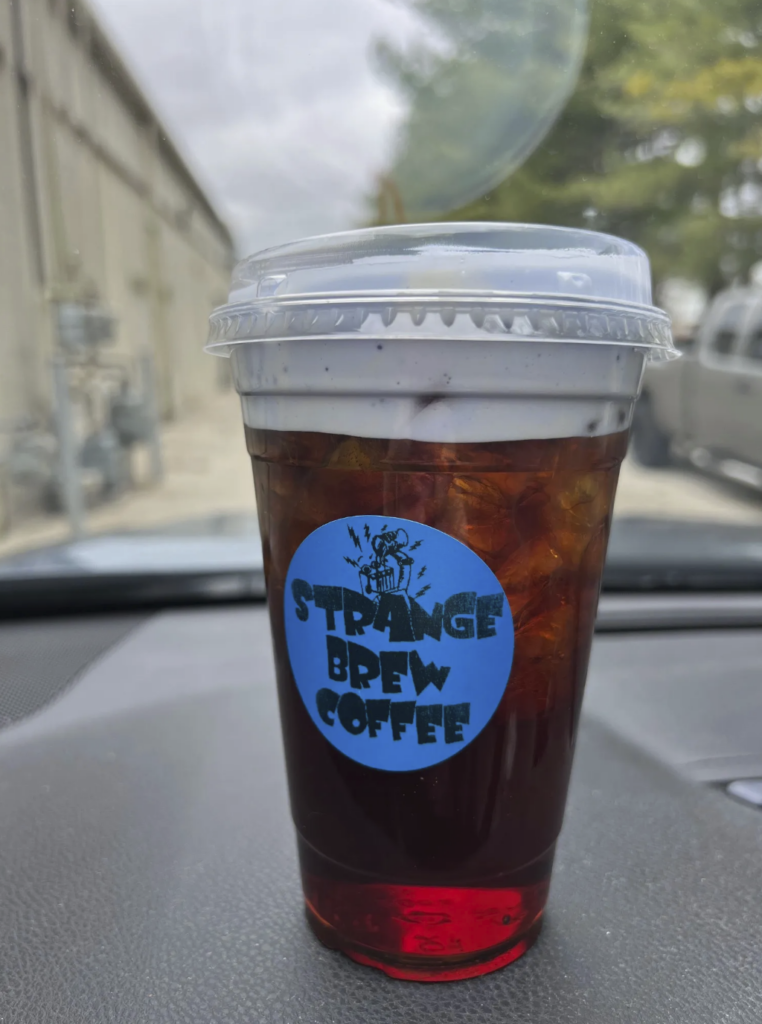
When Strange Brew Coffee in Greenwood, Indiana, first added cold brew to its menu in 2005, it sold roughly one per day. Today, the shop produces 60 to 80 gallons each week to keep up with demand, brewing on a Toddy system. Cold brew has become a cornerstone of the shop: Strange Brew uses it to showcase different kinds of coffee, sell growlers that go home with regulars, and offer seasonal cold foams that keep the menu moving throughout the year.
Cold brew has become a fixture in cafes across the country, with the global market valued at $3.87 billion in 2025. But how it’s brewed, built on, and worked into the rhythm of each shop varies widely.
Much of the reason for that variety is because cold brew isn’t one specific drink. “When we think about cold brew, a lot of people think about the end product, but it’s really just the method of brewing it,” says Katie Schertler, brand manager at Sunny Sky Products, which produces Upouria cold brew concentrates for cafes. “You can heat it up, serve it cold, or use it in frozen drinks.”
That flexibility means operators have room to experiment and build all kinds of drinks with cold brew. For example, cold brew’s perceived smoothness and lower acidity make it a good choice to pair with syrups or flavorings. In turn, that lets operators experiment and play with layered, complex drinks.
Using cold brew as a blank canvas makes it easy for cafes to continuously create drinks that feel new and fresh, and which respond to the needs of a new generation of coffee drinkers. “Gen Z wants the experience of their drinks,” Schertler says. “They’re not drinking alcohol as much, but they’re looking for something that still feels elevated.”
Growth is also being propelled by platforms like Instagram and TikTok. “I think the rise of social media has led to a lot more people ordering signature drinks and seasonal beverages than would have before,” says Joel Norman, co-founder of Bellwood Coffee in Atlanta. His team has leaned into that shift, rotating cold brew drinks throughout the year to keep regulars engaged and give occasional visitors something new to try.
Norman isn’t the only one capitalizing on the opportunities that cold brew brings. Operators across the country are finding new ways to work with cold brew, transforming a drink that barely registered on menus two decades ago into one that’s reaching an entirely new customer base.
When Cold Brew Becomes Soda
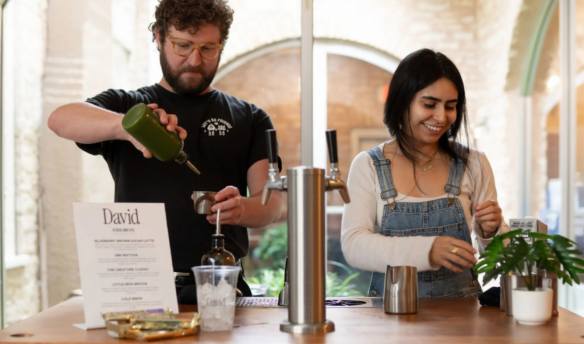
Norman runs Bellwood, a roastery with six shops, alongside his brother, Charles. At the shops, patrons can order straight-up cold brew or one of a rotating lineup of cold brew sodas.
The soda format came out of a problem the two brothers wanted to solve. Espresso tonics—a popular menu item at other coffee shops, which are usually made with a shot of espresso, tonic water, and occasionally other flavors or syrups—never quite worked for Bellwood. Norman explains that the carbon dioxide in espresso interacts with the carbonation in tonic water, producing a metallic edge that requires constant flavor-masking, often by adding other ingredients like syrup to balance it out.
Cold brew didn’t have the same issue. “There’s not a lot of acidity or CO2, so there’s nothing to really fight against the carbonation in the soda,” Norman says. So they began testing soda-based drinks built from cold brew instead.
The drinks start with a cold brew base that’s reduced into a syrup, then served with Topo Chico as the soda component. The result is a carbonated drink that carries the flavor of coffee without the heaviness.
The drinks have been part of the menu at Bellwood for two years and rotate seasonally. Norman says the format has translated well across variations. “It’s been excellent. Easy to make, easy to batch, really easy to drink,” he says. Recent versions have included a mojito-style soda with lime, a cherry cola variation, and an orange grapefruit build for summer.
Making cold brew into a concentrate can unlock different ways to play with the drink, says Schertler. She notes that products like Sunny Sky’s Upouria line of concentrates have become more popular with cafes that want to simplify production without sacrificing menu variety.
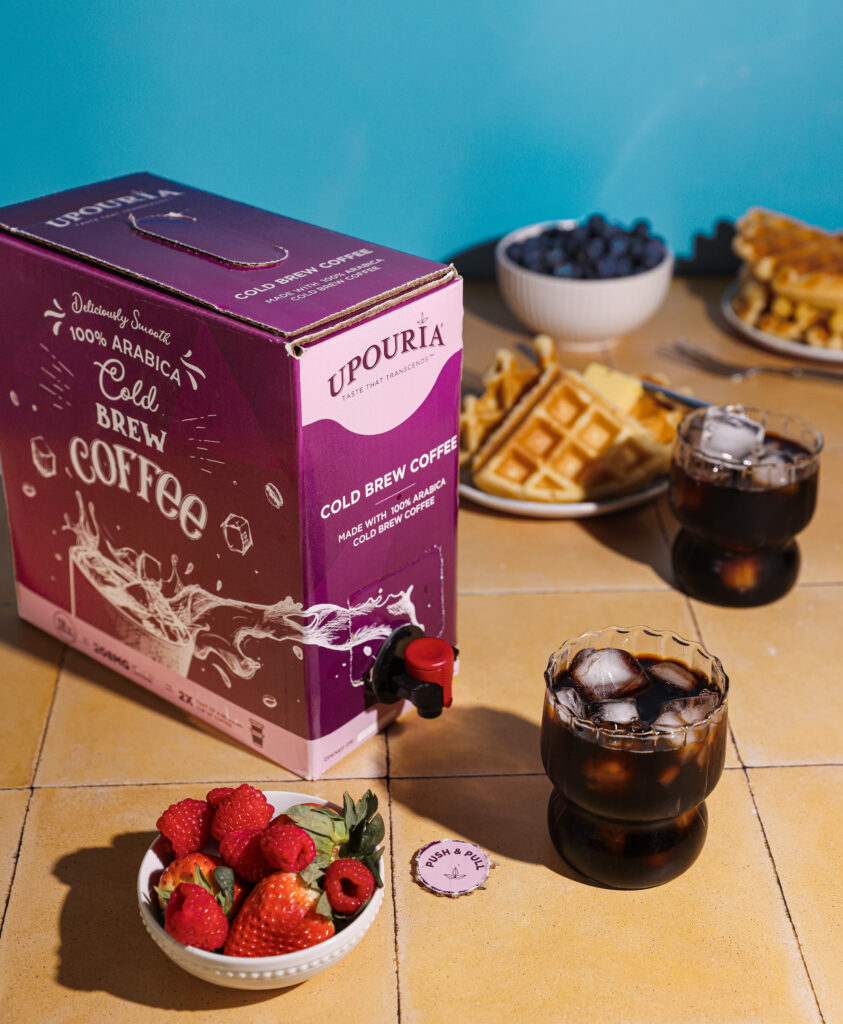
Cold brew concentrate is a more condensed form of cold brew that operators dilute and use across drinks. Sunny Sky’s Upouria line is shelf-stable and comes in bag-in-box packaging, which takes up less space and lets teams build drinks on demand rather than brewing everything themselves.
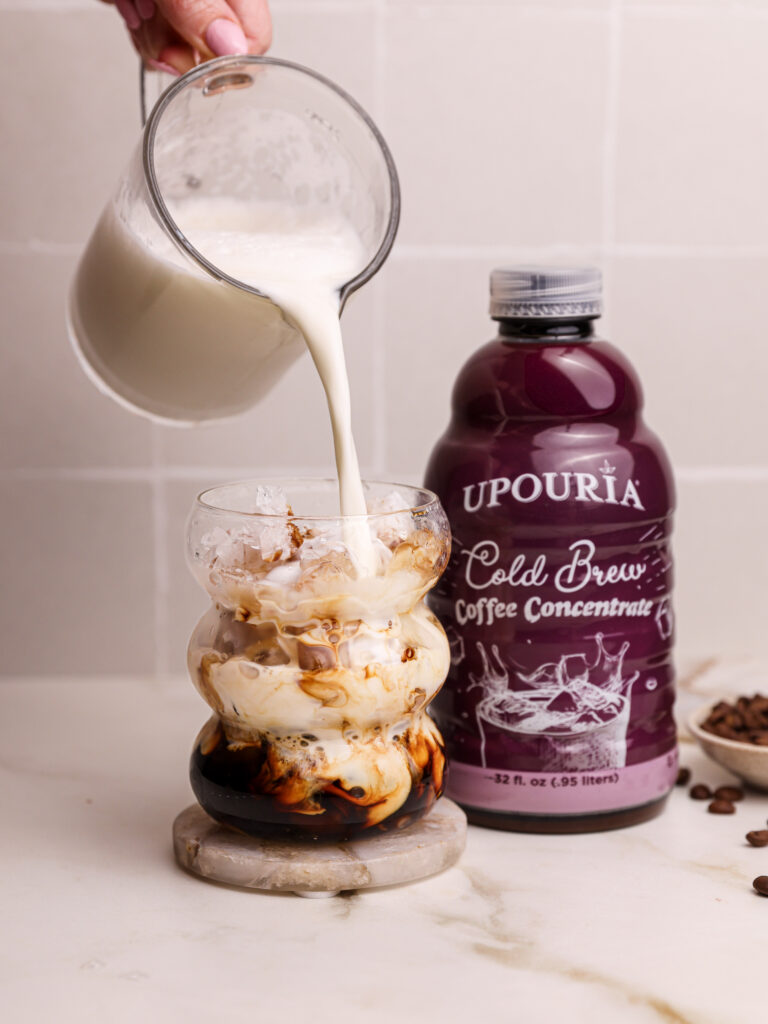
The concentrates can also be made with a roaster’s own beans or blends, so cafes can keep their house flavor profile while shifting some of the production work out of the shop. Because cold brew tends to be smoother and less bitter, it also changes how drinks come together. “When you’re using flavored creamers or syrups, you can actually use less of those products because they’re not competing with the bitterness of traditionally roasted coffee,” Schertler says.
Sodas aren’t the only way Bellwood has found success with cold brew. The business started as a coffee cart in 2019, and at the time, the brothers developed a cold brew horchata named after Ezra Koenig of Vampire Weekend. The band’s song, “Horchata” was one of their favorites.
After launching the drink, they packaged some up with dry ice and sent it to Koenig, who responded favorably. The drink, a cinnamon oat milk cold brew, has been on the menu since 2020. Last year, across Bellwood’s six locations, it sold roughly 12,000 units.
Cold brew is doing numbers across the board. In 2025, the brand sold 16,700 cold brews and 6,000 cold brew sodas, compared to 20,500 drip coffees. For years, says Norman, “drip was by far our number-one seller, and lattes were close seconds and thirds.” But now, the cold brew categories nearly match drip coffee cup for cup.
A System Built Around Cold Brew
Motor City Cup Co. a shop in Detroit, is built around cold brew. Owner Denise Murray says she developed the mobile coffee cart after more than a decade in high-volume coffee environments. She noticed traditional espresso often slowed service—pulling shot after shot—especially at events. “I wanted to create something that still feels premium but removes those limitations,” she says. “Cold brew gives me a lot of flexibility.”
Murray produces a cold brew concentrate for the events she serves, scaling each batch to match attendance numbers. She keeps the menu tight so every drink can be executed quickly. On-site prep is minimal by design. “It allows me to offer variety without slowing down service or overcomplicating the setup,” she says.
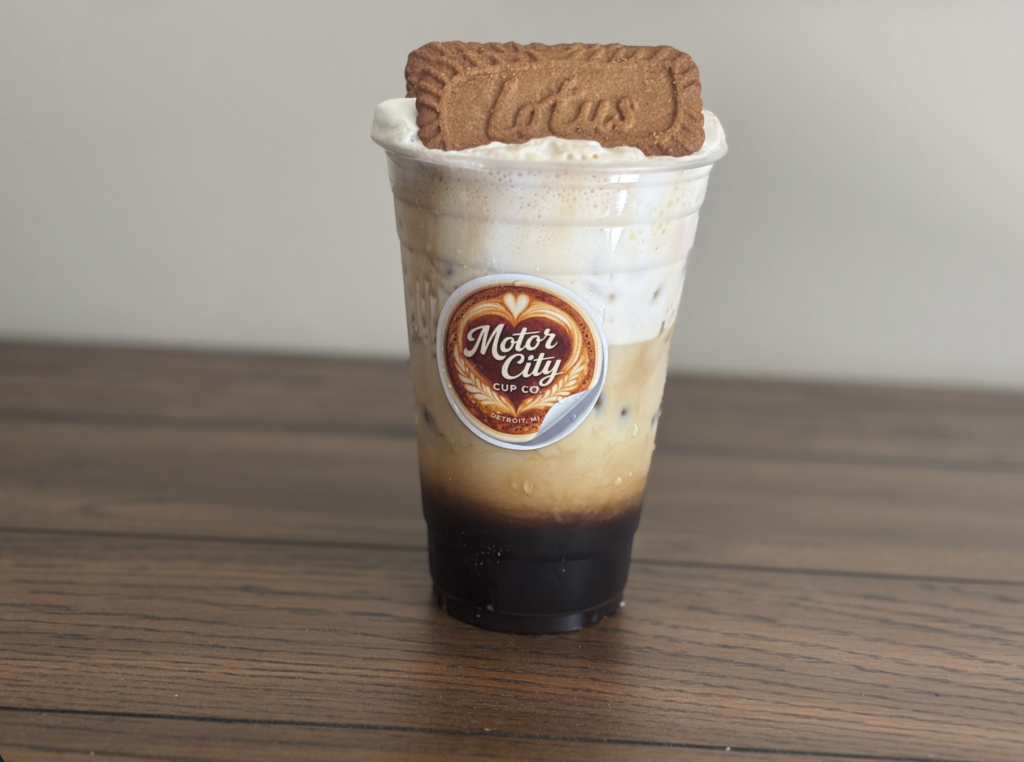
Murray says the structure also matters for the bottom line. “That efficiency really drives both speed and profitability,” she says. Batching reduces waste and labor, while drinks like her pistachio cream cold brew can be priced higher without having to buy a lot of extra ingredients.
Top performers, like the honey cinnamon cold brew and hibiscus refreshers, tend to stand out visually, which matters in event settings where customers are making quick decisions. “Keeping things simple, consistent, and fast will always outperform trying to offer too much,” Murray says.
But cold brew’s versatility doesn’t just work in event contexts. Back at Strange Brew, cold brew is part of how the shop builds ongoing relationships with regulars. The shop offers cold brew growlers that people can take home. “We show them what beans we use and help them learn how to successfully recreate their favorite drinks at home,” says owner Toni Carr.
Strange Brew has three different kinds of cold brew in rotation at a time, swapping in different coffees for each batch, including both single-origin coffees and dark roast blends. Seasonal cold foams change throughout the year, with strawberry and ube around Valentine’s Day and pumpkin with brown sugar cinnamon in the fall. “We often get our customers excited by pairing different cold brews with a new cold foam,” Carr says.
Rethinking What Cold Brew Can Do
When Village Perks in Seven Mile, Ohio, first opened, it was able to get away with brewing small batches of cold brew. Now, the shop goes through between five and 10 pounds of beans a week for its cold brew, driven in part by how broadly the drink is used across the menu.
For a recent spring menu item, the team infused cold brew with orange peels during the 20-hour brewing process, then steeped the finished coffee with fresh orange slices before topping it with a vanilla bean-orange zest cold foam.
For a chocolate and bourbon festival, Village Perks brewed cold brew with macerated cherries during the brew, then layered in chocolate and a zero-proof spirit to build a more dessert-style drink. “We try to use [cold brew] in as many creative ways as we can, and challenge ourselves to adapt it to non-traditional uses,” says operations manager Angela Stevenson.
Cold brew shows up across the menu, beyond seasonal drinks. It’s used in milkshakes, coffee sodas, iced cafe au laits, and shareable options like cold brew buckets. Taken together, these cold brew variations account for roughly 10–15% of the shop’s yearly sales.
Stevenson says that kind of flexibility is what keeps things interesting. “Don’t be afraid to try weird combinations or take risks on different flavors,” she says. “The unexpected and non-traditional can often turn out really amazing.”
Cover photo by Ánh Đặng

Sponsored by UPOURIA by Sunny Sky Products
UPOURIA helps cafes keep up with summer drink trends without the headache. Their ready-to-serve cold brew concentrates, flavored syrups, and creamers let you quickly craft everything from viral strawberry matcha lattes to coffee mocktails—all while keeping consistency high and prep time low. Perfect for busy cafes looking to innovate without the extra labor.