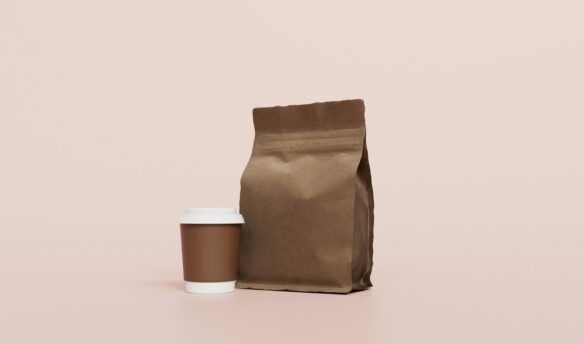
Picture a bag of specialty coffee. It likely displays a wealth of information, including the coffee’s origin country (Colombia, Uganda), the processing method (natural, washed), growing altitude, roast level (from light to dark), and tasting notes (like caramel, blackberry, or rose).
In some cases, you might also find a Q grade, a number between 0–100. That number is evaluative, usually determined by people tasting the coffee and ascribing value to attributes like aroma, acidity, body, and defects. Coffees deemed specialty score between 80 and 100 points, though the majority fall within the 80-to-90 range.
For a long time, roasters have used these numbers, often referred to as cupping scores, as a framework for sourcing coffee. But pricing volatility, geopolitical pressures, and climate instability have had major impacts on sourcing in recent years—and are forcing roasters to rethink how they evaluate quality as a result.
“We found ourselves searching for coffees that would allow us to maintain our portfolio structure and price positioning, while still protecting the flavor profiles our customers expect,” María Esther Thome-López, co-founder of Coffee Flock (a South Florida-based coffee education and training hub) writes in an email. For Coffee Flock, that meant “reformulating blends, exploring new origins, or adjusting purchasing strategies.”
As prized coffee species, especially arabica varietals, become harder to produce, we should ask whether traditional cupping scores are still the most relevant or useful way to approach coffee sourcing. Amid economic pressures, issues of market alignment, and equity, the coffee industry is overdue a conversation about re-defining quality.
What’s in a Number?
For decades, the 100-point evaluation system has enabled roasters to source green coffee using a clear set of criteria. These scores are primarily determined by Q Graders, like Thome-López, who are trained to evaluate coffee given a strict set of parameters. Before 2023, those parameters aligned with the Specialty Coffee Association (SCA)’s cupping standards. That year, however, the SCA launched the Coffee Value Assessment (CVA), an updated set of cupping protocols that the trade organization co-developed with the coffee industry, scientists, and researchers.
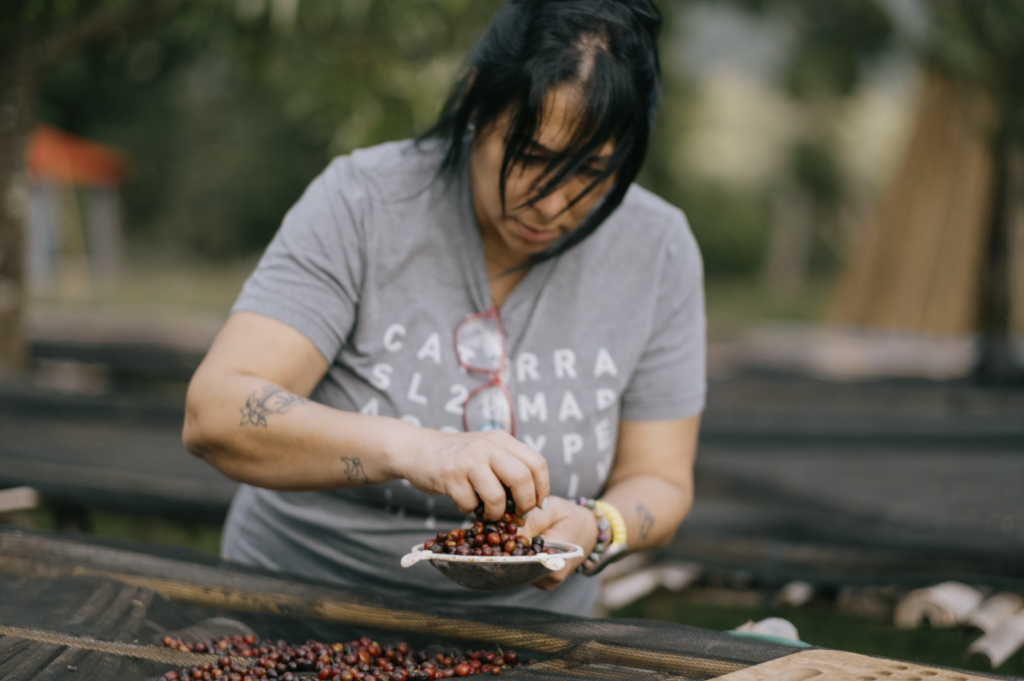
Because it’s used as an evaluative tool, a coffee score can become a signal of quality, which is why some roasters choose to put it on their bags. “I think point scores on retail bags are intended to communicate quality in a simple, recognizable way,” Thome-López says.
However, without additional context, this practice can set unclear expectations among consumers. “The score is a professional reference tool, not a universal guarantee of experience,” Thome-López says. “It cannot predict how any individual will experience [a coffee] in the cup.”
For one thing, research suggests that expert assessments of coffee’s sensory characteristics often don’t correlate with consumer preferences. Whereas some roasters specialize in micro-lots scoring 90+, this coffee can be rare and expensive, and not necessarily for everyday drinking. Many consumers prefer brews within the 80-point range, for reasons that go beyond the number.
What’s more, scoring differences between 80-90-point-coffees don’t align with linear shifts in quality in the ways we might expect, says Thome-López. In other words, an 84-point coffee isn’t necessarily of lower quality than an 87.
Rather, “The difference is rarely about the presence or absence of positive attributes. It is about structure, precision, and complexity,” she says. It’s less like “comparing defective coffee to flawless coffee [and more like] comparing degrees of refinement and complexity.”
Thome-López, who is also an SCA trainer, explains how she views the differences among three coffees that score in that mid-80s range:
An 82-point coffee may be clean but simple, with fewer identifiable flavors, a shorter finish, and more linear expression. While the coffee can be sweet and balanced, “it doesn’t evolve much in the cup,” says Thome-López. “It gives you what it has, but without depth.”
An 84-point coffee has more clear flavor attributes. “You can articulate flavors more easily,” Thome-López says. “The coffee feels more intentional.”
Meanwhile, an 87-point coffee has higher aromatic intensity, greater complexity, clearer attributes, and a longer, more refined finish, says Thome-López. “The cup reveals much more.”
Simply put, an 82-point coffee isn’t of lower quality, but differs in structure and complexity from an 87-point coffee. The difference could be that one coffee offers sweetness and another has more precise notes of brown sugar and blueberries.
Scores As Scaffolding
Shanita Nicholas, co-founder of Sip & Sonder in California, had to learn to distinguish nuances in coffee the hard way. A chemical engineer by training, Nicholas worked as Sip & Sonder’s head roaster between 2017–2026. It was her first time roasting—and sourcing—green coffee.
She’d start by looking at importers’ websites and reading the information they made available online. “At the beginning, we were translating information that we received from other people, like the importers’ thoughts on the coffee,” says Nicholas.
Initially, she found sourcing and quality assurance to be a significant learning curve. “Starting a company and learning how to make coffee, how to bring a team together, how to roast and manufacture … that’s a lot before you finally get to, ‘Okay, I see how this works,’” she laughs. “When we opened the cafes, it was like, ‘I don’t know everything about the machines, but if I get one that people say is really good, and I bring in some good people, I can at least make a decent cup of coffee.’ And that idea translated into sourcing.”
Initially, Nicholas set Sip & Sonder’s minimum sourcing threshold at 84 points, which struck her as a reasonable metric for good coffee. Looking back, however, Nicholas now says she could have sourced coffees below 84 points. Still, her initial benchmark served a purpose—this threshold represented expressive coffees that remained accessible for customers. “I identified these coffees as meeting our price point (premium but accessible), taste (balanced with accessible complexity), and story (single-origin coffees with accessible transparency),” she writes in a follow-up email.
Over time, Nicholas built more confidence and underwent the Q Grader certification. This year, she founded Quantum Seeds LLC, a platform that aims to connect coffee producers directly with global buyers. Her goal is to keep more value at origin; for example, by enabling coffee businesses to source coffee that is roasted in the same country where it’s produced. This venture grew out of the shifts in Nicholas’ approach to sourcing. As she continued to go on origin trips, she would gather farmers’ impressions of their coffee and use those insights to write consumer-facing descriptors for Sip & Sonder’s coffee.
Not only did this approach bring producers’ expertise closer to consumers, but Nicholas also found that it connected in a different way than including cupping scores on the packaging. When talking with customers, “We talk less about the score and more about what we’re tasting and how we’re making those decisions,” she says.
The Many Dimensions of Coffee
The shift from the old SCA cupping form to the CVA evoked a spectrum of reactions among coffee professionals, from surprise to confusion and frustration to hope. But Thome-López sees the new protocol as more inclusive, because it acknowledges that “taste and quality are not universal absolutes but vary with culture, experience, and commercial context,” she says.
She saw this firsthand when she helped build a specialty program for a cafe in Buenos Aires, Argentina. Coffees that “scored highly” didn’t necessarily translate for consumers. “I quickly learned that what resonated there was very different from […] Venezuela or other markets. A coffee that scored well technically could still feel out of place if it did not match local tastes or brewing expectations,” she says.
But whether Thome-López is wearing her consultant hat or that of Coffee Flock’s head roaster and director of education, her sourcing philosophy has the same starting point. “For me, what matters […] is the internal quality architecture of the company: the calibration system, sourcing criteria, roast philosophy, and portfolio strategy. As roasters, we have to clearly define what quality means for our brand, and we don’t start with ‘What is the score?’ We start with ‘What do we need?’”
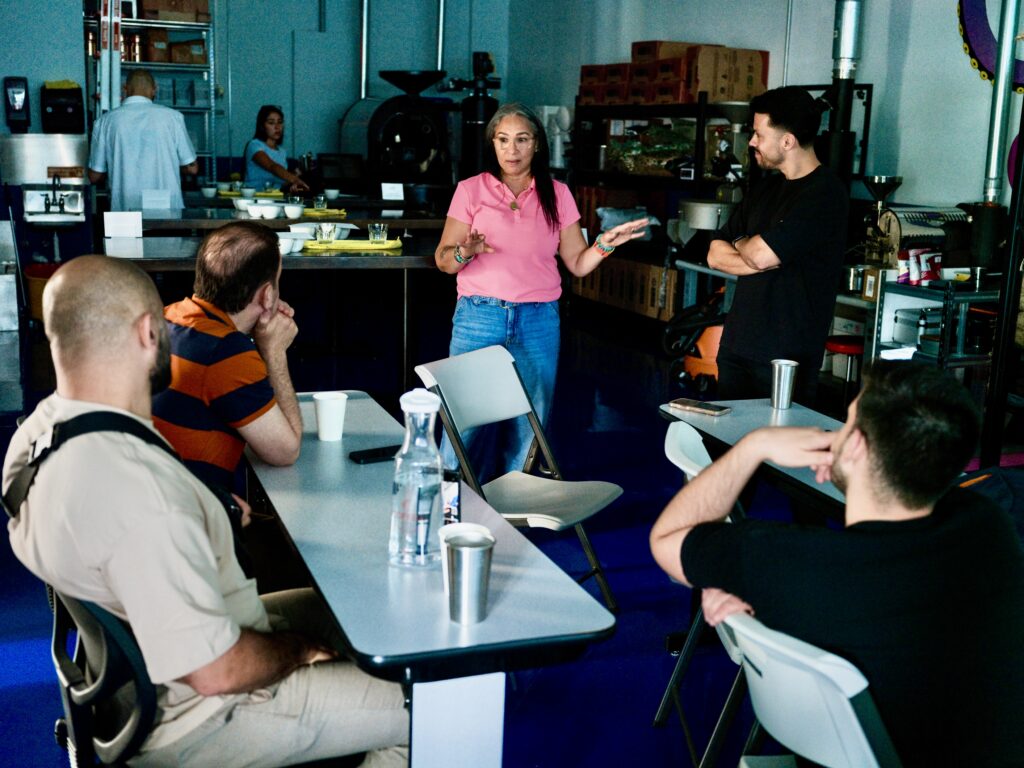
When it comes to Q grading, a coffee’s score has a direct impact on what producers can sell it for, whether or not that reflects the work that goes into the coffee.
“Coffee is ultimately an agricultural product shaped by people, ecosystems, risk, and uncertainty,” says Thome-López. “A score without context can be misleading. A price without context can be unfair. A flavor description without context can be incomplete.”
Roasters both experience these pressures and create them. In order to stay in business today, says Thome-López, roasters must find “internal clarity” between three elements of their operation: their sensory evaluations, their target market, and their company’s positioning and budget.
“I use the Q score as one layer of information, not as a proxy for quality itself,” she says. “Ultimately, quality is not a number. It is alignment.”