Robusta, the most well-known variety of Coffea canephora, has long been hailed as an answer to a warming climate. But an August 2026 publication in Sustainable Development has reignited debate after the authors wrote, “Climate resiliency claims for farmed robusta are misguided.”
After reviewing more than 50 studies on the impacts of climate change on coffee, authors Aaron P. Davis, Akshay Dashrath, and Justin Moat conclude that while robusta is more heat-tolerant than Arabica, it is vulnerable to drought and not as heat-tolerant as previously thought.
Lead author Dr. Davis, an influential botanist in the coffee sphere, said of the paper: “I found it troubling that people […] were advocating robusta as the savior of the coffee sector under climate change.”
In the aftermath, media response included coverage from publications like Reuters, Sprudge, and of course, Fresh Cup Magazine. While Barista Magazine Online cautioned the industry not to abandon robusta production on these grounds, most headlines emphasized “concerns” about robusta alongside Dr. Davis’s statement that robusta’s resilience is “an internet myth.” On our Instagram post, which noted the paper’s conclusion that perception of robusta’s resilience “is not supported by scientific evidence,” commenters shared sentiments like “What a surprise” and “Surprise surprise.”
Although Lukas Harbig found many of the paper’s findings valuable, he was surprised both by Dr. Davis’s comments and the media’s framing, he says in an email interview. Harbig is an international Cup of Excellence judge and co-founder of both German green coffee importer cumpa and the event and educational program Canephorum.
Harbig hopes to challenge widespread backlash against robusta, which he says reflects “black and white thinking.”
“The paper rightfully identifies critical challenges around Canephora: drought intolerance, water availability, fertilizer use, and the sustainability of high-input production systems,” Harbig says.


At the same time, he and other Coffea canephora advocates, like widely cited coffee scientist Dr. Fábio M. DaMatta, point to a lack of nuance in the discussion about climate resilience and suitability.
In their view, media coverage following the Davis paper’s publication promoted a narrow definition of resilience, which they say requires cultivating a wide variety of coffees. They also say the headlines oversimplified the findings on robusta’s water needs and prioritized environmental sustainability over farmers’ financial stability.
“A narrative that promotes diversity and critical thinking shouldn’t be about ‘resilient’ versus ‘not resilient,’” Harbig says. “And it shouldn’t reduce Canephora to robusta.”
What the Media Coverage Missed
Dr. DaMatta, a full professor of plant physiology at the Universidade Federal de Viçosa, addresses the dominant narrative in a response penned for Espresso Magazine, a Brazilian publication. “Robusta does not offer a universal guarantee against climate change. No cultivated species offers this,” he writes. Fresh Cup has used Google Translate to translate his words from Brazilian Portuguese.
He argues that the Davis paper simplified the difference between heat tolerance and drought tolerance, which are “distinct characteristics” that the public can easily misinterpret as an overall lack of resilience.
According to Canephora cultivation data from the Brazilian state of Rondônia, trees produced significant yields—120 bags per hectare, versus an average 28.9 bags per hectare for Arabica and conilón, a Canephora varietal, across Brazil—during the 2023-2024 harvest season. This is “particularly notable,” DaMatta writes, because the season was marked by drought-like conditions, including temperatures well above regional averages—over 28° Celsius (82.4° Fahrenheit) versus 25-26°C (77-78.8°F)—and long stretches of low rainfall. Yields held in the 2024-2025 harvest.
What works in Brazil, however, may not hold in Vietnam. For example, Kath et al. (2020) shows robusta is more productive at lower temperatures than DaMatta saw in Rondônia. It may also not hold across all Brazilian states or Canephora varieties, which is why DaMatta cautions against transforming “regional estimates […] into a universal baseline” without considering specific coffee plant genetics.
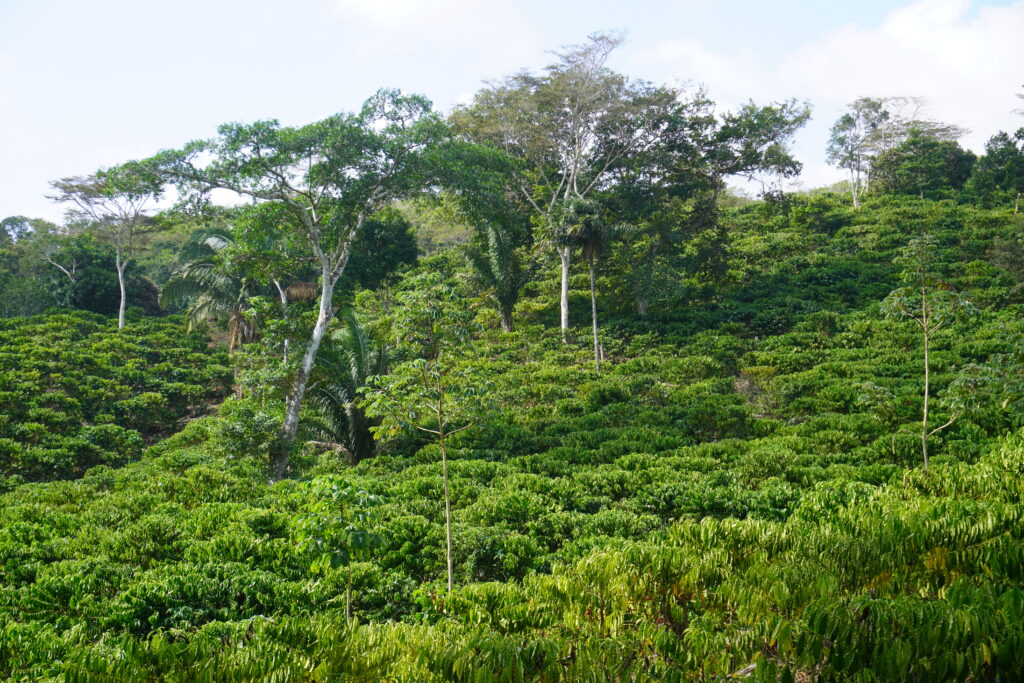
“Davis et al., 2026 has numerous merits in pointing out risks associated with water scarcity, unplanned expansion, and the limitations of forecasting models. We agree with these warnings,” writes Dr. DaMatta. “They do not, however, support a broad disqualification of the ability of robusta to produce in hot environments.”
For Harbig, the binary “resilient/not resilient” framing of Dr. Davis’s comments to Reuters is problematic. “Davis challenges one robusta simplification, but risks creating the next one […] even though his own solutions are anything but binary,” Harbig says.
Davis Responds
Reached by email, Dr. Davis stood by his statements but acknowledged how his words were used. “‘Resilience’ is multifaceted,” he wrote, adding that the “internet myth” framing was Reuters’ editorial decision. “During an interview a lot of ground is covered; perhaps 5-10% is used. […] [M]edia articles typically include just a small part of the interview, leaving out the nuances. It’s quite clear that many reactions were made on the press coverage rather than the science article itself.”
Dr. Davis also urged people to go beyond the press and social media coverage and read the open-access paper directly. “Researchers [can] make mistakes or miss things, but as long as the research is repeatable and falsifiable, science and our understanding of the world can move forward, hopefully for the benefit of everyone.”
In the paper’s conclusion, the authors do encourage the coffee industry to cultivate diverse species (which could include other varieties of Canephora across different regions) without relying on robusta to “sustain […] global coffee production under climate change.” However, media response widely amplified the robusta-myth angle.
Water Demand and Coffee Productivity
One of the biggest flash points of the Davis paper debate centers on water resources.
The authors note that farmed robusta requires “substantial irrigation,” yet major robusta-producing countries like Brazil and Vietnam—which account for 65% of global robusta exports—have low soil water availability. “The relatively high soil moisture requirement of the species is a critical limiting factor in terms of where robusta can be farmed under rainfed conditions,” they write.
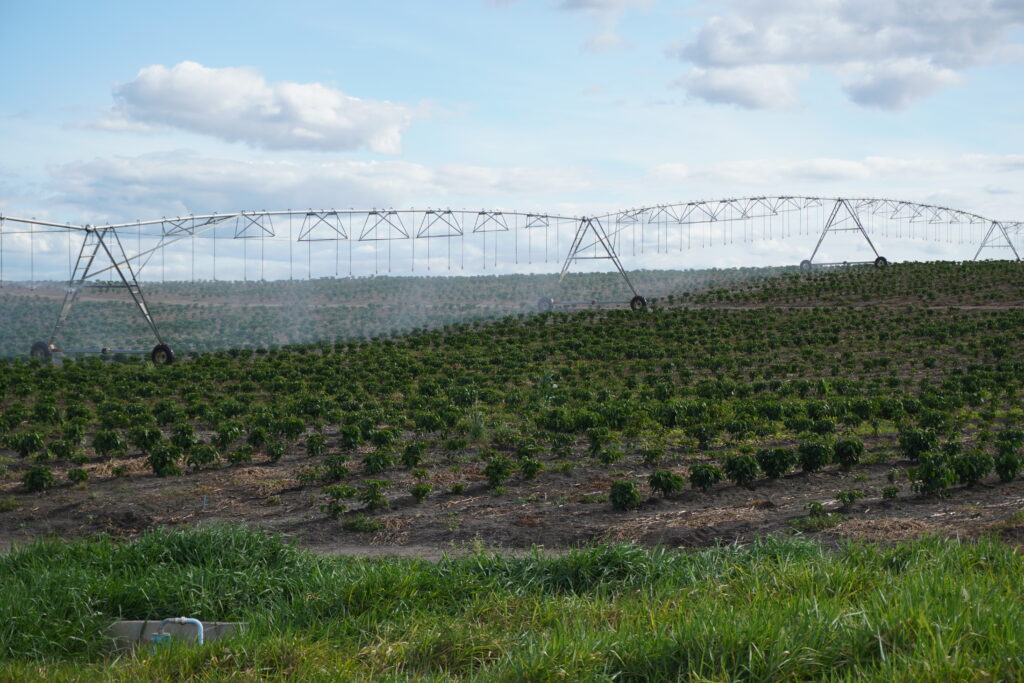
This, in combination with increased fertilizer use, leads the authors to conclude that robusta farming in these areas does not align with the coffee industry’s goals for environmental stewardship.
Dr. DaMatta writes that Canephora yields across the Brazilian Amazon vary based on average temperature and rainfall, leading some farmers to irrigate more than others, but this does not automatically make high water use wasteful.
According to his data, needing irrigation under heat stress isn’t necessarily a sign of poor thermal adaptation; it’s what sustains high productivity in those conditions. “A very productive crop can use more water per hectare and still produce more coffee per unit of water consumed,” he writes.
The Davis paper shows that in some regions, satisfactory robusta yields require quantities of water that can lead to long-term scarcity, which suggests other varieties are more suitable. But while the results may reveal vulnerabilities for certain Canephora varieties, DaMatta argues, they are not categorically true for “robusta.”
“Generalizing the vulnerabilities of [Canephora], without giving due weight to genetic diversity [of the species], management advances, and the realities of Brazilian coffee farming, is also an exaggeration,” he writes.
Sustainability: Who Gets a Say?
“Conservation is essential,” DaMatta writes, but he argues that the Davis paper takes too narrow a view of sustainability: “By emphasizing environmental sustainability, the author seems to relegate one of its essential dimensions to the background: the economic and social sustainability of the producer,” he writes.
Canephora is primarily grown across Africa and Asia, where most growers are smallholders, DaMatta explains. “They don’t grow coffee just to conserve natural resources. […] They grow it to support their families.”
While the Davis paper aims to improve coffee’s environmental odds, it only briefly addresses farmer profitability. In his email to Fresh Cup, Dr. Davis wrote, “One of the major issues is that farmers are being advised to grow coffees that suit the market but not their growing conditions. We have seen some terrible, and expensive, failures. The farmers are the ones that pay the price.”
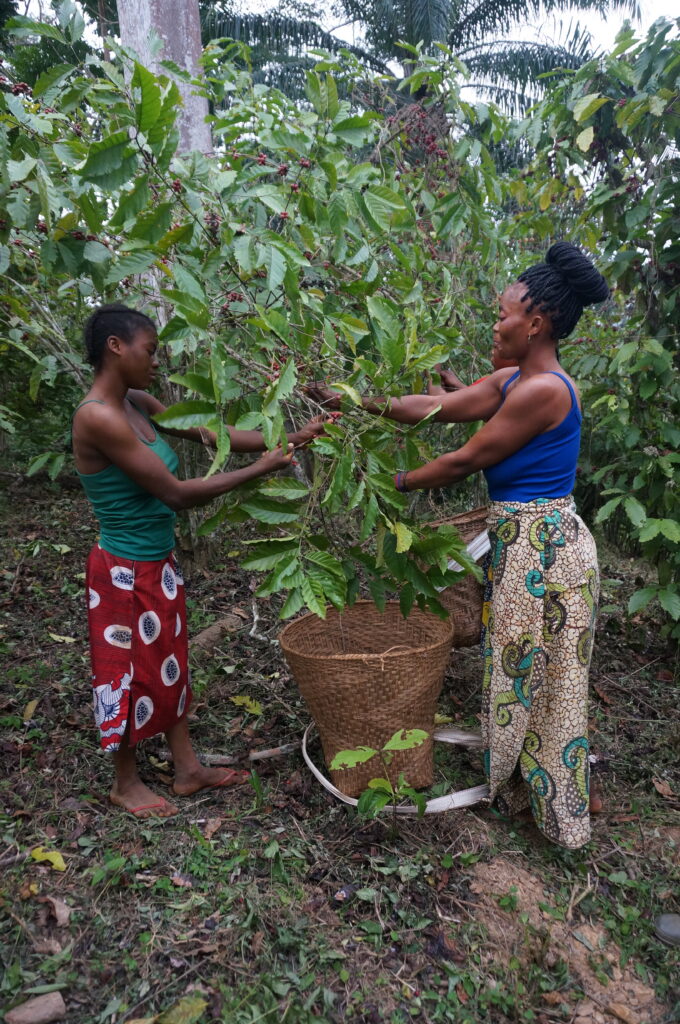
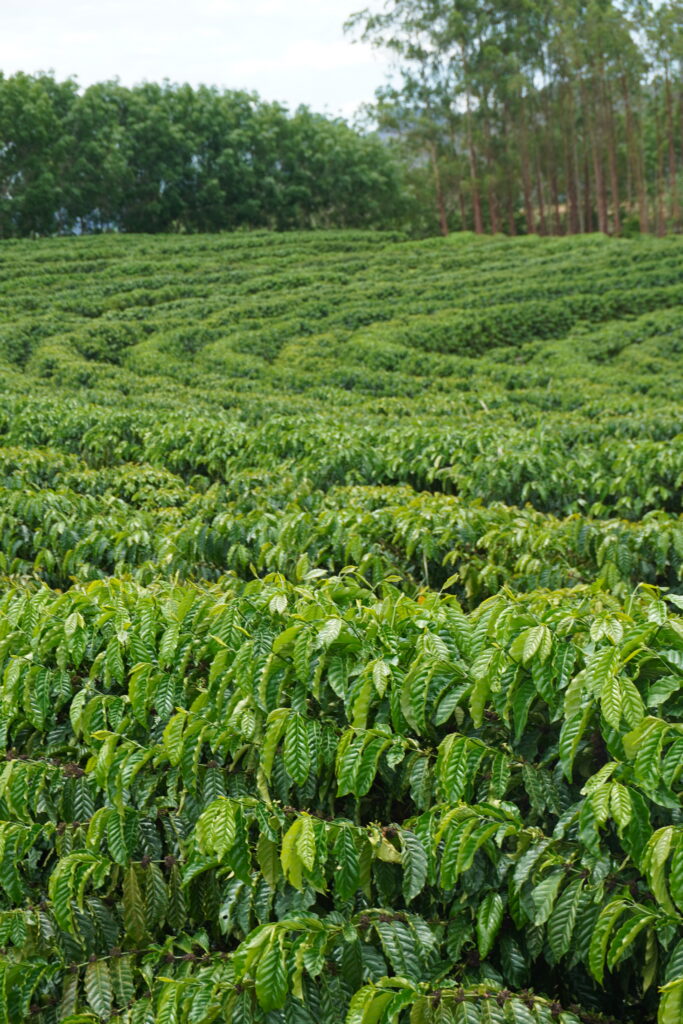
Industry interpretation of the robusta “myth” as portrayed could create uncertainty for coffee farmers, says Harbig, especially if it encourages a shift from Canephora to the next “sustainability silver-bullet,” like Liberica, a hardy coffee species once seen as the natural successor to Arabica. But those shifts wouldn’t bear fruit for years.
Today, many farmers are leaving coffee due to dwindling returns—which means addressing environmental concerns is not enough to ensure the future of coffee. “For an agricultural activity to be truly sustainable, it also needs to generate income,” DaMatta writes.
There are still gaps in the wider industry discussion regarding the power imbalance between coffee-producing and (predominantly) coffee-consuming countries, and how the paper’s conclusions may influence the top-down decisions affecting farmers—like what coffee varieties to prioritize or what constitutes sustainable water management.
To be clear, everyone wants a more sustainable coffee industry. Farmers themselves are among the biggest advocates for regenerative practices. But Harbig argues that consumer demand for coffee, not farming decisions, is what’s driven the industry to this point.
“Why shouldn’t farmers irrigate?” Harbig asks. “We irrigate corn, soy, rice, and wheat, but with coffee, it becomes unsustainable behavior?” (Studies comparing the water footprint of various agricultural products find that coffee is significantly more water-intensive than grains, but on par with olives, cocoa, and cinnamon, which have so far avoided similar press scrutiny.)
“Human intervention is what puts the ‘culture’ in agriculture,” Harbig adds. “Both Canephora and Arabica originate from forest ecosystems, [but] we expect coffee agriculture to supply billions of cups every day.”
From “Either/Or” to “Yes, And”
Today, robusta accounts for 43% of global coffee trade while Arabica makes up most of the remaining share. Robusta is mainly used in commodity blends, whereas the rise of “100% Arabica” labeling has created strong, marketable associations of the species with quality.
Such bias against robusta has overshadowed some of the paper’s less-sensational conclusions.
Recent headlines make it easy to assume the Davis paper suggests slowing robusta cultivation, rather than rethinking where it is cultivated. However, the authors acknowledge the climate suitability of any coffee species depends on the region.
“The development, or reinvigoration, of robusta in countries and regions with climate suitability aligned to [its requirements] has the potential to improve sustainability and increase production capacity,” they write.
Media focus on the robusta resilience “myth” also made it easy to miss the authors’ recommendation to pursue a diverse portfolio of coffee species, especially given the Inter-American Development Bank’s 2020 research suggesting rising temperatures may reduce suitable coffee-growing area by 50% by 2050.
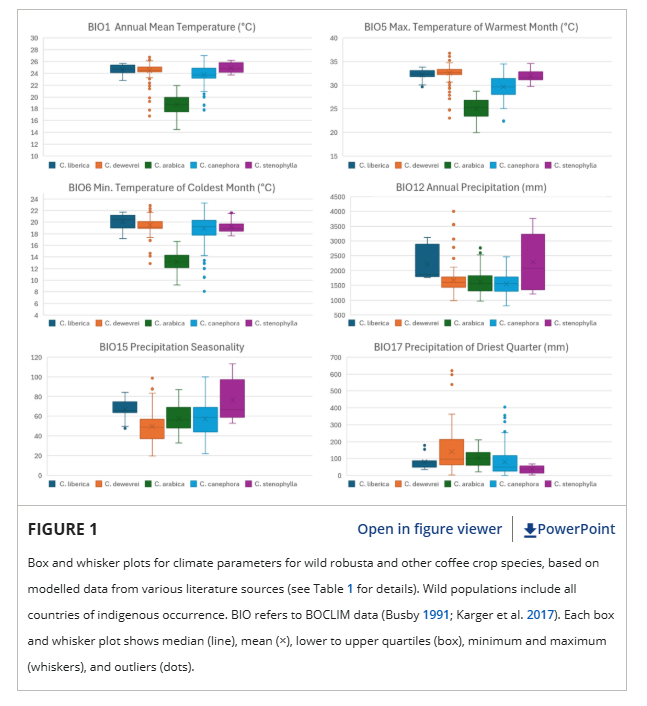
The paper provides a summary of climate parameters, including annual mean temperatures, for wild and cultivated Canephora and Arabica as well as lesser-known species like Liberica, Dewevrei, and Stenophylla, many of which Davis has researched in his career.
Harbig wishes this got more coverage. Without it, he worries that panic will drive the industry. “We end up in an ‘either/or’ world when what we really need is an ‘and’ world,” he says.
Resilience = Diversity
For years, coffee companies including Nguyen Coffee Supply, Nam Coffee, Naivo Coffee Company, and Black Baza Coffee have advocated for “Fine Robusta” to join the specialty fold. Nguyen Coffee Supply founder Sahra Nguyen has talked with Fresh Cup about the stark difference in perceptions of Arabica and robusta, and advocated for robusta as an inclusive gateway to more specialty coffee origins and flavors.
There has been progress. In 2025, the Coffee Quality Institute, a global non-profit working to improve coffee quality, shifted its communications from use of the term Q Robusta Grader to Q Canephora Grader. Canephora first got a flavor wheel in the same year.
In 2026, Cup of Excellence launched its first Best of Canephora competition in Brazil, which Canephorum celebrated. Conservation International, IDH, and Treevaluation also developed a new paper—announced September 21, 2026—pursuing a shared definition of coffee “resilience.” Together, these moves show that change is possible.
Ultimately, multiple things can be true. The Davis paper presented critical findings, and the media narrative fell short.
Harbig’s answer is to widen the lens, not narrow it.
“Explore Arabica. Explore Canephora. Explore Liberica. Explore Excelsa, Racemosa and Stenophylla. Breed hybrids,” he says. “We need to understand the strengths and weaknesses between all of them and build a coffee sector with more options rather than searching for the next winners and losers.”
Photos courtesy of cumpa Gmbh.