In November 1996, federal prosecutors in California brought charges against the owner of a Berkeley-based coffee company called Kona Kai Coffee. Prosecutors alleged that owner Michael Norton sold millions of dollars’ worth of coffee labeled as “Pure Kona Coffee” to companies including Starbucks. Due to high labor costs and rarity, Kona is one of the world’s most expensive coffee origins. Kona Kai’s beans, however, were sourced from Costa Rica and Panama, and resold at the higher Kona price.
Although Norton originally denied the charges—the Financial Times quoted his lawyer as saying, “Is all French bread baked in France?”—he eventually pled guilty to wire fraud and tax evasion. According to prosecutors, the scheme had been ongoing since at least the late 1980s, and had earned Norton more than $14 million, which they alleged he attempted to hide in a Swiss bank account.
In the years since, Hawaii has tried to crack down on coffee fraud. But counterfeiting has persisted, and Kona isn’t alone in facing ongoing problems. Coffee fraud can take many forms, from labeling one origin as another to bulking out ground coffee with grains or other foodstuffs.
Today, famous coffee origins and varieties, as well as well-known companies, are increasingly the target of counterfeiters. Certain coffee origins command higher prices, whether that’s because of a reputation for quality or simply through good branding. But how do you know if the coffee in that bag actually came from where it claims?
Profit Incentives
Food fraud has been a problem for thousands of years. The Babylonian king Hammurabi in ancient Mesopotamia created a code of law that punished sellers of diluted beer and wine. Roman traders sold wine sweetened with lead to mask the taste. In medieval Europe, people caught selling adulterated saffron could be executed.
Today, food fraud continues to be a global issue, one that governments and policymakers struggle to contain. The World Trade Organization (WTO) estimates that the annual value of worldwide food industry fraud is between $30–50 billion, although coming up with an exact number is difficult due to its obviously illicit nature.
Coffee is grown and consumed around the world, and the industry’s historically opaque supply chain offers plenty of opportunity for fraud. In 2024, the WTO published a report that examined the global scale of food fraud and the challenges related to tackling it. The report listed coffee among the most-targeted products, “with cheaper ingredients such as corn, soybeans or twigs often added. Mislabelling of origin or type of bean can also occur.”
Doaa Abdel-Motaal is a senior counsellor in the WTO’s Agriculture and Commodities Division, and wrote a chapter in the report on how to address illegal food trade and fraud. She says that data on coffee fraud specifically is scarce, but that so-called luxury products tend to be very attractive to fraudsters.
“There’s more incentive for fraud because of how much profit there is to be made from defrauding a consumer,” she says. “So alcoholic beverages, coffee, spices, olive oil, honey, and organic foods have been identified as being some of the main targets of fraud.”
Counterfeiting Coffee
There are many different kinds of coffee fraud. Sometimes coffee is smuggled across borders, because the price can differ widely between neighboring countries. Farmers and traders have historically brought coffee back and forth over the border between Kenya and Uganda, for example, depending on which country offers better prices at the time.
Coffee can also be bulked out with cheaper ingredients to cut costs and increase profits. This practice goes back a long way, to wartime rationing and coffee shortages, such as when the Union naval blockade of the port of New Orleans during the Civil War led to the popularization of chicory coffee. This type of activity still takes place today. In January 2026, Vietnamese police seized several tons of ground coffee that had been blended with soybeans, while rising grocery store prices in Brazil have also led to an increase in “fake” coffee products.
Sometimes well-known companies are targeted for counterfeiting. There have been multiple instances of authorities discovering people selling fake Nescafe products. In 2019, five people at a Chinese food company received prison sentences after being accused of selling counterfeit Starbucks coffee.
The simplest type of coffee fraud is when someone blends cheaper beans with more expensive coffee, or replaces it entirely with a less premium coffee. One of the worst-affected origins is Hawaii. Farmers in the famous Kona region only produce around 2.7 million pounds of coffee each year, and yet 20 million pounds are sold as authentic Kona. Something clearly doesn’t add up.
In 2019, hundreds of Hawaiian farmers filed a class-action lawsuit against a group of coffee roasters and some of the biggest U.S. grocery stores and online retailers, including Walmart, Amazon, and Kroger. According to the plaintiffs, lab testing of 19 different packaged coffees sold as “Kona” or “Kona blend” found the products contained zero or only trace amounts of actual Kona-grown coffee. Previous lawsuits have made similar claims.
The 2019 lawsuit eventually led to a series of settlements, which included financial compensation as well as new labeling requirements. “There are probably many, many more marketers of coffee who have misused geographic names in marketing, and this will be a disincentive,” the lead plaintiff, Kona farmer Bruce Corker, told the New York Times in 2024.
It’s not just Kona coffee that is susceptible to mislabeling. In November 2025, Willem Boot, a consultant and co-owner of the famous Finca Sophia coffee farm in Panama, accused two Taiwanese companies of “fraudulently selling coffee under the Finca Sophia name.” Boot claimed that Black Gold Coffee, and its sister brand Oklao Coffee Roasters, had sold coffee labeled as Finca Sophia over a number of years, despite never purchasing beans from the farm.
Black Gold and Oklao put the alleged mislabeling down to an “administrative error” and apologized. However, Taiwanese media reported that local authorities were investigating the case as potential fraud.
How To Combat Coffee Counterfeiting
If coffee label fraud is relatively common, is there any way to stop it? The WTO’s report proposed a number of strategies to counter illegal food trade and fraud, including “a blend of regulatory measures, enforcement, industry cooperation and consumer education.”
The United Nations’ Food and Agriculture Organization is also working on global guidelines for combatting international food fraud, although Abdel-Motaal says that there is still much disagreement over basic specs, like definitions. “Basically, they can’t agree whether, on the definition of food fraud in those guidelines, they will address economic fraud or also food safety fraud,” she says. While different jurisdictions have different rules and regulations around the issue, “it would be nice to have an international standard that would help producers collaborate across the supply chain.”
Coffee-growing countries are also trying different approaches to combatting the problem. In 2024, Hawaii passed a law that mandated any coffee sold as Kona had to contain at least 51% beans grown in the Kona. Previously, Kona-labeled blends could feature just 10% Kona coffee. “The percentage of Kona Coffee required for it to be labeled Kona should be 100%, but given that this is the first progress made on this in more than 30 years, it’s a huge win,” state Rep. Nicole Lowen, who introduced the bill, told SFGate.
The Kona lawsuits were helped, in part, by the use of chemical analysis. Researchers identified specific mineral compounds that distinguished Kona-grown coffee from other origins. “We were able to establish a fingerprint for Kona,” biologist James Ehleringer told the New York Times. Other approaches, such as the so-called “electronic nose,” can analyze volatile compounds in roasted coffee to pinpoint exactly where the beans were grown.
Some countries have embraced geographical indications (GIs) and trademarks as a protective measure. The World Intellectual Property Organization defines a GI as “a sign used on products that have a specific geographical origin and possess qualities or a reputation that are due to that origin.” Several countries, Colombia and Jamaica among them, have registered coffee-specific GIs. This means that coffee sold as “100% Colombian Coffee” or “Jamaica Blue Mountain” must come from those specific origins.
Trademarks and branding are another method of protection. Jamaica’s agricultural regulator owns the trademark for “Jamaica Blue Mountain,” while the state of Hawaii has registered a number of specific trademarks for its different growing regions. Farmers and exporters must apply, and pay a fee, to use the marks. In 2025, the Specialty Coffee Association of Panama sought to brand and trademark the term “Panama Geisha” in part as an attempt to combat counterfeiting.
Of course, none of these approaches will stop motivated fraudsters if enforcement is weak. “Geographical indications are good, but [not if] a fraudster can come along and use the same geographical indication without any consequence,” Abdel-Motaal says. “So it is really about enforcement. There are jurisdictions where there’s very little policing happening and very few avenues for recourse.”
At the same time, without collaboration from companies, there’s often not much authorities can do, she says. “What’s needed here is for the private sector to be very organized, to take measures to weed out fraud, to inform the regulator quickly when they see a problem, and to themselves control very tightly their own supply chains, in particular global ones.”
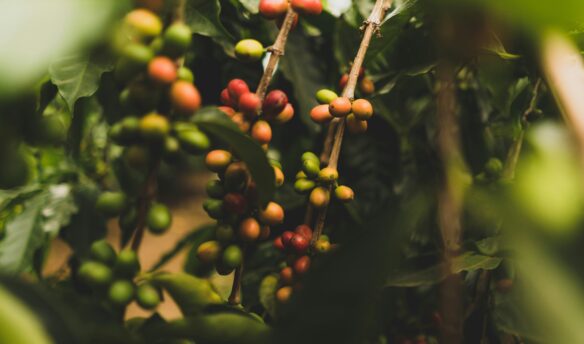
Photo by Point Normal on Unsplash