✉️ This story was featured in this week’s Coffee News Club
👋 Get the Coffee News Club newsletter in your inbox weekly—sign up.
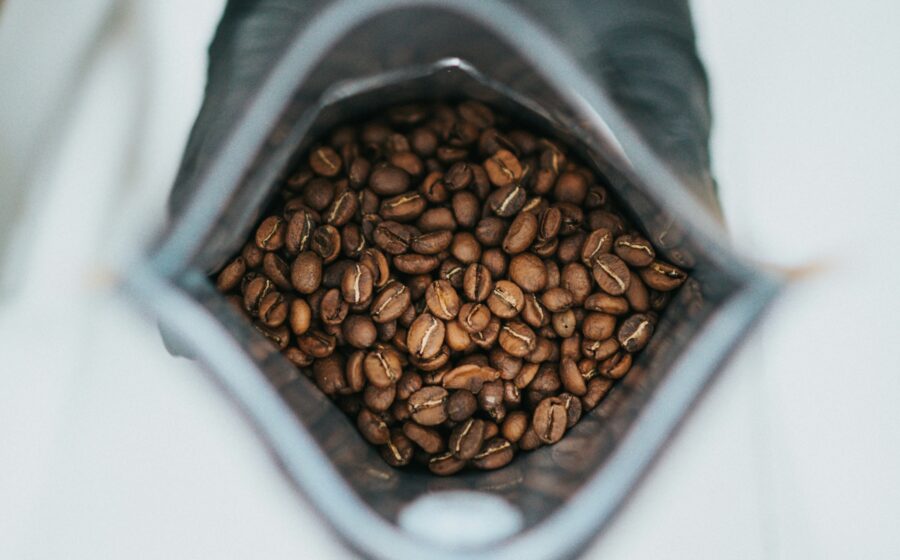
How can you tell where a coffee comes from? Traceability is an important and valued aspect of the industry. In most cases, a bag of coffee will include information about where it’s from, whether a 12 oz bag of roasted beans or a burlap sack of green coffee.
However, there have been several recent high-profile examples of a coffee being marketed as being from one country when it was from another. Just last September, we brought you news of coffees being sold from the coveted Kona region of Hawaii when the bags contained less than 10% of beans from the region.
What if there was a way to know for sure? Maybe there is.
A team of researchers from China and Singapore have developed a method that analyzes volatile compounds in roasted coffee to pinpoint exactly where the coffee was grown.
Over 1000 volatile organic compounds, or VOCs, have been identified in coffee, created during roasting and belonging to different chemical classes like phenols, alcohols, esters, and furans. Together, they contribute to coffee’s flavor and aroma—basically, various combinations are part of what you identify when one cup of coffee tastes different.
For the study, published in Food Chemistry, the researchers used various gas chromatography devices to analyze the volatile compounds in eight roasted coffee samples. They also used something called an electronic nose, which is a fun-sounding sensory device used to accurately detect aromas or flavors. (Sadly, they don’t look like the humanoid robotic noses we pictured when researching this; they’re just metal boxes with a hose attached.)
The researchers identified 12 key markers from hundreds of possible VOCs that could be used to pinpoint a coffee’s origin. Using this data, the team built predictive models to accurately identify which country each of the eight coffees came from.
The approach “provide[s] a foundation for the rapid identification of the origin of roasted coffee beans,” the authors wrote.
Their work builds on several recent studies using e-nose technology to assess coffee. In 2024, Taiwanese researchers developed an e-nose that also identified coffee by its aroma. Going back further, in 2009, Colombian researchers used an e-nose to detect defects in green coffee samples.