✉️ This story was featured in this week’s Coffee News Club
👋 Get the Coffee News Club newsletter in your inbox weekly—sign up.
Many coffee companies are now using generative AI chatbots for tasks like customer service and inventory management. One startup took it a step further and put an AI agent in charge of an entire coffee shop—with predictably mixed results.
San Francisco-based Andon Labs opened a cafe in Stockholm, Sweden, powered almost entirely by a Google Gemini-powered AI agent nicknamed “Mona.” Agents are generative AI programs that are capable of autonomously performing tasks. As James Brooks reports for the AP, Andon Labs funded the project with a budget of about $21,000 and gave the agent full control over the opening process. This included applying for permits, finding internet and electricity providers, and hiring staff.
There have been some… hiccups. According to an update from Andon, Mona invited potential hires to in-person interviews, which, of course, the chatbot couldn’t do. Mona also impersonated an Andon Labs employee to get an alcohol license. When told to stop, the chatbot did it again.
Mona also ordered 3,000 rubber gloves for its two employees, as well as canned tomatoes, which the cafe doesn’t use in any of its dishes. The chatbot messaged workers outside of working hours, which Brooks notes “is a workplace no-no in Sweden.”
Andon Labs bills itself as an “AI safety and research startup” that “stress-tests” AI agents in the real world. “AI will be a big part of society in the future, and therefore we want to make this experiment (to) see what ethical questions arise when we have AI that employs other people and runs a business,” said Andon Labs’ Hanna Petersson.
The company has run several of these real-world AI tests. It previously worked with Anthropic to deploy Claude AI to run a vending machine in the offices of the Wall Street Journal. WSJ journalist Joanna Stern described the result as “chaos.”
The AI chatbot gave away nearly all its inventory for free within a few days. “It ordered a live fish. It offered to buy stun guns, pepper spray, cigarettes and underwear. Profits collapsed. Newsroom morale soared,” Stern wrote.
After being open for two weeks, the Swedish cafe had brought in about $5,700 in sales, but spent more than $16,000 of its original $21,000 budget on startup costs.
Giving free rein to a chatbot raises ethical concerns, according to Emrah Karakaya, a professor at Stockholm’s KTH Royal Institute of Technology. Karakaya compared the experiment to “opening Pandora’s box,” and offered a hypothetical: who is to blame if a customer gets food poisoning?
Karayaka also pointed out that without human oversight, the little mistakes the AI agent makes can add up. “If you don’t have the required organizational infrastructure around it, and if you overlook these mistakes, it can cause harm to people, to society, to the environment, to business,” Karakaya said. “The question is, do we care about this negative impact?”
Read the full story on the AI coffee shop manager from the Associated Press here.
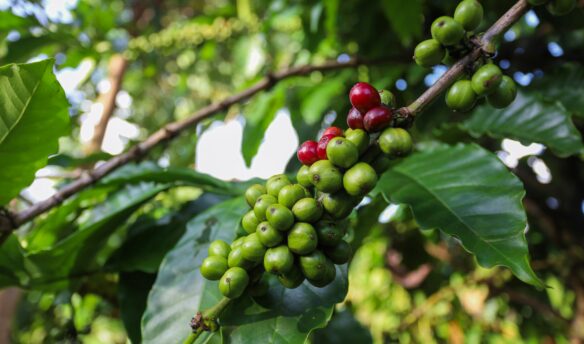
Photo by Van Tien Le on Unsplash