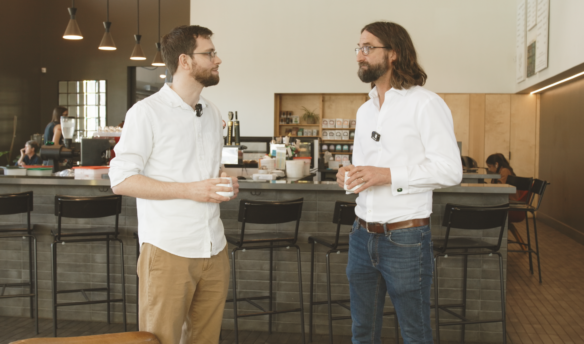
Josh Longsdorf hasn’t posted much on Instagram in years. Anthology Coffee, his shop in Detroit, has more than 16,000 followers. That audience was built up over the course of a decade—and he’s happy to leave it there. “We really just leave [our profile] up to post if we’re closed for a holiday,” he says. “Other than that, I don’t think it serves much of a purpose.”
Instagram wasn’t always an afterthought for the business. “We’ve had Instagram since 2011,” he says. “Back then, it was the era of filters, and it was just fun.” For years, Anthology invested in the platform, building a following through regular posts and videos. But when the team stopped prioritizing it, business didn’t slow down. Since stepping back from the platform, Anthology has actually grown faster—with more customers and stronger sales—than when it was actively posting.
For a lot of coffee shop owners, that’s a counterintuitive, or even disorienting, thing to hear. Instagram can seem like an obligation: Many shops feel pressure to stay active and churn out a constant stream of content. That’s become an increasingly laborious demand as the platform has shifted towards video in recent years, with Reels now accounting for more than half of the time people spend on the platform.
Today, about a quarter of users say they still turn to Instagram for customer care, using it to interact with businesses directly. But despite that function, Longsdorf isn’t alone in feeling skeptical about the social media platform’s utility. For many coffee shop owners, the question in 2026 is how much time and energy Instagram actually deserves.
Where Instagram Still Fits
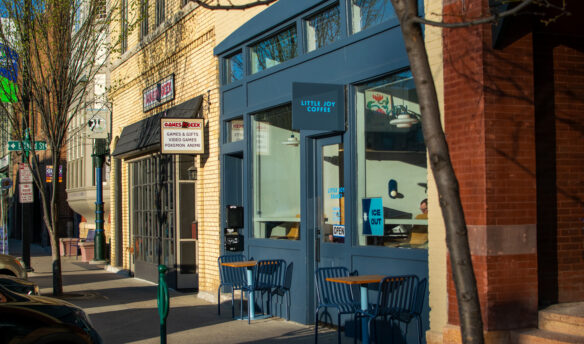
It’s true that, for some shops, Instagram still works as a promotional channel. Little Joy Coffee in Northfield, Minnesota has built a following of more than 139,000 people. Its recent campaign, promoting its smash-hit raspberry Danish latte, spread to more than 480 cafes across 41 countries. In some cases, a single post can translate into a surge in attention and sales.
“I launched the entire brand on Instagram,” says Greg Cotta, owner of Seasons Coffee in Sacramento. Since its founding 10 years ago, Seasons has accrued just under 15,000 followers.

Still, Cotta says he’s slowed down on posting recently. Now, Seasons Coffee’s feed includes sporadic posts centered on updates, collaborations, or content shared by others.

The platform played a big role early on, when Seasons operated as a coffee subscription and cold brew delivery service, and Instagram was the primary way people discovered the brand. As the business model shifted into a physical cafe and roasting operation, that role changed. But the platform itself changed, too. “It’s time-consuming,” Cotta says. “The reward isn’t always there.”
Instagram’s shift toward a more video-driven, always-on format means staying visible requires more effort. For owners already managing daily operations, that trade-off isn’t always worth it. Cotta sees it as a question of resources. “If you want your business to make money, your job is to make money as the business owner,” he says. “Social media is something you can spend on when you’re already making money.”
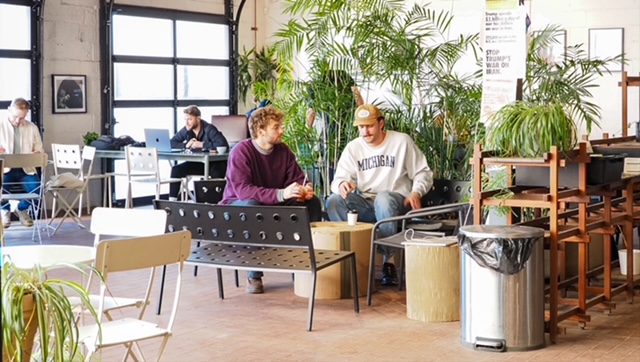
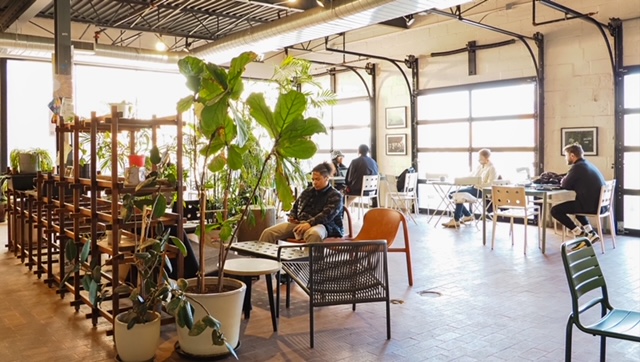
At Anthology, the move away from Instagram was more practical than strategic. For years, two long-time employees who enjoyed creating content managed the account. When they stepped away during the pandemic, the shop simply stopped prioritizing Instagram. Longsdorf wasn’t concerned about the change.
When More Marketing Isn’t Always the Answer
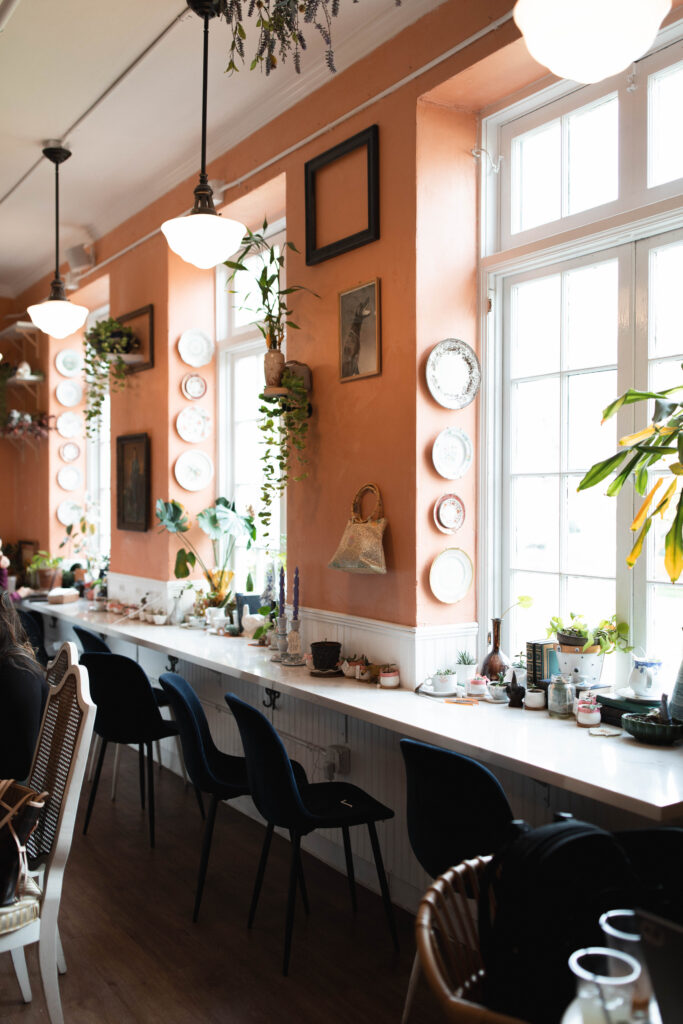
Seasons’ physical space has played a role in its approach to Instagram. The cafe is located inside a converted schoolhouse shared with several arts organizations—an environment that isn’t immediately recognizable as a coffee shop. “People walk up to a schoolhouse and feel like they can’t enter,” Cotta says
Rather than try to clarify, or promote the space more aggressively online, Cotta went in a different direction. “We felt UGC [user generated content’ was more useful than anything we could do ourselves,” he says, referring to videos customers make of their favorite drinks or their visits to the shop. He wanted people to own their discovery of Seasons, and share that experience online. “We had to leave space for people to find it and share that they found it.”
That thinking carries through to how Seasons uses Instagram today. Its posts tend to center on events, collaborations, or content from customers and creators who have already engaged with the space. For Cotta, that level of visibility carries more weight than brand-driven content.
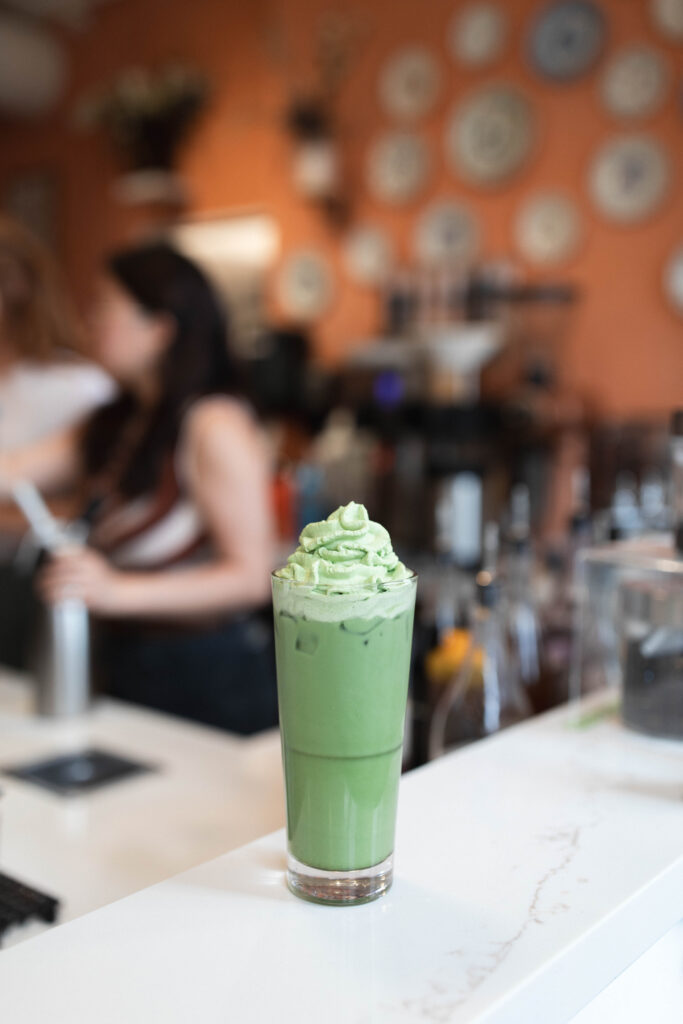
“It’s more interesting to talk about other people than ourselves,” Cotta says. “That’s better media, and frankly, better for the community.”
Too much self-promotion, he adds, can translate to diminishing returns, making it feel more like marketing than something people genuinely want to engage with. “If we’re just promoting it ourselves, it’s not cool anymore.”
Still, not everyone can afford to step back from Instagram in this way, especially newer or smaller shops. A cafe that hasn’t yet built word-of-mouth or a loyal local base may rely more on the platform for discovery, especially in dense markets where customers are actively looking for somewhere new to try. The question is whether the time it demands drives enough revenue to justify its use.
Even for owners who aren’t actively investing in Instagram, the pressure to do so is still there. Trends move quickly, and what performs well for one business can start to feel like a template for others. Longsdorf sees that dynamic play out often. “I think Instagram puts a lot of business owners in a position where they feel like they have to pursue trends,” he says.
Before jumping on the bandwagon, Cotta says it’s worth thinking about how uneven those results can be. “There are 500 cafes that tried to post the same thing, and it didn’t get attention,” he says. “We see the ones that come to the top of the screen, and we’re like, ‘Oh, this is what everyone’s doing.’ But we don’t know what percentage actually got the reward for doing it.”
At Anthology, the content that resonated most wasn’t built around popular formats. “When we grew our following, the videos were authentically us,” Longsdorf says. “They were fun. They weren’t really trends.” As soon as you start chasing what everyone else is doing, he says, you lose sight of why you started in the first place.
What Actually Drives Growth
For Longsdorf, growth really comes down to operations and location. “Having followers all over the world doesn’t do you any good,” he says. “Your market as a cafe is your local community.” Instead, he points to how the business operates day to day. “We just focus on what we can control: having a good, solid, consistent product and providing good hospitality.”
At Anthology, the goal is creating an environment where employees can show up fully, and extend that feeling to customers. “If you’re focused on employees and taking care of them, they provide good hospitality,” Longsdorf says. “Then guests tell their friends, and they come back.”
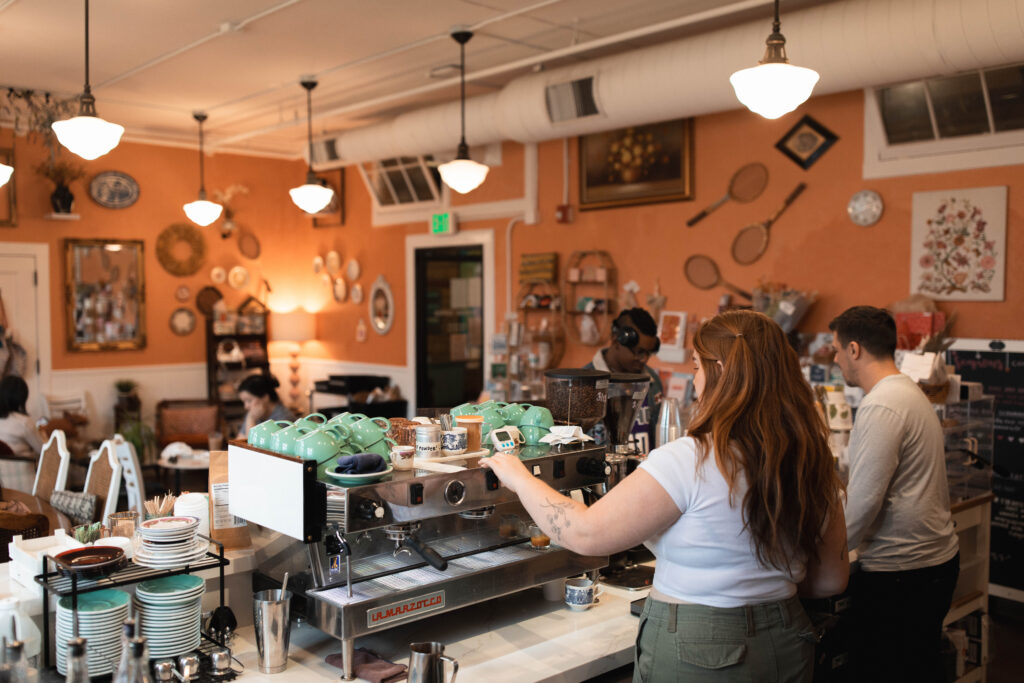
It’s a slower loop than a viral post. But for Anthology, it’s the one that’s actually worked. Longsdorf doesn’t credit stepping away from Instagram itself for that growth. Instead, he points to where that time and attention went: into operations, staff training and support, hospitality, and the customer experience.
“Since we’ve stopped caring about Instagram, we’ve actually seen growth at a higher rate than when we were actively using it,” he says.
That success story may be a sign that, in 2026, Instagram is not as obligatory as it once seemed. And for businesses with posting fatigue, that can be permission to step away from the platform—and try a different way of reaching customers.
Cover photo by Nicolette Molina