Small-city barista, coffee trainer, AeroPress champion, New York educator, experimental pop-up owner: Danny Toro’s coffee career has taken some interesting twists and turns over the last decade. Recently, it culminated in the launch of Field Study, a high-end coffee concept in Brooklyn, New York.
The business is situated in a working car showroom. On weekends, Toro and their fellow partners serve drinks made with rare and experimental coffees ranging in price from $9to $25. The concept is built around stillness: Even amidst the hustle of New York City, there’s still time to take a moment, sip slowly, and enjoy a very fancy coffee.
Toro arrived here the long way around. Originally from a small city outside Austin, they were drawn to the science of coffee brewing as a biology student at Texas A&M University. From there, Toro’s work history spanned training and education roles at several well-known coffee companies, including Austin’s Medici Roasting and Greater Goods Coffee Company, as well as New York City’s Three Legged Cat. In 2024, Toro won the American AeroPress Championship, resulting in a new series of job and brand partnership opportunities.
At World of Coffee in San Diego this year, Toro and their partners conceived of Field Study. Just three months later, the concept is operational, and is serving coffee to paying customers.
Fresh Cup got together with Toro to discuss the differences between the professional coffee scenes of Austin and New York City, life after becoming the American AeroPress Champion, and pushing the boundaries of coffee quality (and price tags).
This conversation has been edited for clarity and brevity.
Walk me through your early coffee career. How did you go from small-town Texas barista to partner in an experimental coffee concept in New York?
I started off like most people, as a barista just working at a shop in College Station, Texas. I was working at this really small mom-and-pop shop, and they had a Chemex there, and they were doing latte art, and that was something I’d never seen happen before in a coffee shop.
I would visit a lot to study, got really close with the baristas, and eventually I started working there. I was studying at A&M at the time as a biology major, so I naturally fell in love with the science of brewing and extraction.
After I graduated, I decided to keep working in coffee, so I made the jump and moved to Austin and started working at Medici Roasting as their coffee trainer and educator. It was very nerve-wracking to take on that role, especially managing seven cafes and training baristas year-round. But I really appreciate teaching people, seeing baristas grow, trying to uplift them and empower them. That was probably the most fun part of my career up to that point.
Then I wanted to keep learning, but at a smaller scale, because managing all those cafes was a lot. So I went to Greater Goods Coffee Co. They had a training position and were an SCA Premier Training Campus. I took all the SCA classes there, and soon after I was teaching public classes for the first time. That was also really scary, but it was cool to teach people who were just curious about coffee. The most impactful part was getting them to understand the differences between processes, between light roast and dark roast, and then seeing them leave excited, like, “I can brew coffee at home now by myself.” Sometimes they’d come back to the shop and share their notes on what they’d been doing. That was really wholesome.
After that I moved to New York. I just wanted the opportunity to learn something different, something I maybe didn’t understand yet.
Why New York specifically?
I’d always wanted to live there, and I had explored it as an option for a while. There weren’t a lot of training roles available at the time in Austin, so I wanted to seek out more educational opportunities somewhere else. And I wanted to be around brands like Onyx Coffee Lab, or La Cabra, or Black Fox Coffee—all those companies that are doing things on a different level.
But New York was very different from Austin. Just the volume of everything. The first shop I worked at was in Rockefeller Center, and I never stopped once. If you made one mistake, it set everyone back. Your technical skills definitely sharpen fast.
What else is different about the New York City coffee scene compared to Austin?
Everyone is very competitive. I felt like I had to relearn how things were done, how companies ran. New York has a lot of talented baristas, and I was just constantly trying to keep up. Austin is competitive in its own way, but New York is more latte-art-heavy. I went to my first latte art throwdown there and everyone in the first round was doing swans. I was like, I can barely do a swan. Okay, time to brush up.
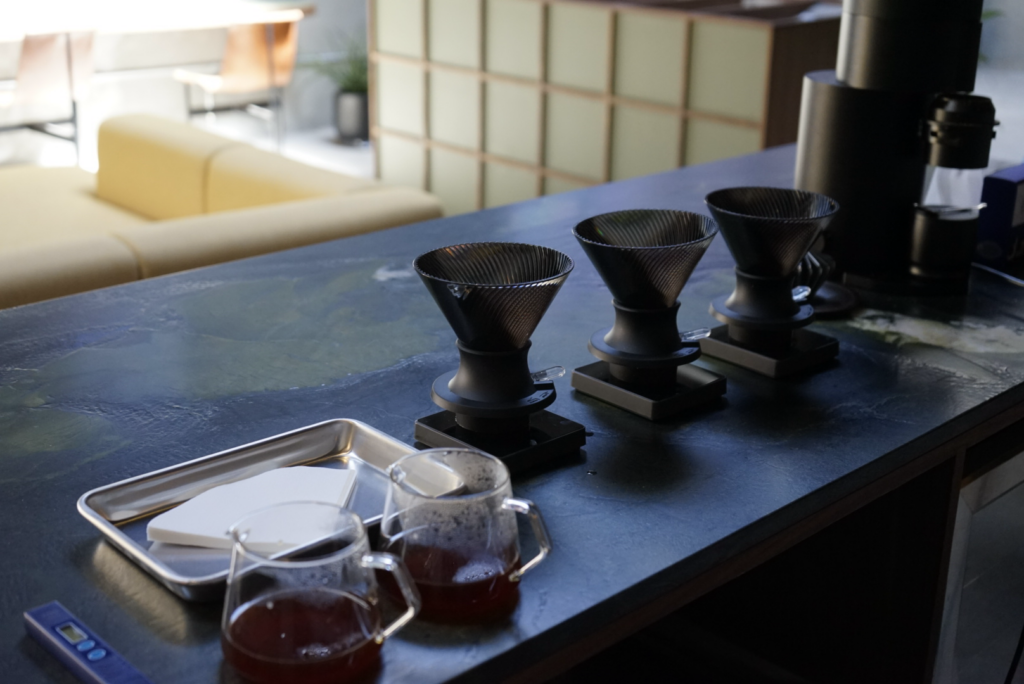
The pacing is also just the culture. Everyone wants to grab their latte and go. Some places try to cultivate something more, but at the end of the day, people are trying to get from point A to point B. Here in Austin you can have a genuine connection with your barista. Everything’s slowed down a bit. There’s more time for the hospitality side of things.
What made you want to compete in the AeroPress Championship?
AeroPress was my brewer of choice at home at the time. I used it pretty regularly. And then I used it as part of my U.S. Brewers Cup routine in 2023 and placed really well with it. So I was like, if I can do well with this in Brewers Cup, maybe I have a shot at the AeroPress competition. I wasn’t really expecting much. I entered for fun, and it ended up going really well.
How did winning the competition impact you?
It was really strange. I was working at a cafe in East Williamsburg called Three Legged Cat, just brewing coffee on the bar, and people would come in and ask for an AeroPress. International visitors who had specifically come in to try my AeroPress. I felt immense pressure. I was like, you guys came all the way here for this? So I put an AeroPress on the menu for anyone who wanted to come try it. I got to meet a lot of baristas through that. Even when I traveled, baristas would recognize me. That was really weird.
The other thing was being able to collaborate with brands more. This past April I got to work with Sibarist. I’ve been using their coffee filters since I started competing in Brewers Cup in 2023. It felt like a full-circle moment where I was like, I used your filters as a baby barista, and now I’m here representing you. So overall, winning gave me more recognition for my craft, and the ability to work with other brands and pick up guest shifts in different places.
How did Field Study come together?
It came out of nowhere, honestly. The conversation started at World of Coffee this year. I’m really good friends with one of the co-owners, Leeor [Waisbrod], who owns Three Legged Cat. And the other co-owner is Norberto Peña from Obscure Coffee Roasters, a Latin-owned roaster that focuses on Latin American coffees. I’d gotten to know him through coffee cuppings and just running in the same circles.
Before World of Coffee, they came to me and said, “Hey, we have this concept, we want to create something elevated for guests, and you’re the first person we thought of.” I wasn’t really doing anything at that moment, so I said yes.
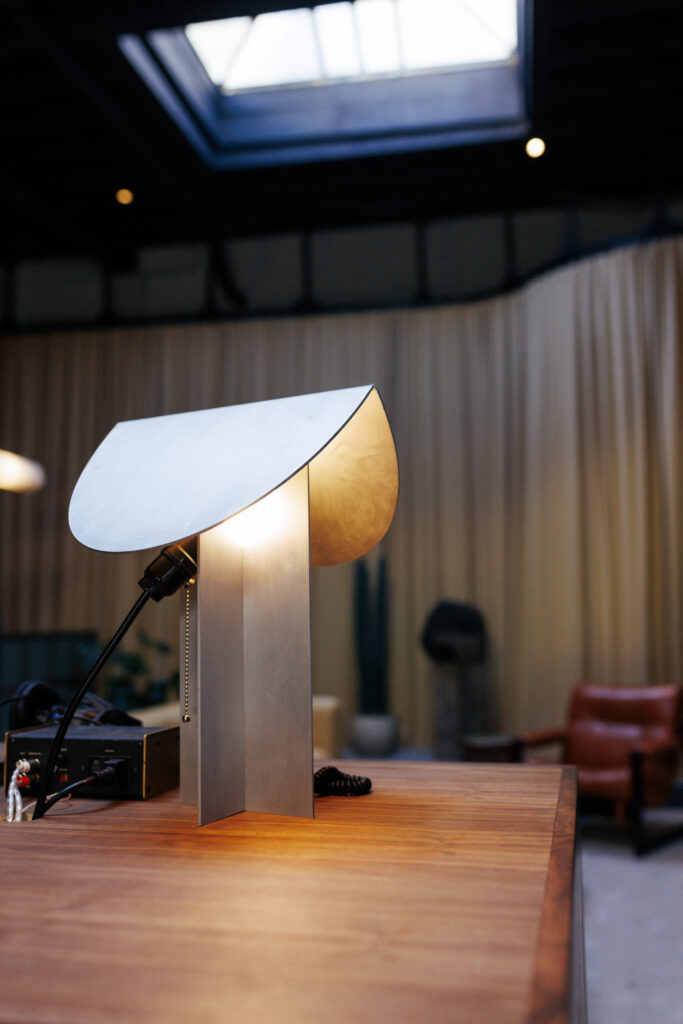
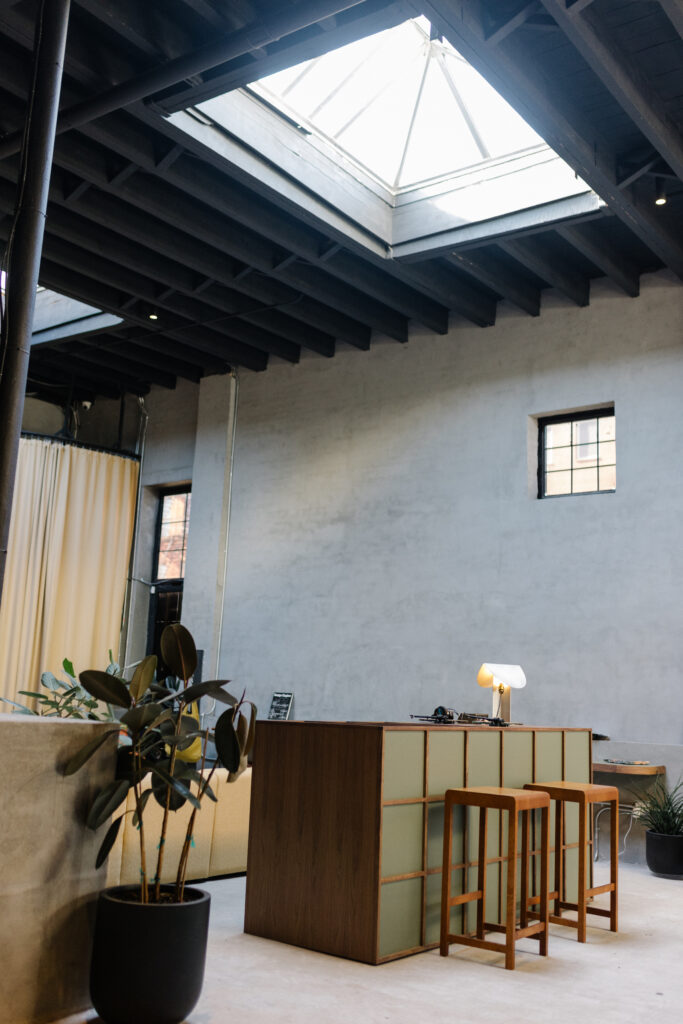
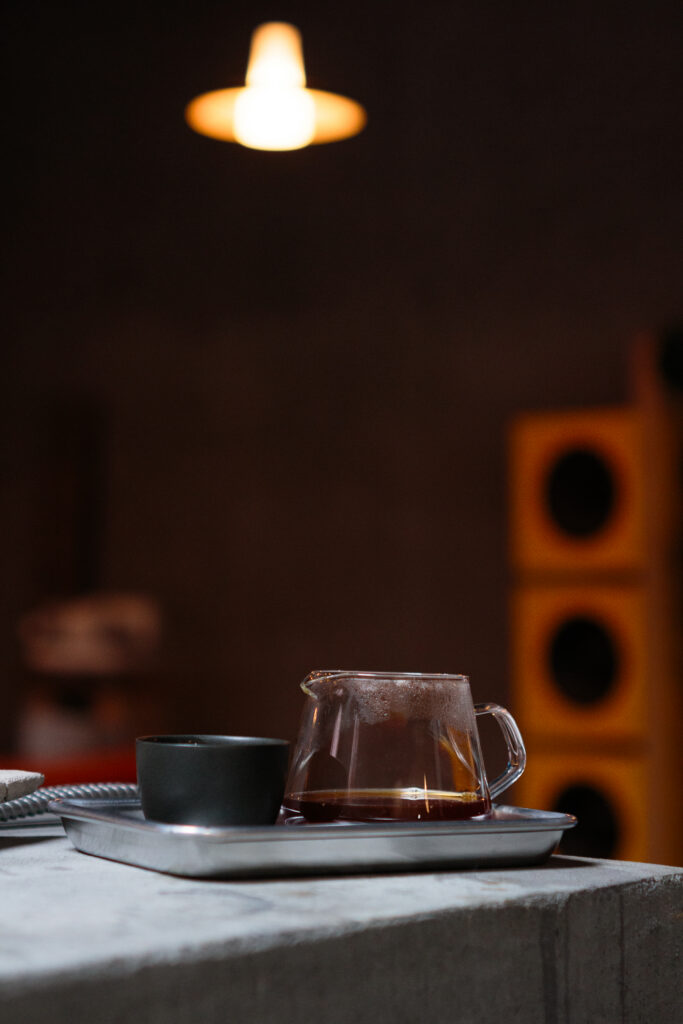
We wanted to create something like a tasting room experience—more focused on slowing down. People come in and just sit and enjoy a cup of coffee for 20 minutes to an hour without rushing out. Because with New York, everything is to-go. And coffee should be enjoyed slowly. That’s something I learned through competition, knowing that coffee changes from when it’s warm to when it’s cool. So Field Study is designed around that idea. We don’t do to-go cups at all. Only for-here cups.
We’ve also been playing around with signature drinks. We have [freeze-]distilled milk on the menu. We have a cascara fizz—that was my recipe, and I brought it to the shop. And we source competition-level coffees from roasters we really believe in, like Standout Coffee in Sweden, Blank Space out of California, and some local roasters as well. We’ll sometimes have the same coffee from two different roasters and let guests compare how they each roasted it. The bar has seating, and if you sit there, we’ll walk you through what you’re tasting. Recently we’ve added coffee experiences: You come in, you get a welcome drink, we pull you an espresso and a pour-over, and then you get a signature. It’s really fun.
What are you charging for these high-end coffees?
Our prices range from $9 for an espresso to about $25 for some of the rarer coffees. We try to have flexibility for everyone. But I do want coffee to eventually be priced the way a cocktail or a glass of wine is priced. People have been surprised by what we charge, but they’ve also been buying it. We sold a gesha espresso for $18 and people were ordering it. That tells you something.
What equipment are you running?
We have a La Marzocco GS3 and a Decent Espresso machine that we profile on. The GS3 handles our standard espresso featuring Obscure Coffee, and the Decent is for the specialty espressos, the rarer, more dialed-in stuff.
Is Field Study meant to eventually become something more permanent?
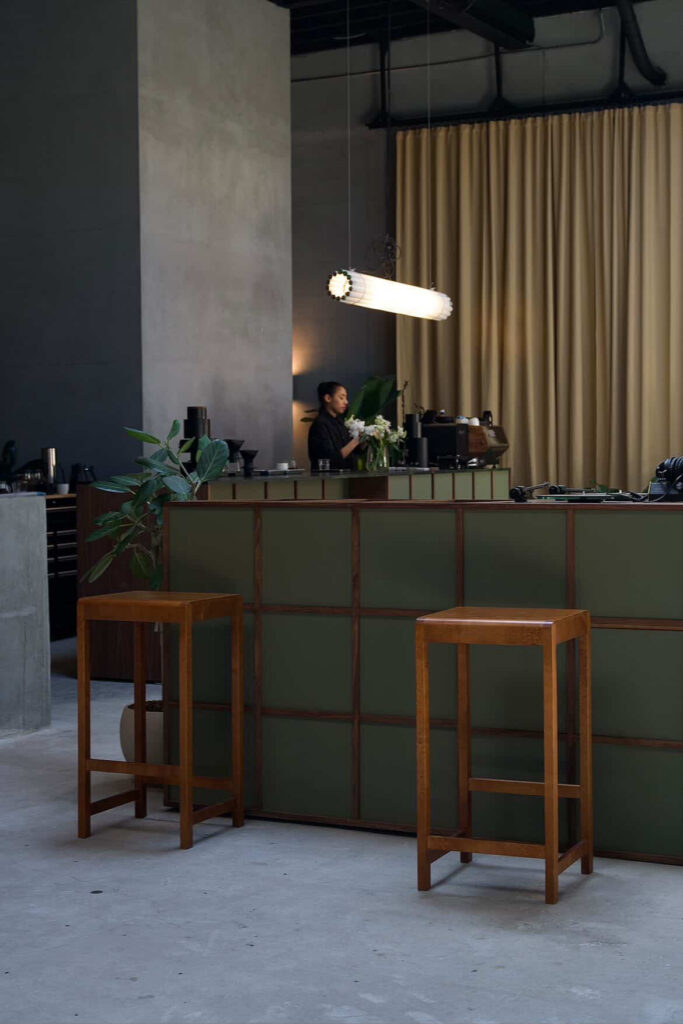
Right now we’re operating as a pop-up inside a car showroom and garage space in Brooklyn. We’re there Friday through Monday. The space has been there for about a year, and the owner wanted to do something with it, reached out to our partner from Obscure, and that’s how the connection happened. Sometimes there are still car shows in the space while we’re there, which has been a new experience for me.
Long-term, the goal is a brick-and-mortar of our own. Right now we’re just seeing if this concept can actually work in New York. A slow bar is something you see more commonly in tea, but coffee is treated differently. So we’re trying to push that.
What else are you working on these days?
I’m competing in the Origami Cup in Houston on August 1. I’m really excited about it because I used an Origami brewer in my first Brewers Cup, so it feels like a full-circle moment. I’ve been reconnecting with that brewing style and asking myself: How much have I actually learned since then? What new techniques can I bring to it now? I have a teal Origami that I pulled out of a box, and I’m just going to brew again.