When Little Joy Coffee in Northfield, Minnesota put a raspberry Danish latte on its spring menu, owner Cody Larson did something few other coffee shops would. He published the recipe for the drink online, and invited independent cafes across the country to add it to their menus. He even built a public map, so customers could find locations serving the drink near them.
The response to the viral latte quickly spilled into the real world. Little Joy’s sales jumped more than 70% year over year in April and May before settling into a sustained 45% increase. Even as the drink spread online—and to other IRL venues—more people wanted to visit the cafe where it all started. Little Joy has since become a destination that draws customers from well beyond the college town’s campuses.
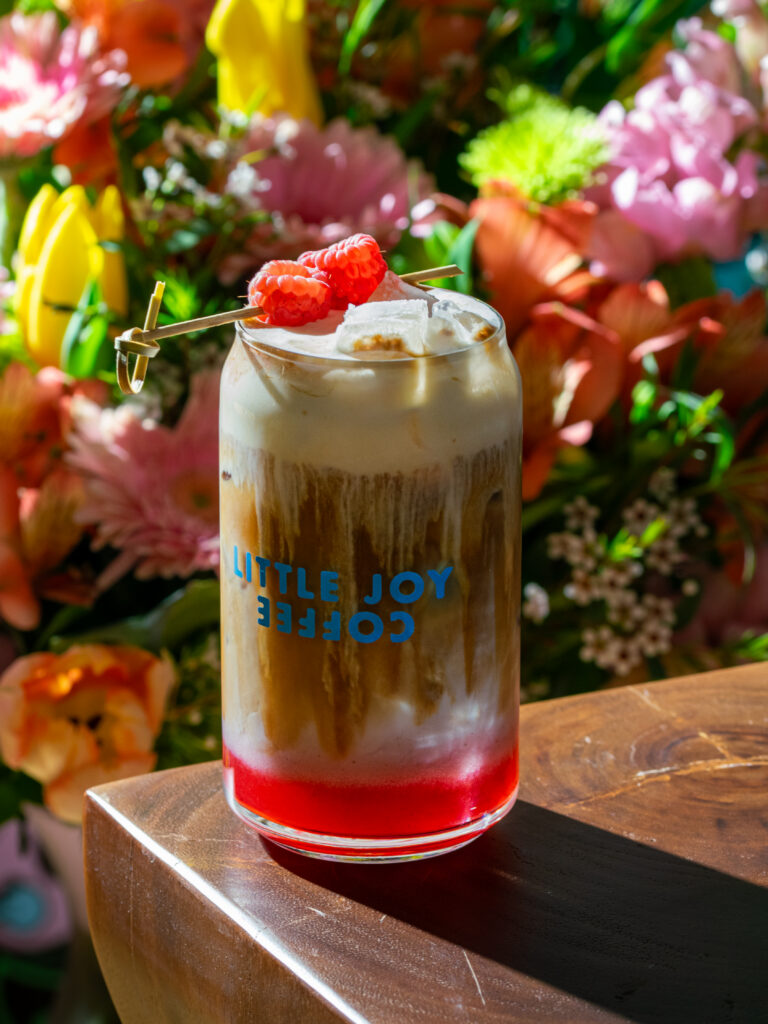
The raspberry Danish latte also brought new attention to Little Joy’s social media. The cafe’s recipe-sharing videos reached a national audience, leading to coverage from outlets including CNN and the Today Show. Today, its social accounts are where the cafe maintains a dialogue with its customers—and where it continues to engage viewers (and inspire operators) with new drinks in development.
Testing in Public
Long before the raspberry Danish latte took off, Little Joy had made a habit of sharing drink recipes that most other coffee shops would have kept to themselves. In late 2024, the team started filming an Instagram series they called Day 1 of Trying New Drinks. Early episodes featured drinks like a mocha with black cherry chocolate and cherry bitters, and a spiced pomegranate matcha tonic. The staff tasted each recipe on camera, and debated whether it deserved a place on the menu.
The cherry mocha didn’t make the cut, but Larson posted the recipe in the caption anyway. “The drink actually failed, but the views took off,” says Larson. Before the video series began, Little Joy’s Instagram posts were averaging around 200 likes. One month into the series, its videos were getting more than 16,000. “As far as the algorithm goes, it seems the more you give, the more you get,” he adds.
Instead of treating recipes as trade secrets, Little Joy kept publishing them. Engagement grew with each new installment, as viewers debated recipes in the comments, suggested drinks of their own, and even inspired recipes ranging from a brown butter blueberry miso latte to a carrot cake latte.
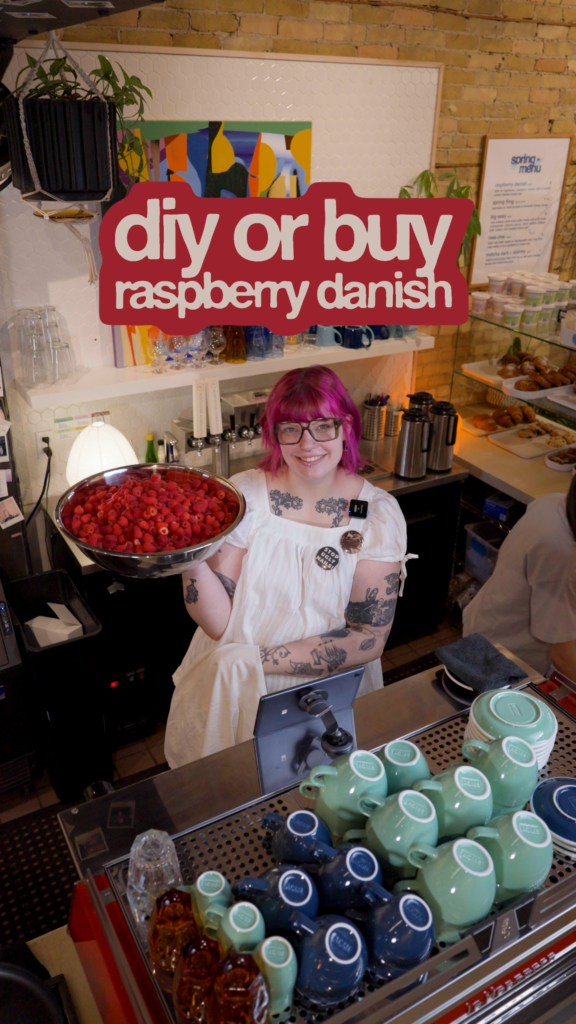
As the audience grew, customers started sending direct messages asking how to make Little Joy’s most popular drinks at home. The team turned those requests into a second series, DIY or Buy. These videos were led by manager Serena Walker, who demonstrated each recipe step by step, including breaking down ingredient costs. She ended each video with a simple verdict: Is it worth buying, or should you make it yourself?

As a bonus, the series gave Little Joy a chance to address a complaint many independent coffee shops hear: that an $8 latte isn’t worth the price.
“It’s feedback that a lot of small coffee shops are getting right now. Showing people the amount of labor that goes into it, the amount of ingredients it takes and how much money it costs is really important,” Walker says. “[T]hey can see why they’re paying that much for this cup of coffee.”
The Drink Nobody Expected to Go Viral
The drink that would come to define Little Joy was almost never made at all. For months, Larson had tried to perfect a mango sticky rice latte for the spring menu. On the morning he was set to launch the drink, it still wasn’t ready. He had to make a last-minute decision and remembered a raspberry syrup the shop had unsuccessfully tested previously. The drink came together around that syrup, with espresso, milk, and a cream cheese cold foam on top.
“The raspberry Danish was actually a very last-second drink,” Walker says. “The day of the menu launch, Cody last-second put the raspberry Danish latte on the menu.”
Walker believes the drink’s name helped fuel its popularity. “If you’re seeing some sort of espresso tonic with all these flavors you’ve never heard of before, you’re not really going to know what it’ll taste like,” she says. “Why would you pay $8 for that when you could pay $8 for something that you can recognize, like a raspberry Danish?”
When Little Joy featured the raspberry Danish latte in its DIY or Buy series, Walker walked viewers through the recipe step by step. She broke down every ingredient and its cost on screen, including the cream cheese cold foam. Making the drink at home cost just under $8. Her verdict: “Don’t make this one at home. Too many dishes, and you’re gonna stain your white clothes.”
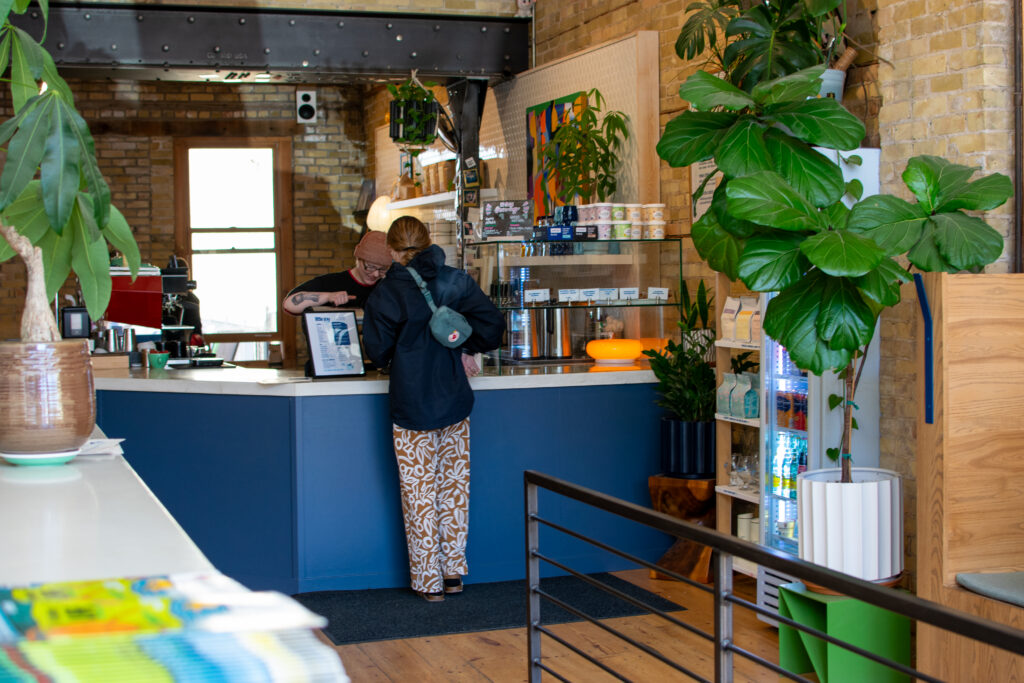
Instead, Little Joy encouraged customers to come into the shop and buy one. Then, the cafe went a step further by inviting coffee shops around the country to steal the drink and put it on their menus—Starbucks excluded. Larson built a public map where participating coffee shops could add themselves.
“Without the map, the raspberry Danish wouldn’t have gone anywhere,” Larson says. “Instead of the raspberry Danish being just another viral drink you see play out on your screen, the map brought the whole experience into the real world, making it accessible to almost anyone, anywhere.”
Coffee Over Competition
Walker was in Chicago when the video started taking off. She checked her phone and couldn’t keep up with the comments. By then, the raspberry Danish latte had spread far beyond Little Joy’s Instagram. Meanwhile, when she returned to Northfield, the line stretched out the door.
“I really wasn’t expecting the amount of response it got,” she says. “We weren’t anticipating so many people putting their drink on this raspberry Danish map, but they really were excited to be a part of something.”
Walker credits Larson with the philosophy behind sharing drink recipes. “It was Cody’s idea to have more open-source recipes on the internet for other people to steal,” she says. “It’s because we’re not worried about competition. Other coffee shops can also be doing better while we do better. It’s not going to hurt our business to help other small independent coffee shops, because it’s the smaller coffee shops versus corporations, rather than us versus each other.”
Larson says he sees recipe-sharing as a way to strengthen independent coffee shops at a time when many consumers are gravitating toward larger chains. “I’ve been seeing a lot of local coffee shop slander on social media lately. It’s become popular to complain about things like too little ice or too much ice.”
Seeing that response fueled a sense of collectivism. “I’m afraid this sentiment is driving more coffee drinkers to big chains, where even if the coffee isn’t great, at least they know what to expect,” he adds. “If sharing our recipes helps other shops in any way, I think that’s a good thing for all independent shops.”
Something Bigger Than Little Joy
More than 230 coffee shops across 30 countries added the raspberry Danish latte to their menus. Walker still hears from coffee shops that put the raspberry Danish latte on their menus. Of Hearth Coffee in Denver, she says, “I’ve seen some baristas in TikTok comment sections being like, ‘I work there. This is the best-selling drink we’ve ever had on our menu. People come here just to get it.’”
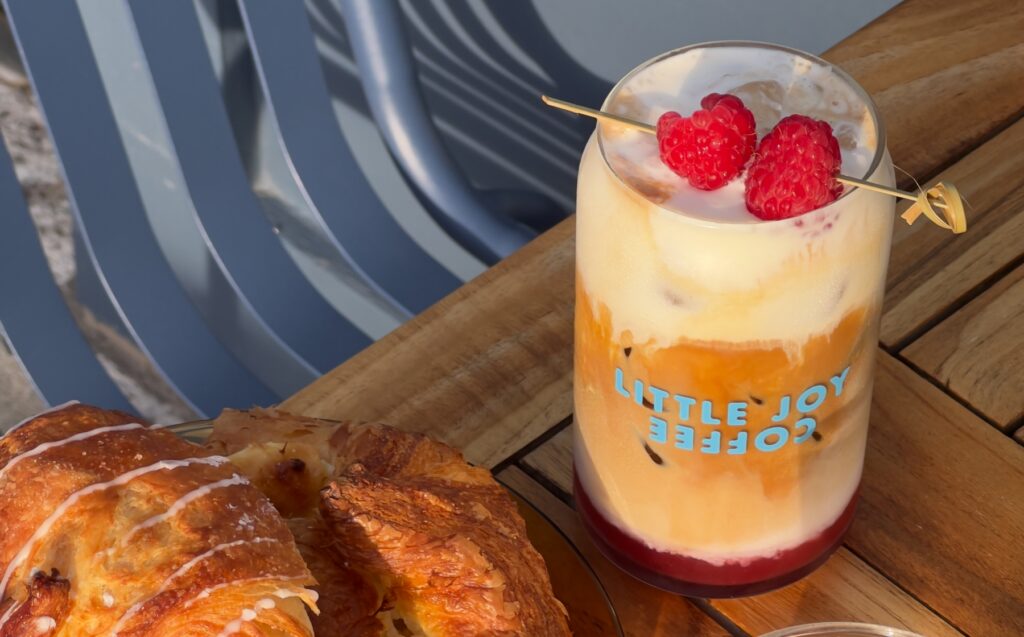
The past year has changed Walker’s life, too. Customers have recognized her all around Minnesota, including at the Mall of America. People travel to Northfield specifically to visit Little Joy.
The raspberry Danish latte didn’t change the way Little Joy creates content. Its team still films new drinks, shares recipes, and posts the results whether a drink makes the menu or not. “It’s not a challenge to see if we can do something even better because that’s never probably going to happen,” Walker says. “That was probably our one minute of fame.”
Instead, the shop has continued sharing recipes for the same reason it started. “We know how to make all these syrups, so might as well share them with people and help out other coffee shops,” Walker says. “We’ve seen how much it helped them … and how much it has benefited so many other small businesses across the world. So why would we not be doing it again and again?”
Today, a search for the raspberry Danish latte on social media turns up far more videos from other coffee shops than from Little Joy. “I should be offended, I guess,” Walker says. “But I’m really not, because it became kind of something bigger—more of a community thing.”