Coffee grown on Mars? What would that taste like? A new project seeks to find out. Plus, three new coffee world champions are crowned in Brussels, and drinking coffee is good for your liver.
‘Three New World Coffee Champions Were Just Crowned’ – via Sprudge
Last week, the finals of the World Brewers Cup, World Coffee in Good Spirits, and World Roasters Championship took place in Brussels during World of Coffee.
Nas Jaafar, representing Malaysia, won the World Brewers Cup—the first person from Malaysia to do so. Australia’s Simon Gautherin came in second, and Bavis Kwong of Hong Kong placed third.
At the World Coffee in Good Spirits final, Andy Philein of China took the top prize, creating drinks inspired by the cosmos such as a signature cold drink called “Saturn” and an Irish coffee entitled “Afterglow of the Cosmos.” Sion Wu of Taiwan (or Chinese Taipei, as World Coffee Championships now controversially refers to it) came second, and Akira Zushi of Japan placed third.
The 2026 World Roasting Championship crown went to Belgium’s Benjamin Brassart, who won the title on home soil. China’s Li Zhong Xiang took second place, while Thanasis Angelopoulos of Greece came third.
With that, the 2026 coffee competition season is almost over, with just the World Barista Championship to come in Panama in October. In June, Jak Michael Ryan of Proud Mary Coffee won the United States Barista Championships, and Jill Hoff of Monogram Coffee won the Canadian Barista Championships.
Read the full story on the three world champions here.

‘FDA Weighs Next Steps on Decaf Solvent Rules Following New Comments’ – via Daily Coffee News
In late 2023, a group of environmental and health nonprofits petitioned the U.S. Food and Drug Administration to ban the use of methylene chloride, a chemical sometimes used in coffee decaffeination. In the years since, the proposal has slowly worked its way through the FDA’s system, and we may now be getting closer to a resolution.
Methylene chloride is one of the methods used to decaffeinate coffee (the process, in which the solvent binds to and removes caffeine molecules, is sometimes known as the European method). Many of the world’s largest companies, including Starbucks, sell decaffeinated coffee using this method.
The substance’s use in coffee has repeatedly come under fire from groups such as the Clean Label Project (CLP), which have filed lawsuits against Starbucks and other brands for allegedly marketing their decaf products as “pure” despite testing showing trace amounts of methylene chloride.
Critics claim that methylene chloride is carcinogenic and should be banned from use in food production. The FDA currently allows its presence in food products up to 10 parts per million. However, the residue levels in decaf coffee are generally much lower—even CLP’s own decaf testing found residues of only 90 parts per billion.
The FDA has requested public comment on the subject twice, with the latest call asking ”what practical considerations food manufacturers would have in phasing out impacted uses.” This could hint at an impending ruling, and a full ban would affect many U.S. coffee companies that sell methylene chloride-decaffeinated coffee. However, some have already begun to move toward alternative approaches, such as the Swiss Water Process.
The National Coffee Association opposed the petition when it was originally published. The trade group submitted a comment in defense of the chemical, noting that “removing methylene chloride as an agent permitted to decaffeinate coffee will have legal, supply-chain and human health consequences.” On its website, the NCA wrote that the European Method of decaffeination “is safe according to rigorous standards set by FDA, the European Food Safety Authority, and other food safety authorities around the world.”
Read more on the decaf debate here.
‘Martian Mocha, Anyone? This Futuristic Coffee Machine Uses NASA Data To Give You a Taste of 3 Different Brews From the Next 100 Years’ – via TechRadar
Extreme weather events—think drought, floods, and extreme heat—have occurred more frequently over the last few years. That’s bad news for coffee: studies have shown that climate change could decrease both the quantity and quality of coffee production. However, it can be hard to grasp what that might entail. What if there were a way to try coffee from the future to see how it might taste?
An industrial designer named Sarah Ali created a project called Brew_Lab in collaboration with climate researchers and NASA experts. As Jamie Richards reports for TechRadar, the project attempts to replicate the taste of cups of coffee from three possible futures: Brazil in 2027, Sierra Leone in 2080, and Mars in 2126.
Ali created Brew_Lab—part engineering project, part art installation—for her postgraduate degree in Material Futures from the University of the Arts London. She used climate projections and research to create what she calls “edible scents” for each scenario, which she added to regular cups of coffee to enhance their flavor.
To create the scents, she partnered with the Australian company Scentible, which develops sensory development kits for the coffee industry. In a video produced by the company, Ali explains that “80% of taste is smell, so I decided to build a machine that outputs smells to alter coffee flavors to a future one.” Ali designed what she calls a self-operated “coffee vending machine” that users can adjust to deliver smells from their chosen future.
Two of the scents Ali designed were from possible terrestrial futures. The first was based on a Brazilian coffee circa 2027, which Richards writes “is used to emphasize the frailty of the Arabica bean.” Research suggests that 50% or more of arabica-growing land could become unsuitable for cultivation by 2050, and 60% of wild arabica species are at risk of extinction. The near-future coffee scent reduces sugar and acidity and increases bitterness to highlight the effects of higher temperatures on arabica.
The second scent aims to predict how coffee grown in Sierra Leone in 2080 might taste. For this, she used data from Dr Aaron Davis’ work on stenophylla, a wild coffee species that botanists at the U.K.’s Royal Botanical Society have been researching for its climate resilience. Although the taste profile of the 2080 scent isn’t noted, stenophylla has previously been described as tasting similar to arabica, with Davis reporting notes of chocolate, caramel, and jasmine.
To create the taste profile of the potentially Mars-grown drink, Ali drew upon NASA research that studied the possibility of agriculture on the red planet. She used the hardy coffee species, Coffea racemosa, due to its extreme drought and heat tolerance. Ali also considered the impact Mars’ lower gravity would have on the coffee’s taste—lack of gravity can dull sensory perception. The Mars scent was “designed to taste engineered,” Ali says in the video, and she artificially increased its intensity to counteract the dulling effect of low gravity.
“I thought of Mars because it’s a very extreme scenario”, Ali told TechRadar, “and the extreme scenarios allow us to really understand what’s happening. How do we think about things differently, to avoid that future or prepare for it.”
The project’s description on the Material Futures website says the flavor profiles are designed to change “in real time” in response to new climate data from Ali’s research partners. “Its constant variation reflects the industry’s volatility, offering a sensory glimpse into the impact of our daily consumption.”
Read more on Martian 2126 coffee here.
More News
‘Honorary President of Swiss Coffee Trade Association Resigns, Calls for Widespread Change’ via The Pourover
‘The San Franciscan Roaster Company is Under New Ownership’ via Daily Coffee News
‘Europe Remains World’s Largest Coffee Market’ via Global Coffee Report
‘Colombia Declares Coffee as Its National Beverage’ via Colombia One
‘What Is Pocket Coffee, and Why Is It Going Viral?’ via Taste of Home
‘Starbucks is ‘Actively Reassessing’ a Key Climate Pledge Amid Other Sustainability Milestones’ via Daily Coffee News
Is Coffee Good For You?
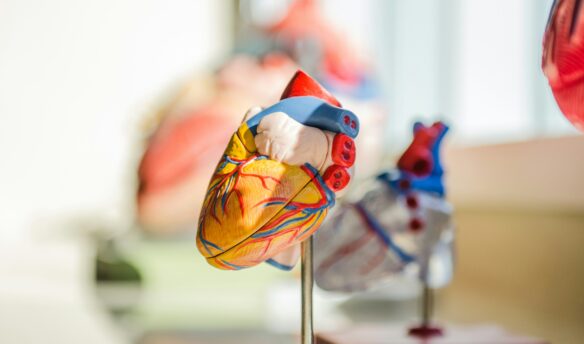
A large-scale new study from researchers at Cedars-Sinai Health Sciences University has found that drinking coffee could lower your risk of liver disease or liver cancer.
The study, published in Clinical Gastroenterology and Hepatology, followed nearly 355,000 participants in the U.K. Biobank biomedical database for more than a decade. The researchers found that those who consumed the most coffee saw the highest positive benefit to their livers.
Compared to those who didn’t drink coffee, people who drank five or more cups per day had a 47% lower risk of liver cancer and a 42% lower risk of liver-related death. Additionally, they saw a 32% lower risk of cirrhosis, a late stage of liver disease involving scarring and permanent damage.
Even small levels of coffee consumption showed benefits, but the benefits increased the more coffee participants drank. The authors noted that while those drinking the most coffee saw the greatest benefits, they wouldn’t recommend increasing coffee intake specifically for liver health.
“Our findings support moderate coffee consumption for people who already enjoy and tolerate it well,” study senior author Ju Dong Yang said in a press release. The study found that caffeinated and decaf coffees offered similar protective benefits, suggesting that caffeine alone was not responsible for the positive effects. The authors noted that more research was needed to pinpoint the specific beneficial compounds within coffee.
Previous studies have also pointed towards coffee’s protective impact on the liver. A review of decades of research published last year, for example, found that coffee could reduce the risk of developing liver-specific diseases as well as liver cancer.
Beyond the Headlines
‘The Real Resident Barista At The World Cup Is Becky Reeves’ by Zac Cadwalader
‘Inside the 2026 Coffee Barometer, Part 1: Prices Swing, Structures Don’t’ by Nick Brown