The Coffee Tech Stack series is presented by our partner, Square.

Nolan Dutton has been looking for a tech solution to streamline roasting operations at Corvus Coffee Roasters since he started with the company five years ago.
“There really isn’t, or hasn’t been, much for small [or] medium-sized roasters,” says Dutton, who serves as the director of coffee operations for the Colorado-based company. “There’s literally nothing in between” handmade spreadsheets and popular business management software programs. “I’ve spent years trying to figure out what that is.”
Like many homegrown coffee businesses, Corvus Coffee Roasters started small. In 2010, founder Phil Goodlaxson started roasting coffee in his garage and selling beans at the farmer’s market before opening his first cafe in 2012. Now, the company roasts about 6,000 pounds of coffee per week, and has six locations in the Denver metro area. A seventh is on the way, which will serve as the “flagship experience for our bakery and expanded food program,” Dutton says.


While its retail growth has accelerated, Corvus is also hoping to expand its online and ecommerce platform in parallel. As a result, it’s outgrown many of its existing platforms—and Dutton has been looking for ways to help the roastery run more smoothly, and ensure its systems talk to each other.
“The software we’re currently using doesn’t have a lot of flexibility or visibility for reporting or inventory tracking,” he says. “We’re just finding that we need customer relationship management, order processing, and inventory to all be more seamlessly connected.”
He may have finally found the solution. In August, Corvus will start using Flexnet, a software platform designed specifically for coffee roasters. “The CRM, the sales funnel, production software, and inventory are all going to be combined,” Dutton says. The result, he hopes, is a roastery that can grow and benefit its workers in a meaningful way.
How Roasting Works With Retail
In his role, Dutton manages “everything that’s not retail or bakery” at Corvus, including green coffee sourcing, quality control, and roasting. Even though he’s not handling retail operations, he still monitors sales trends to inform his coffee decisions.
Corvus’ cafes all use Square as their go-to point of sale system. Dutton relies on “Square Reporting to look up sales, actual sales trends, sales data, unit sales, all that kind of stuff … something I’ve learned in managing supply chain and manufacturing is that point of sale data is one of the most important things you can have access to and visibility to.”
Those insights have been invaluable, especially because serving multiple sales channels can make for complicated roasting schedules. If a customer orders a bag of expensive gesha online, for instance, Corvus can’t just roast for that one order—it needs a minimum batch of green coffee.
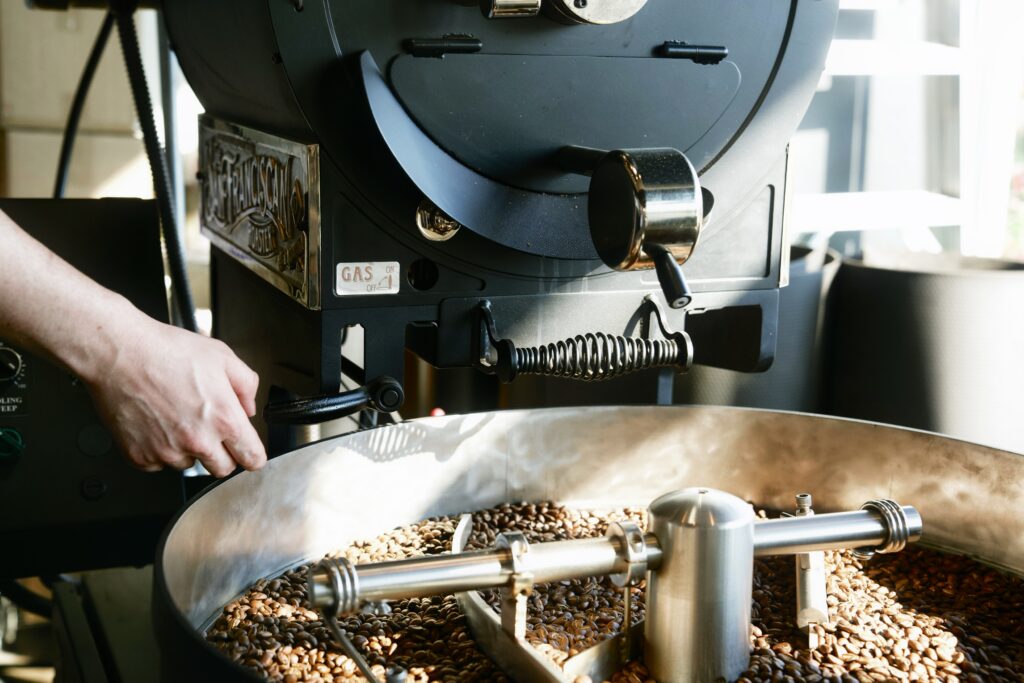
Because Corvus carries many higher-end coffees (listed on its website as “reserve” offerings), those logistics can be particularly challenging. While the company does advise ecommerce customers that these coffees are available on a “limited roasting schedule,” there is still likely carryover—and that carryover needs to be placed in cafes where it will sell.
Square Reporting can tell Dutton which of Corvus’ locations that gesha might sell well in.
“[With Square data] I can go, ‘Okay … this one store—whichever [one] I’m looking at—has sold X number of units of this specifically high-end gesha, and we’re wondering when we can justify roasting it again next. How much inventory do they have?’”
Roaster-Specific Solutions
Outside of retail, things get even more complicated. As Dutton explains, most enterprise resource planning systems are designed to integrate the processes of conventional businesses. But coffee is unique.
“Most manufacturing … is either make-to-stock or make-to-order,” he says, noting the difference between a company that has a warehouse of stock ready to send out versus a manufacturer that makes pieces to order, and which operates according to longer lead times.
Coffee roasters straddle both worlds.“Specialty coffee lands right between those two, because we’re trying to make to order on a weekly basis from freshly sourced product around the world,” Dutton explains.
Most conventional software programs simply can’t address those complexities, so, like many roasters, Corvus built ad hoc systems that made sense for its business at the time. “It’s a lot of independent systems for sure, and things tracked independently on spreadsheets,” Dutton says.
But that approach has limitations. Having independent systems creates “incongruencies and things get missed when people are trying to own an independent thing that’s not a system-wide or company-wide endeavor,” he says. “Multiple people need visibility … and better clarity on how many of this unit, or how many of this package, or this cup, did we actually go through or use.”
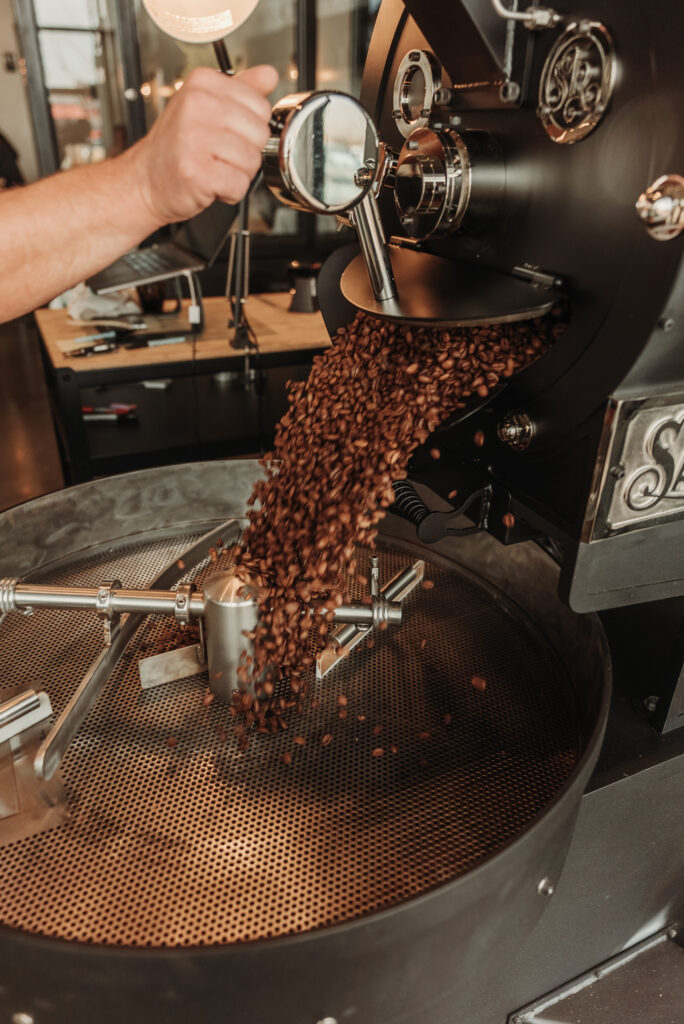
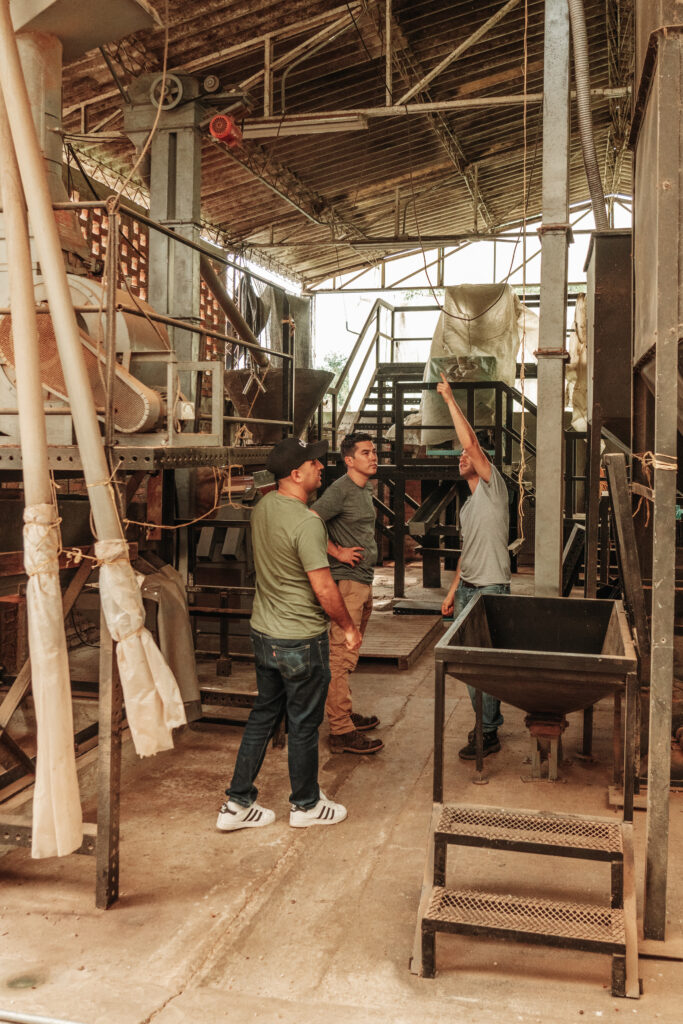
Dutton explored a range of potential solutions that would address those complexities before landing on Flexnet, which launched in the U.S. at the Specialty Coffee Expo in Houston in 2025.The software was designed by Caleb Sexton, a long-time coffee pro, and that first-hand expertise shows.
“Right now, we take [orders] and enter those manually to understand how much to roast and bag,” Dutton says, which was perhaps more manageable with 150 or so orders a week in online sales. Today, it’s much harder to manage at the roastery’s current production load of 500+ orders weekly.
That’s where Flexnet comes in. “It should replace any manual entry for order processing,” Dutton says. It’ll also help manage green inventory, and streamline processes between the production and roasting teams.
“What’s nice about Flexnet is it’ll tell our production team whether they can or can’t roast something if the green coffee isn’t there,” Dutton says. “Right now, the people setting up production are just telling the roaster what to roast, and then it’s like, ‘Oh well, we might not have that coffee.’”
Dutton anticipates the software will save the team lots of time by keeping data precise and centralized. “I think inventory is something that’s overlooked,” he says. “But if [data is] accurate and up to date and centralized … it’ll probably save countless hours.”
The Tech That Stays
Flexnet isn’t a catch-all software that’s replacing every tool in Corvus’ tech stack. Dutton says his team will still use systems like Square as the point-of-sale, Monday for project management, Slack for internal communication, Gusto for payroll, and Google Drive for spreadsheets and information management.
But he’s excited about its game-changing potential, in part because he’s seen the impact that technology can have in the coffee world. He remembers when Cropster, a coffee software program that, among other things, tracks roast profiles, was introduced—and the immediate improvement it made to roasting timings and quality. (Dutton says, by contrast, he learned to roast during a time when he was “logging temperature every 30 seconds.”)
He has similar hopes for Flexnet’s impact. Dutton says that by making the systems within the roastery more efficient, Corvus can focus on its growth goals while redirecting resources to its 70-person-strong team. It can also focus on buying more coffee from, and better supporting, its producing partners.
Dutton said he also uses Claude “as an operational co-pilot across the business.” He’s used the AI for things like inventory tracking for the production team and to draft job descriptions. “We use it to review e-commerce systems like Shopify and Klaviyo for compliance and strategy gaps. Rather than a single-purpose tool, it’s woven into the day-to-day judgment calls of running a specialty coffee company.”
Running a coffee roastery is labor-intensive, and roasting more coffee usually requires adding more labor, which doesn’t necessarily translate into better outcomes for current staff. Dutton hopes that by making systems more efficient, workers will benefit right alongside the company.
“We’re always talking about trying to do more with the same number of people, so the same number of people can make more money,” he says. “Growing without adding labor is a goal … [by] making their jobs easier, more people can get raises versus adding people to do more tasks.”
Corvus Coffee Tech Stack: At a Glance
- Point of Sale: Square
- Bookkeeping: QuickBooks
- Payroll: Gusto
- Knowledge Management: Google Drive
- Task Management: Monday
- Online Ordering: Shopify
- Internal Communication: Slack
- Roast Profiling: Cropster
- Inventory Management: Flexnet
- AI: Claude
- Roasting Operations: Flexnet
- Scheduling: Teamwork

Sponsored by SQUARE
The Coffee Tech Stack series is presented by Square. Square is a point of sale technology provider and longtime innovator that now offers a comprehensive suite of tools built specifically to help coffee shops and roasters operate smoothly and profitably.