Driftaway Coffee has had a good few years. As Roast Magazine’s 2026 Macro Roaster of the Year, the Brooklyn-based roastery has become a reputable force within the specialty coffee community. Today, the company is on track to roast approximately 200,000–250,000 pounds of coffee through its direct-to-consumer coffee subscriptions and wholesale program, and is targeting 100+ active accounts by the end of 2026.
But for co-owners Suyog Mody and Anu Menon, the journey to this point was anything but an overnight success.
The two previously had careers in the digital marketing industry, working with clients such as Coca-Cola, McLaren, Ralph Lauren, and NASCAR. While their respective career paths revolved around promoting other people’s brands, both loved coffee and had a desire to create and sell their own product.
After a bit of brainstorming, the pair decided that a direct-to-consumer coffee subscription was a natural fit. Driftaway Coffee was born.
Fast Facts:
Roastery location: Brooklyn, New York
Roaster: Loring S35
Footprint: 3,600 square feet
Pounds roasted: 200,000+ pounds annually
Retail and/or wholesale roasting: Both
From Humble Beginnings
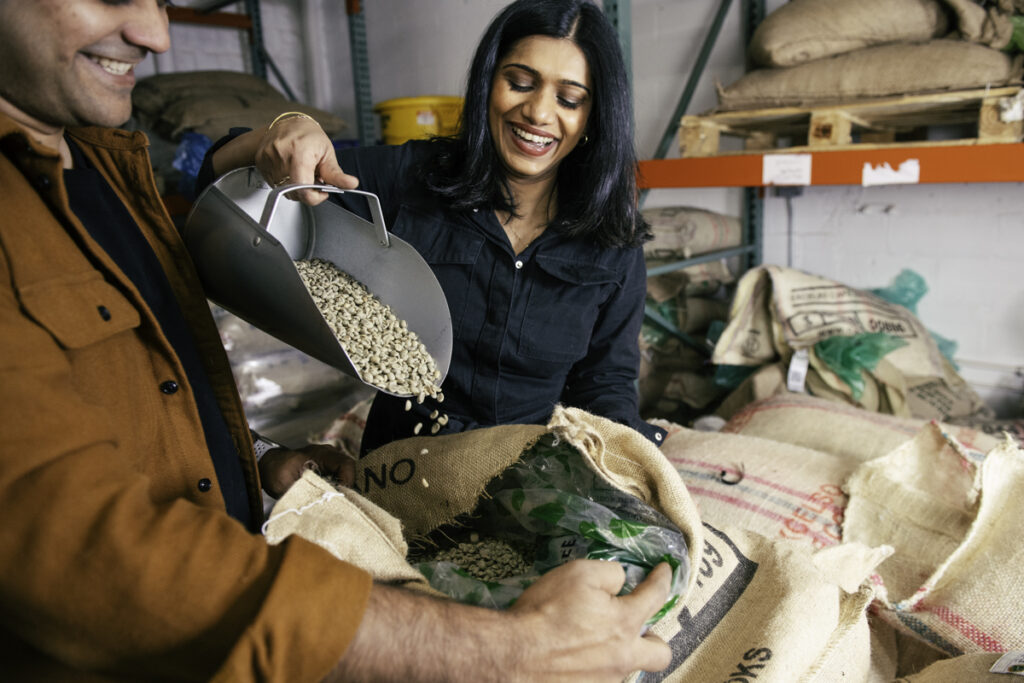
Both Mody and Menon were already well-versed in product promotion and operational logistics when they founded Driftaway. “The hard part was learning about sourcing green coffee, roasting, roast profiling, comparing to other roasters—those types of things,” says Mody.
In 2012, they started their coffee-roasting experiments on a newish popcorn maker. But this phase didn’t last long, Mody says, because the plastic burnt off during the inaugural roast. After a bit of research on home roaster forums, he learned that popcorn makers from the 1970s fare better than newer models for roasting. A few eBay bids later, and the pair were successfully roasting at home, sharing coffee samples with anyone who would try.
They later upgraded to a Behmor home roaster and logged thousands of 200g batches on the small machine. “The first three or four months after we technically started, one of the bloggers we had sent a sample to wrote a blog post, and instantly we had 300 new coffee subscribers,” says Mody.
The pair bought a second Behmor roaster, but quickly realized it wouldn’t actually help them roast more coffee—at least not enough to meet growing demand. “We then bought a Huky roaster from Taiwan,” says Mody. They modified the machine so the Asian gas connectors worked properly with American gas hookups.
But as growth continued, they soon felt constrained again. The two had heard about the Pulley Collective, a co-roasting space in Brooklyn. Initially, however, only full-day roasting spots were available for reservation. “We basically would have had to commit to a whole day of roasting, which we were not ready for both financially and mentally,” says Mody. “Once they had an hourly program, we signed up and had the opportunity to train on a Diedrich roaster.”
It was a fit. Driftaway Coffee went on to roast its beans at Pulley for six years, before relocating to the Joe Coffee facility. Finally, in 2021, the company graduated to its own dedicated roasting facility in Brooklyn.
Designing a Roastery Around Demand
With direct-to-consumer transactions as its primary sales channel, Driftaway Coffee’s team needs a lot of space to house their weigh-and-fill lines, inventory, packaging, equipment, and other supplies. Even while roasting at the Pulley Collective, they still required a separate production space.
“We would roast at Pulley Collective and transport roasted beans to our production space,” says Mody. “We would roast somewhere, put it in the Rubbermaid containers, rent a U-Haul, put it all in the U-Haul, unload at the production space, and then from there the rest of the production flow would happen. We racked up lots and lots of U-Haul loyalty points!”
Over time, it became almost unbearably cumbersome to follow this production structure, so they started considering a different approach. As with all roasting facilities, Mody notes that roaster ventilation was a serious consideration when choosing their new location. “We made sure there was no one above us, so our venting is really just straight up and out—no angles at all.”
Taking what they learned from their time at Pulley Collective, Mody and Menon designed a space that’s tailored to Driftaway’s specific workflow. “Aside from ease of installation of the roaster itself, we were super focused on the production flow and specifically to minimize any work related to moving anything around,” Mody says. “And so we built a variety of different schematics based on different locations that we scouted.”
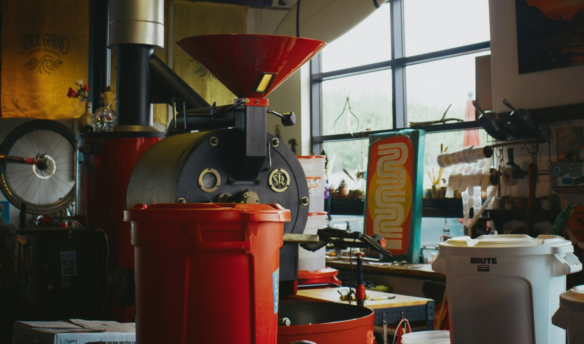
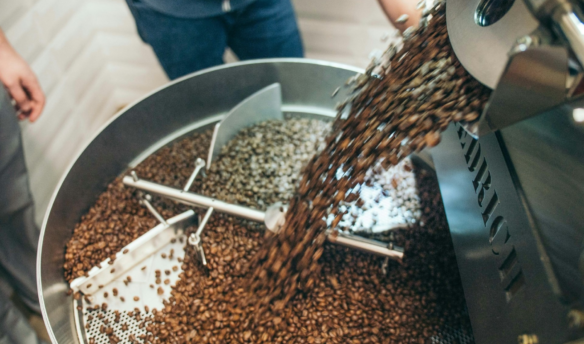
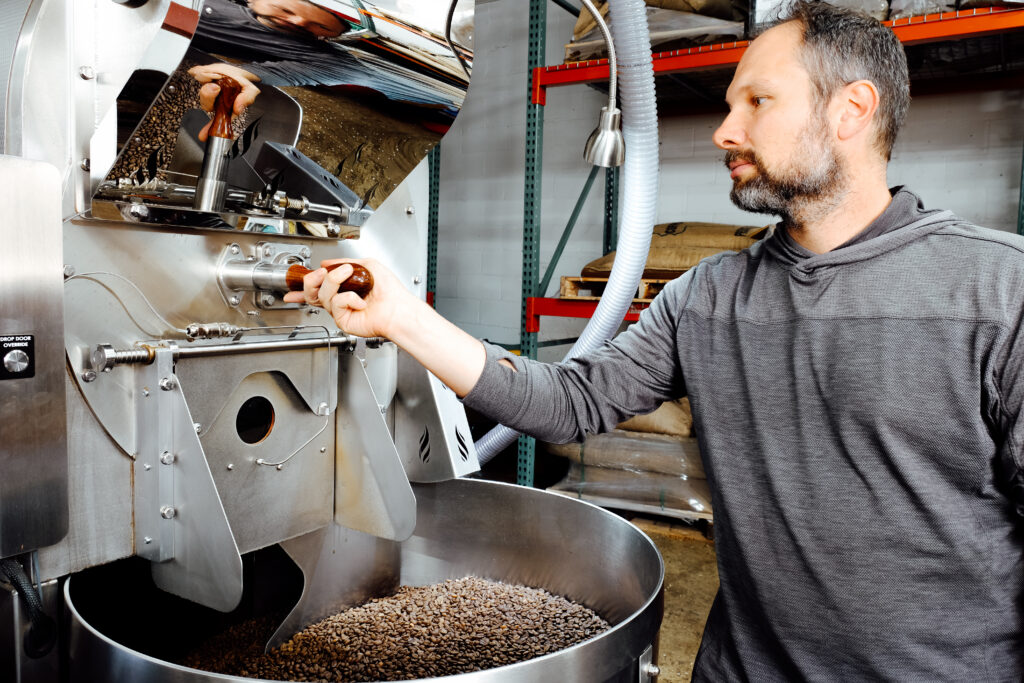
The warehouse’s large garage door allows for green coffee to be delivered and unloaded directly into the facility via the giant, 20-foot gate. From there, it’s transported straight to the roasting area, where it is stored on pallets before being roasted on a Loring S35 roaster. The roasted coffee is then measured and sorted in anywhere from 15 to 30 color-coordinated bins, depending on the day’s roasting schedule. The color of the bin, Mody explains, indicates the roast profile. This area of the production floor is known as the “hand-off area.”
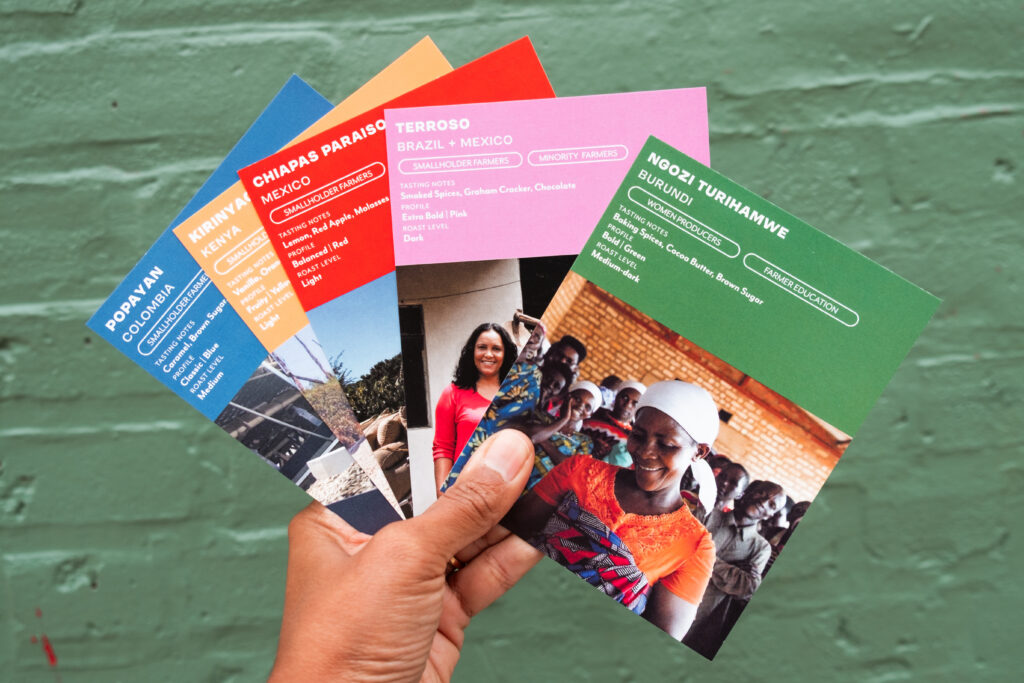
Driftaway has four production lines, plus one “pick and pack” area where staff members can quickly grab packaged coffee from the shelf and fulfill an order. “Three lines are for filling and sealing bags, and one is for assembling kits,” Mody says, like the Coffee Tasting Kit and Coffee & Chocolate Pairing Box. Each production line has tabletop weigh-and-fill equipment.
“So essentially, coffee comes in, gets roasted, gets into the hand-off, gets filled, gets shipped out and back through the same gate, typically on the same day and all within 30 feet,” Mody says.
A Sustainability Emphasis
Driftaway’s founders try to be sustainable when they can. Mody says they learned a lot at Joe, like how to reuse materials.
“All of the bin liners, instead of getting tossed, get put into this reuse pile, which eventually is what the carriers use to pick up packages,” says Mody. “So every single one smells like coffee, but at least you get two or more users out of each one.”
The company uses Biotrē 2.0 bags from TricorBraun Flex for its packaging, which are 60% compostable and can be added to home compost bins with the zipper and valve removed.
Its Loring S35 roaster supports the company’s sustainability goals as well. Loring roasters use a “single-burner convection design” and do not require an afterburner. An afterburner is designed to incinerate exhaust gases at high temperatures to eliminate smoke, odors, and other harmful volatile organic compounds before releasing them.
However, this piece of equipment typically requires significant energy usage, and racks up costs. Going without it has meant a reduced carbon footprint.
Bringing Driftaway Directly to Consumers
Despite making use of their entire warehouse, Mody and Menon soon realized they could consolidate and do far more with their space. “We were hosting a lot of events in the back roasting space, and thought to ourselves that we should try to build something in the front that looks a lot nicer,” Mody says.
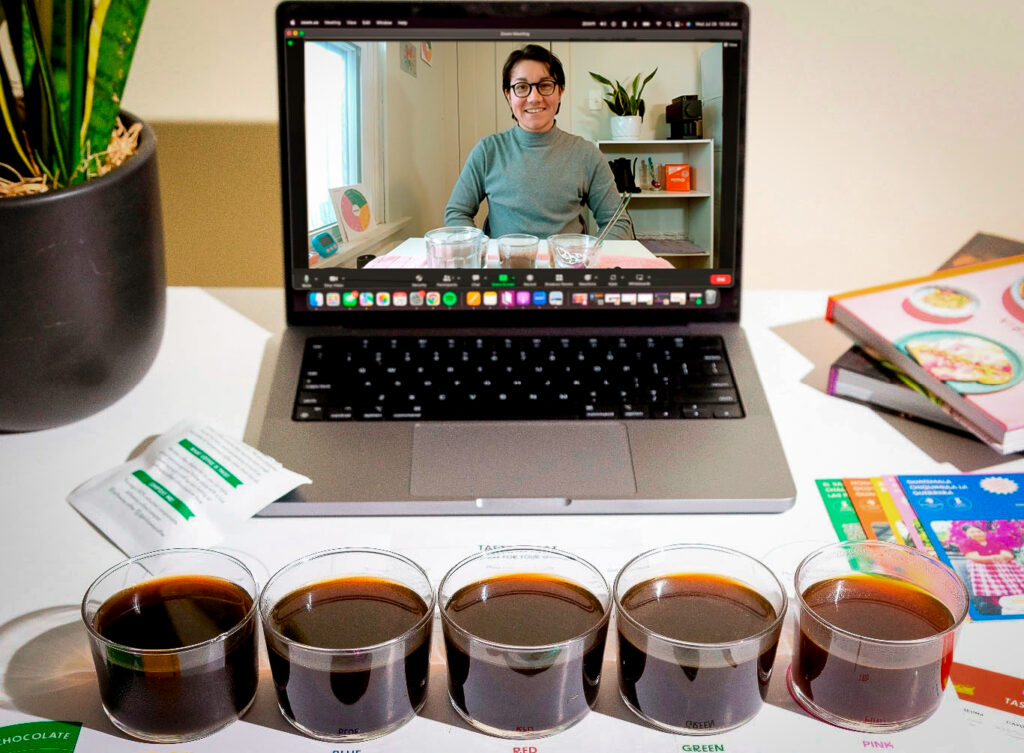
After a bit of reorganization, in March 2025, Mody and Menon opened a tasting room and coffee bar in the front part of their Brooklyn roasting facility. The tasting room and coffee bar operates on weekends, and offers pour-overs, espresso, and reservation-based coffee omakase experiences.
Mody says he’s observed two distinct benefits since opening the space.
“More people are coming in person to pick up coffee orders, which is really interesting, because we’re not in a high-foot-traffic area by any means,” he says.
Also, he explains that the customer feedback loop is far more integrated than before. The team no longer has to cup and roast coffees on their own. Instead, customers can now taste recently roasted coffees. “Getting that feedback quickly back to the roaster—it’s more clear how we can improve and optimize from there,” Mody says.