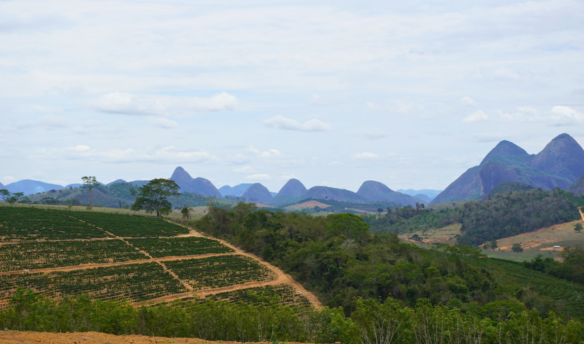
When we think of the coffee that’s grown in Brazil, we generally imagine fazendas: huge plots of land used for monoculture farming. But São Paulo’s Cafezal Urbano coffee farm takes a very different approach.
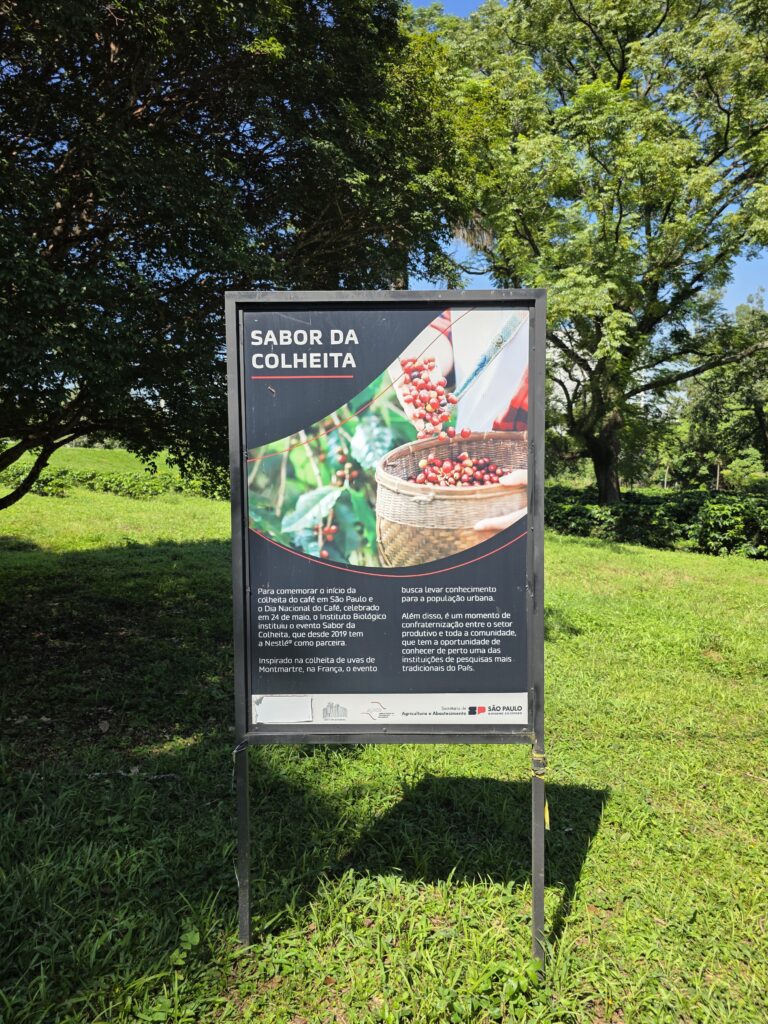
Sitting on less than 2.5 acres of land within one of the most populous cities on Earth , the tree-lined plot happens to be the world’s largest urban coffee farm. It is operated by the Biological Institute (Instituto Biológico), one of Brazil’s oldest and most prestigious research institutions.
Founded in 1927, the Biological Institute was originally designed to combat foodborne diseases and biological pests. However, as Brazil’s agriculture and landscapes turned increasingly to coffee farming, the research institute began to prioritize coffee-related diseases.
By the 1950s, Brazil’s coffee industry was booming. Not only was Brazilian arabica in high demand, but the country led the international industry on the research and development of new cultivars. Behind the scenes, the Biological Institute played a big part in the industry’s success, acting as a cornerstone for Brazilian arabica coffee research and development.
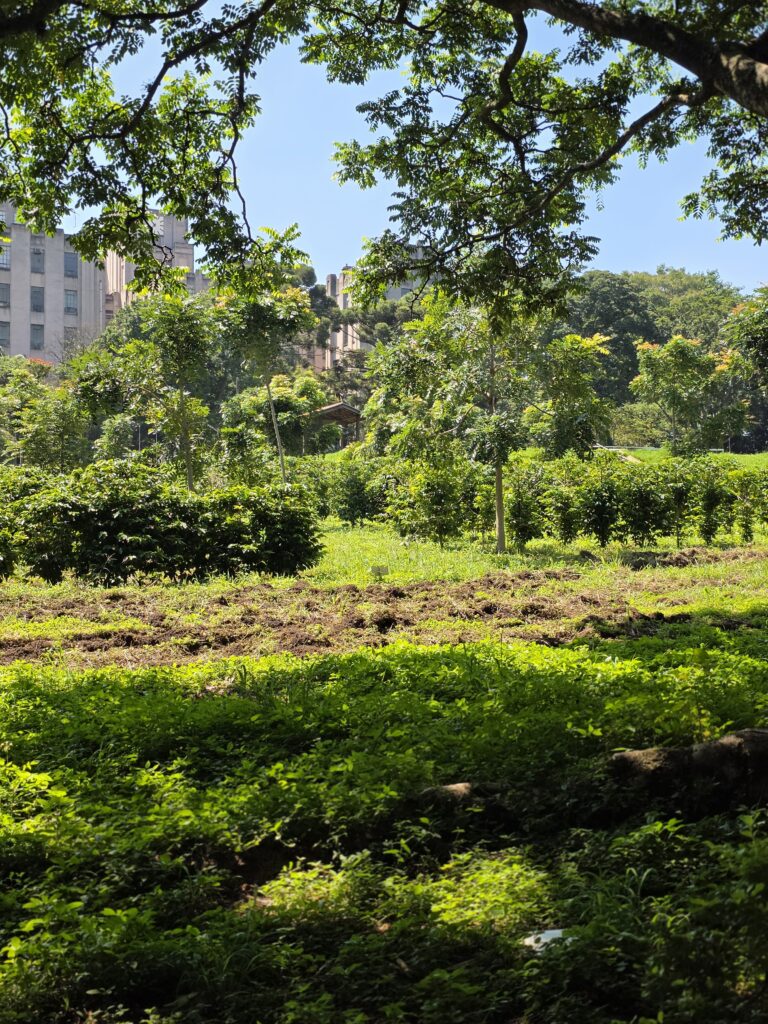
During the same decade, the Biological Institute planted more than 2,000 arabica coffee trees in the middle of its sprawling São Paulo campus. Initially, the plants were symbolic; they represented a kind of “living memory” for the institute’s dedication to the research of coffee diseases and pests.
However, the Biological Institute quickly realized that the urban-grown varieties could serve another vital function: as a testing ground for studying coffee diseases in the field—a literal urban coffee farm, right on the campus’s doorstep.
The Urban Coffee Farm Tour
The Cafezal Urbano farm is right in the center of Vila Mariana, one of São Paulo’s wealthier South Zone neighborhoods, minutes away from the city’s glamorous Ibirapuera Park. Imagine a fruit tree farm and research center only a few blocks from New York City’s Central Park, and you’ll get the idea.

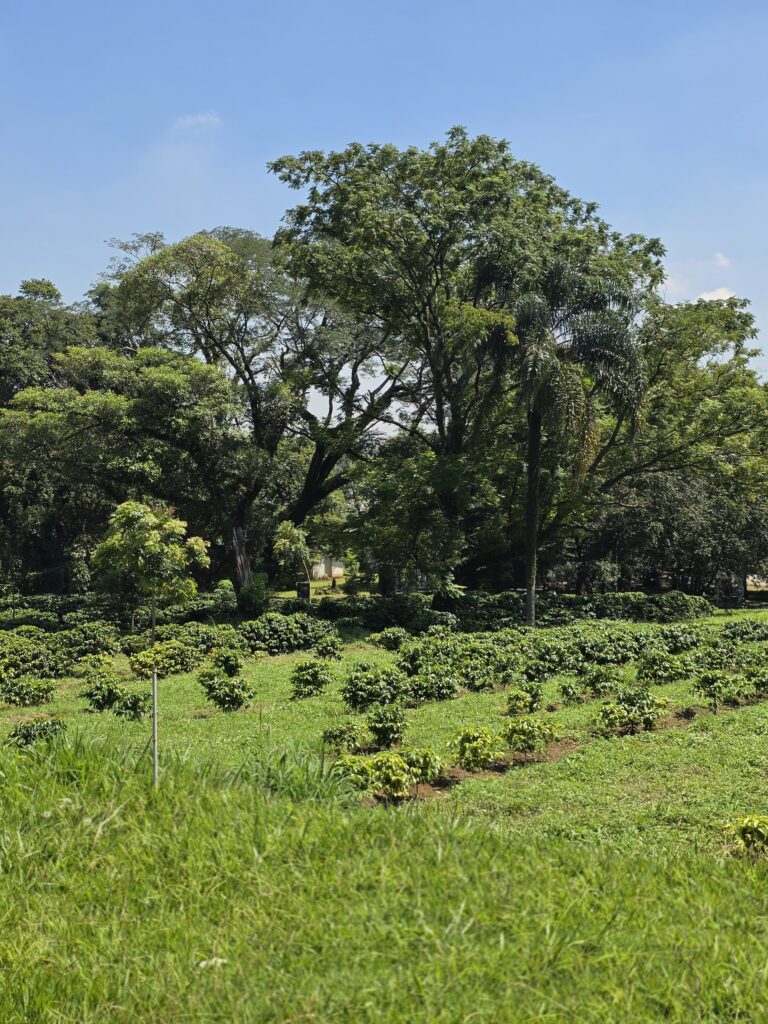
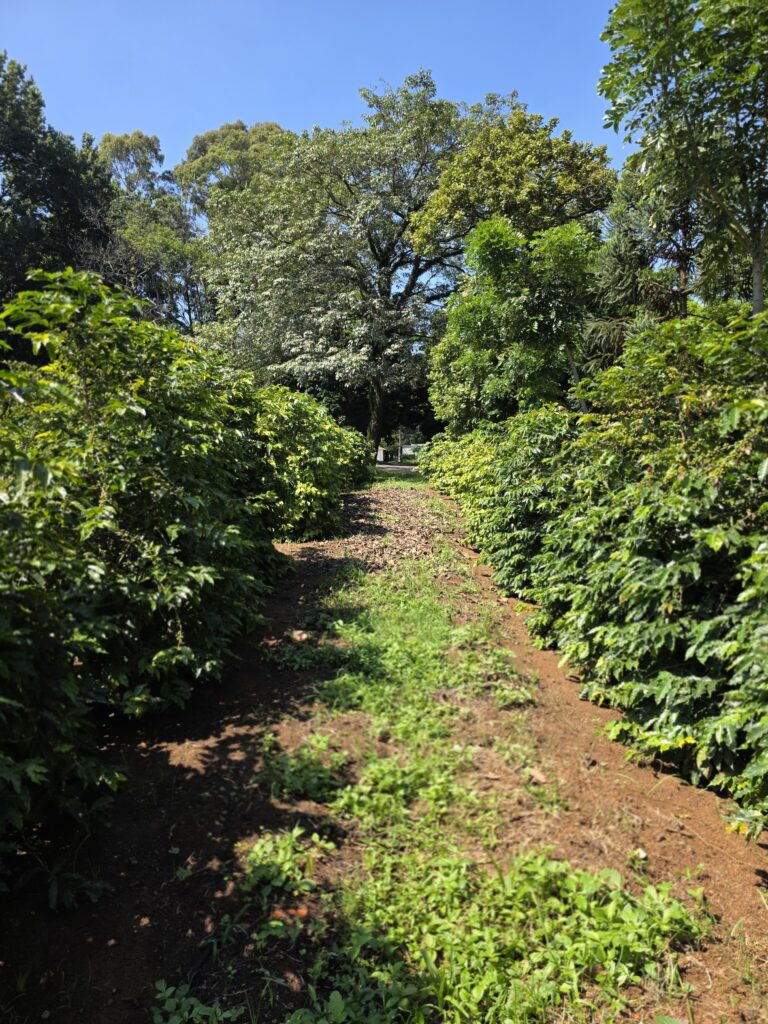
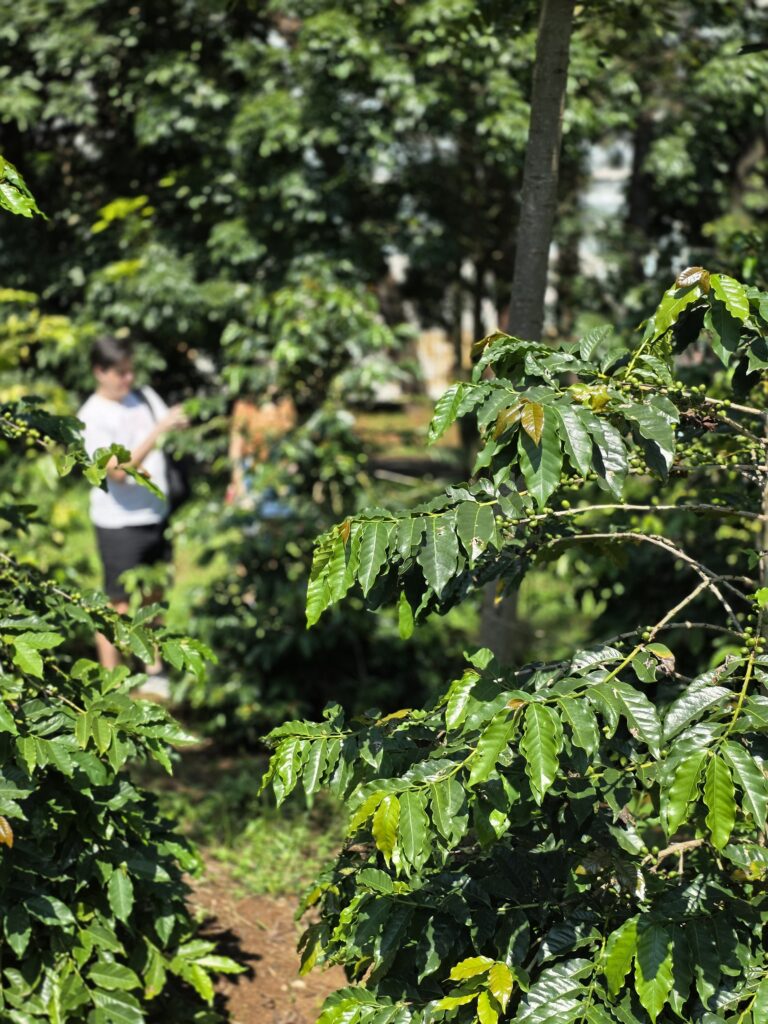
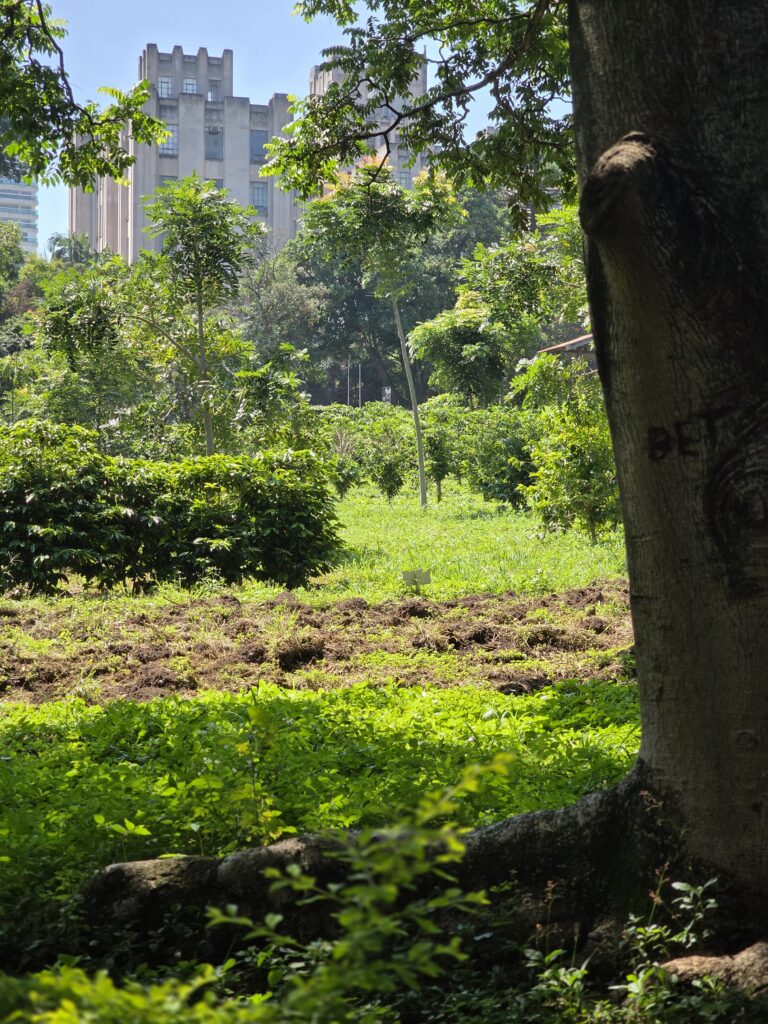
Tucked between two of the institute’s original historic buildings, the Cafezal Urbano at first resembles a manicured orchard. Coffee trees, some planted as recently as a few months ago, grow in winding lanes, each separated by a large, grassy pathway. Looming over them are enormous, old oak and ipê trees, pillars of the original urban landscape.
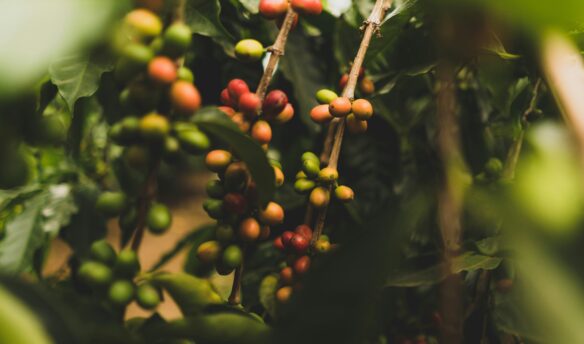
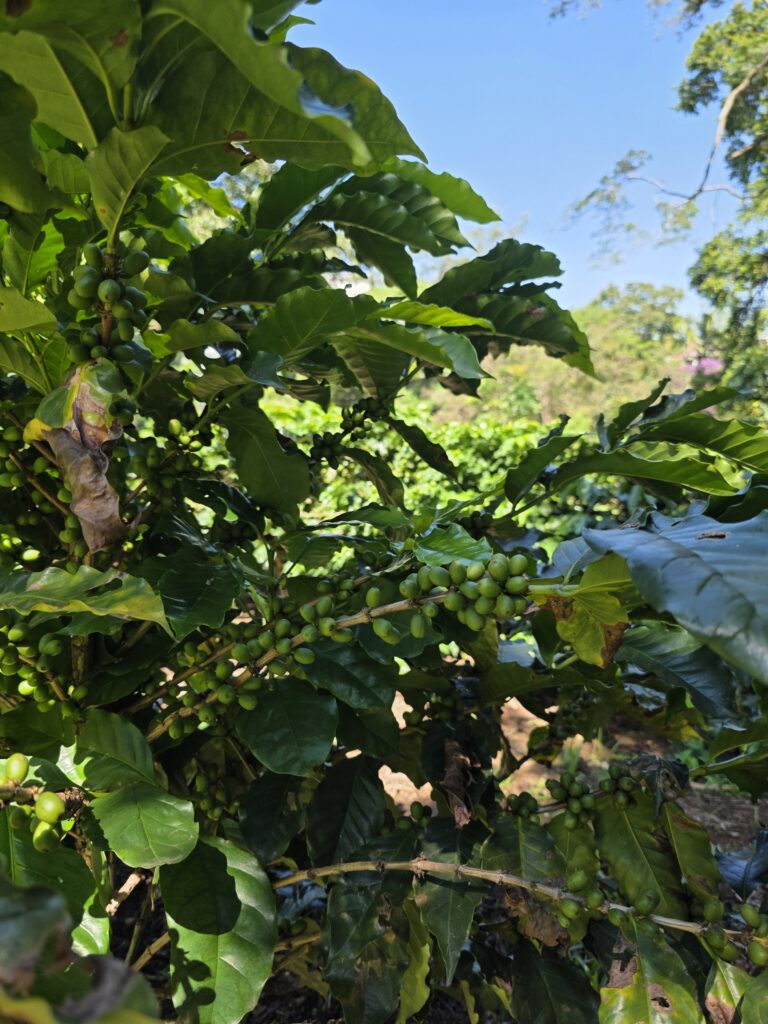
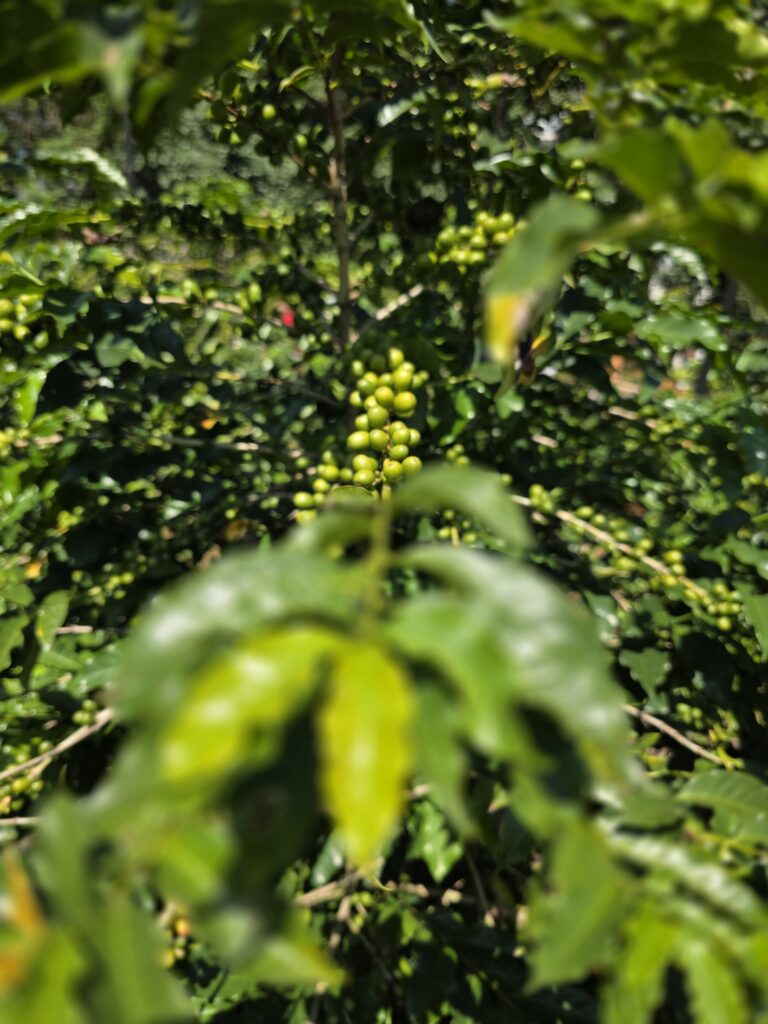
As someone who has been in the industry for almost two decades, I was thrilled to walk along the edges of a campus filled with nearly 200 years’ worth of groundbreaking scientific research. In between the rows of young, lab-born hybrids of Catuaí and Bourbon coffee trees, I felt awe as I bent over to examine the unripe fruits. Some of these coffees will likely go on to be the next industry favorites; others will never be seen again outside the farm.
I joined a group of approximately 20 visitors, all from São Paulo. We kept repeating, “I have lived in São Paulo for all these years, completely unaware that coffee was being grown right here in the city.” Leading the coffee farm tour was Beatriz Vaz, a future researcher at the institute. As we followed her, she described the farm’s research on some of the most destructive pests in the coffee farm industry.
“With the coffee beetle borer, we worked with a specific type of parasitic wasp and entomopathogenic fungi to eliminate the pest,” she told us. “After testing the whole Cafezal, we saw the results of this management approach: Practically 90% of the farm was pest-free, without the use of pesticides.”
Between the neat, grassy lanes of experimental coffee varieties, I noticed the pristine shades of their green leaves. Surely there was something more going on than just a biological pest management system?
“No, it’s 100% organic,” Vaz said. “No fertilizers, no additives. Just really progressive management and research.”
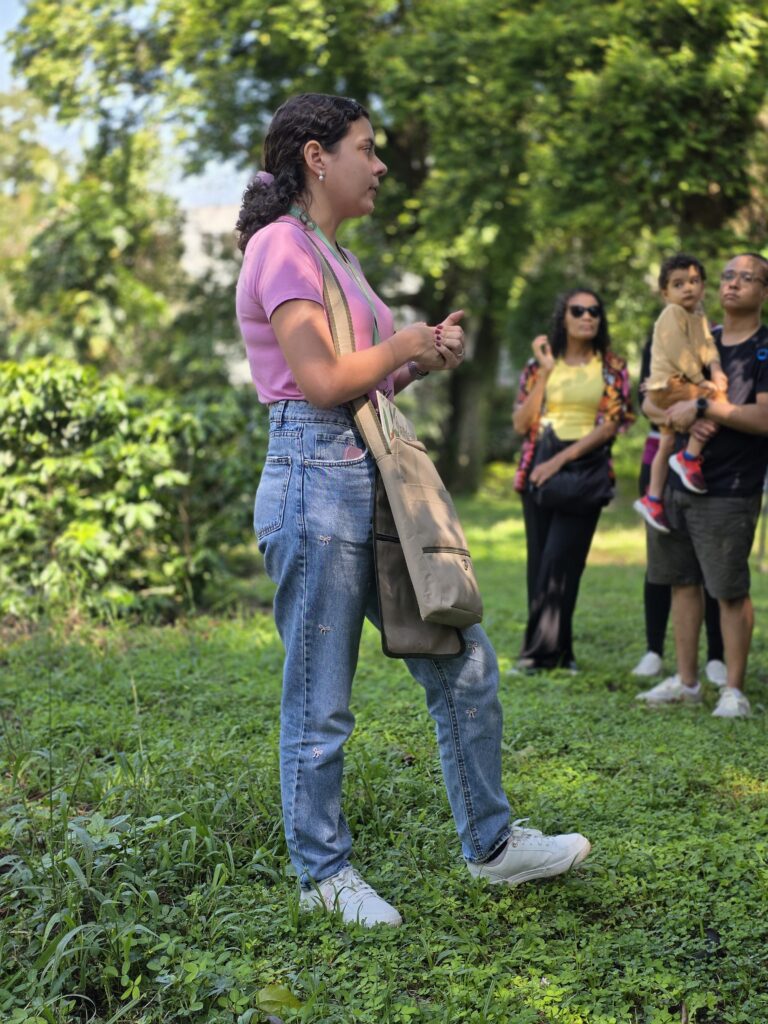
As the tour continued, our group hiked past a patch of sugarcane stalks. Their bamboo-like stems reminded me of their durability—a stark contrast to arabica, which requires constant research and development to survive in a warming world.
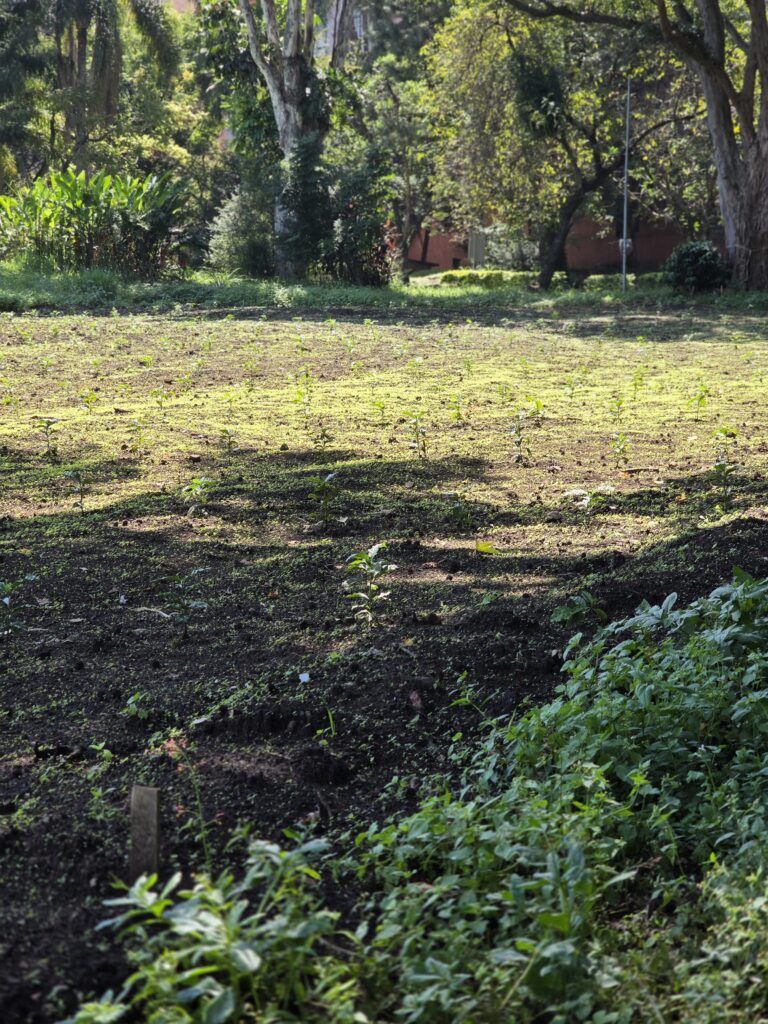
Next, Vaz stopped at a tiny field of fresh soil and newly planted coffee seedlings.“We’re planting some new Obatã and Catuaí varieties here, sent over from the IAC,” she said.
The IAC, or Agronomical Institute of Campinas, has researched and developed some of Brazil’s most famous cultivars, including Catuaí and Mundo Novo. In fact, almost every Brazilian arabica coffee you’ve ever tried was likely linked to the IAC.
Over the last several decades, the Biological Institute has worked hand in hand with the IAC to test new varieties for resistance to diseases and tolerance to extreme climate variations. By becoming a testing ground for the Agronomical Institute of Campinas, the Cafezal Urbano is more than simply the world’s largest urban coffee farm. It is becoming a leading research and development center on its own terms.
I noticed a small area that had been recently tilled. Little lime-green stems sprouted from the soil. I looked over to Vaz, whose eyes lit up. “Just a few weeks ago, we received more than 900 seedlings from the IAC, including some varieties that we’ve never tested before,” she said.
As climate change continues to have detrimental effects on coffee production, some of these more resilient, lab-tested coffees—with no-nonsense code names, such as IAC RN 125 and IAC SH3—could be the solution Brazil’s coffee industry needs. Vaz said she believed that these new varieties, along with the farm’s dedication to regenerative agriculture, are key to fighting coffee-related diseases and climate change. But she also acknowledged that it is a slow process.
“It takes a really long time to see the results from our tests. We want to create a platform for producers, to spread accurate information from our research, but again, these things don’t happen overnight,” she said. “For example, with the bicho mineiro [coffee leaf miner insect], which is a huge problem for Brazilian farmers, we’ve just started getting some data from our newer varieties. But we are still very much in the initial phases.”
As Brazil’s standalone urban coffee farm, the Cafezal Urbano is steeped in the Biological Institute’s rich history of coffee disease research. And, in the next few decades, it could produce some of your new favorite beans. As our group dispersed, I asked Vaz what excited her most about all this. She smiled as she looked out over the trees.
“The majority of the original coffee trees planted here were replaced by newer, more resistant varieties. And, because they are all grown organically here on the farm, it is going to be so exciting to watch and see which ones are able to thrive.”