The Coffee Tech Stack series is presented by our partner, Square.

Blind Tiger Coffee Roasters has eight locations in the Tampa area, but co-founder Robert Torres is imagining a much bigger future. “We’re building for fifty cafes,” he says.
The brand began with a single cafe in Ybor City in 2014. Torres said the coffee roastery was inspired by the prohibition-era speakeasies that would sell tickets to an attraction—famously, blind tigers—as a front to sell and serve alcohol. Over the next decade, the company grew to add seven locations and expand its wholesale footprint to serve customers across the U.S.
And they managed all this growth without any specific technology strategy. In fact, Torres says that the company has been reactive on tech, making one-off decisions as the need arises.
But Torres says it’s time to get strategic.
With his goals to grow and expand, Torres knows his company will need to think differently about tech tools. “I feel a real urgency that we need to get efficient,” he says.
Torres sees tech, and especially AI, as a new world of opportunity that can help the company reach its next level. “I want to understand (AI) so that I’m not losing an opportunity,” he says.
Tech Was Always an Afterthought, Until it Saved $80,000
Torres credits the first phase of Blind Tiger’s growth to a dual focus on quality coffee and customer experiences.
In 2024, Blind Tiger was voted Tampa Bay’s best coffee shop by Axios readers, and a year later, Torres was named to Florida Trend’s Florida 500 list of the state’s most influential business leaders.



As Blind Tiger grew, technology decisions were made on the fly.
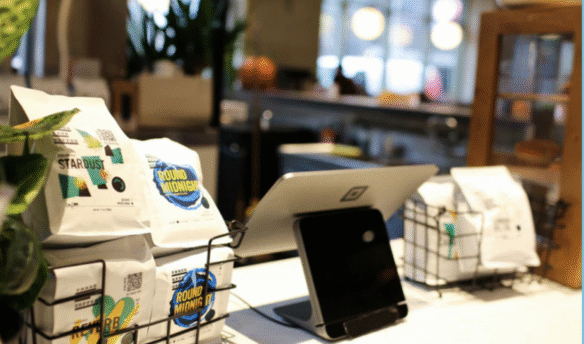
“It was always an afterthought and never intentional. There wasn’t much cohesiveness. We just saw, oh, Square is available, cool. Get a Square Stand with an iPad. Cool.” Torres said their tech tools were chosen and built “literally as we went.”
That approach worked for years, but it also produced a tech stack that was fragmented. Systems didn’t talk to each other, and it made some tasks, like recipe costing, take longer than expected..
But then Torres had a few experiences that caused him to think about the potential of technology differently. For example, the company ran on Square for seven years, then switched to another provider for three years after looking for better credit card processing rates. Then, after meeting with a Square rep and telling them exactly what he wanted to pay in fees, Torres switched back.
“That switch ended up saving us $80,000 per year in processing fees,” Torres says. He hadn’t set out to make another point of sale provider switch, and it wasn’t part of a bigger strategy. “It was just what made sense at that moment.”
The switch back to Square, and the new features the platform has launched in the last few years, surprised Torres. For example, Blind Tiger got an alert from Square’s AI-powered fraud detection after someone used fake credit cards to steal roughly $1,100 worth of food across multiple transactions. The system identified the pattern, pulled the transactions and fake cards, then “put it all together and we were able to stop it and stop future [fraud cases].”
Duct Tape and Google Sheets
Beyond Square as its point of sale system, Blind Tiger uses Per Diem, a mobile app platform that integrates with Square, for the company’s mobile app, which Torres is starting to use to experiment with gamification (for example, Per Diem offers a ‘spin the wheel to get an offer on a drink’ game) to drive customer engagement.
At the cafes, Blind Tiger uses Unifi hardware to set up their WiFi. The system allows Torres to create a custom splash page built through Jotform, where people enter their emails to connect to the internet. Torres says the company has built a list of roughly 289,000 email addresses (he runs email marketing through Klaviyo) over 12 years through the Jotform.
For internal operations, the team uses Homebase for scheduling and team communication, Monday for project management and sales coordination, QuickBooks for accounting, and Google Drive for keeping track of things like standard operating procedures.
On the wholesale roasting side, Torres doesn’t have a dedicated customer relations management (CRM) system for wholesale customers. Orders come in however the customer wants to place them—text, email, phone call—and get tracked in what Torres describes as a complex spreadsheet.
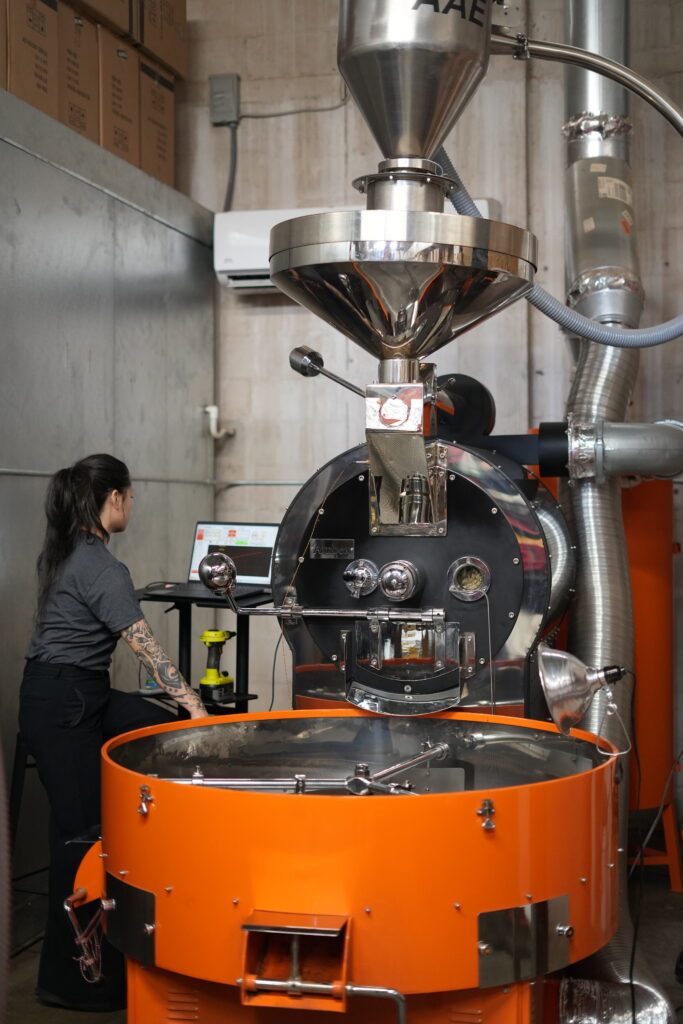

And then there’s inventory. Torres compares their system to a chaotic physical binder that’s stuffed to the brim with paper and held together by duct tape—just in Google Sheets .
“It’s horrific. It’s horrendous. But it works,” he says.
Torres says he’s looked at enterprise resource planning (ERP) platforms like Oracle NetSuite and Restaurant365 to streamline inventory (as well as be the home for costing, purchasing, and other back-end processes), but so far the options are either too expensive or built more for accounting departments of large corporations, not for the way coffee businesses operate.
“Accountants and lawyers have better tools and resources than we do, because of the nature of their business,” Torres says. “The solutions [like this for coffee] don’t exist. And I hate it.”
Getting AI FOMO, And Seeing The Opportunities
Torres doesn’t have a defined AI strategy. Most of the coffee operators he talks to don’t use it much beyond the occasional ChatGPT query. But the constant buzz around AI makes Torres wonder if there’s an opportunity for Blind Tiger. He wants to know if he’s overlooking something critical that can help the business. “What is it that I’m not getting? How am I falling behind?” he asks.
So far, the team has used ChatGPT to help build and troubleshoot their Google Sheets inventory system.
Torres sees potential for AI to help with wholesale ordering. He envisions a system where a customer could call or text a dedicated number, give their wholesale order, and an AI tool would generate a purchase order and send it to the fulfillment team for approval.


Determining the cost of drinks is another area Torres wants to integrate AI. He knows his numbers—he can rattle off the price of a cup, a lid, and a shot of espresso in seconds—but he wants a system that his entire team can use collaboratively that doesn’t live in his head.
“I want everybody on the team to understand how much things cost, or at least learn how to cost them properly,” he says.
Building for Fifty Cafes, Not Ten
Blind Tiger roasts about 100,000 for its eight cafes and wholesale partners. But Torres is building for far more than that.
“We need to build the capacity for five million pounds. We need to build our tech stack for 50 stores, not 10 stores.” He says he’s planning for the long-term future of the brand, “not just what’s around the corner.”
Despite his focus on technology and the future, he advises new businesses to start with building a strong brand identity.
“They need to spend a lot of time on what I like to call ‘the soft part,’ which is really the tough part,” Torres says. “The brand. The why. The mission and the vision and the values. Because at the end of the day, that’s what’s going to keep you going. That’s why people are going to keep coming back.”
He believes this is the best time to be in coffee because technology is creating new possibilities for how coffee companies run.
“Technology is the equalizer,” Torres says. “It allows somebody with a little coffee shop on the corner of the world, if they do something really compelling, people will drive and fly just to experience that. And I believe technology is the thing responsible for that.”
Blind Tiger Coffee Tech Stack: At a Glance
- Point of Sale: Square
- Mobile App: Per Diem
- Email Marketing: Klaviyo
- CRM: Google Sheets
- Bookkeeping: QuickBooks
- Team Communication: Homebase
- Roast Profiling: Roaster Dynamics
- Inventory Management: Google Sheets
- Internet: Unifi
- Email Intake: Jotform
- AI: ChatGPT
- Project Management: Monday
- File Storage: Google Drive

Sponsored by SQUARE
The Coffee Tech Stack series is presented by Square. Square is a point of sale technology provider and longtime innovator that now offers a comprehensive suite of tools built specifically to help coffee shops and roasters operate smoothly and profitably.