✉️ This story was featured in this week’s Coffee News Club
👋 Get the Coffee News Club newsletter in your inbox weekly—sign up.
Many coffee companies promote corporate social responsibility commitments, such as focusing on social and environmental concerns, as part of their business operations. These CSR commitments often involve funding sustainability projects: For example, Nespresso has an ongoing tree-planting initiative, while JDE Peet’s promotes education for the children of coffee farmers in Uganda.
However, a new report argues that sustainability projects are often standalone initiatives that remain separate from companies’ coffee-sourcing strategies. Instead of individual projects, traders, roasters and retailers should commit to more sustainable coffee-buying practices over the long term.
The report was published by the VOCAL Coffee Alliance, a coalition of civil society members from producing and consuming countries. It was compiled through interviews with producers and other stakeholders in Brazil, Nicaragua, Honduras, Uganda, Indonesia, Guatemala, Mexico, and Sri Lanka.
While recent spikes in commodity prices have benefited some farmers, most smallholders remain unable to earn a living income. This, the report says, is due to structural barriers like extended payment terms, rising costs of tools like fertilizers, and the fact that producers shoulder a disproportionate share of the risk. One bad frost or heatwave, for example, can wipe out a farmer’s entire harvest, and thus a year’s income.
“Producers call on buyers to translate ‘sustainability commitments’ into procurement practices that deliver remunerative prices, faster payments, co-financing for compliance and shared risk mechanisms,” the alliance said in a press release. For example, the report suggests that buyers could share some of the risk by covering producers’ crop insurance or climate change mitigation costs, or by committing to speeding up payments.

During the interviews, producers said they valued long-term, transparent business relationships, fair and predictable pricing, and buyers sharing risk. They also flagged what they called “burdensome” compliance costs associated with new regulations, such as the European Union’s deforestation legislation.
“The coffee sector must move beyond fragmented sustainability projects toward responsible procurement and investment that recognizes producers as essential economic partners whose labor, knowledge, data, and environmental stewardship underpin the entire industry,” the report concludes.
Read the full story on the report’s call for more responsible coffee buying here.
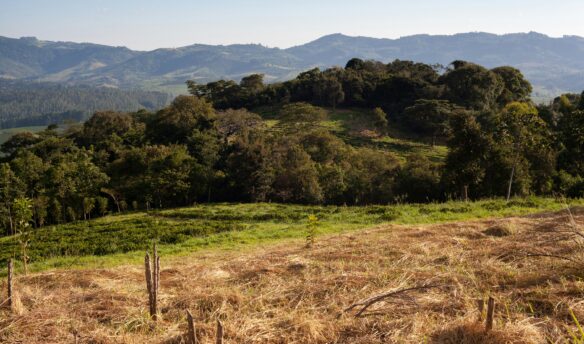
Photo by Ryan Searle on Unsplash