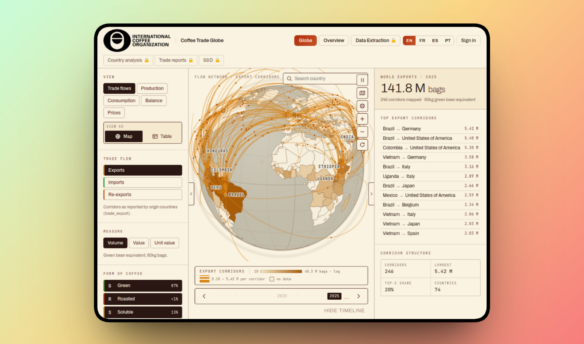
As specialty coffee becomes more popular, so do coffee festivals. In 2025, organizers of the Glasgow Coffee Festival reported record-breaking attendance numbers. The Specialty Coffee Expo in Houston garnered 17,000 registrations, and World of Coffee Geneva drew nearly 20,000 visitors from 140 countries.
For coffee businesses, the chance to meet customers and network with peers can be exhilarating, but also exhausting. After a year that hit coffee hard—from tariffs and rising green prices to highly publicized unionization fights and violent ICE raids in the U.S.—coffee brands are looking to foster community more than ever.
Coffee festivals can be a great place to build that community, but they can also be hectic, or a slog. The question becomes how to keep the energy high, for both booth staff and visitors—and how to stand out from the competition.
Denmark is a relatively small country, though it consistently ranks among the top five coffee-consuming nations per capita worldwide. The Danish Coffee Festival, held in Copenhagen early this year, welcomed more than 6,500 attendees and 72 exhibitors.
“It’s a bit of a rollercoaster,” says Marc Munk Simonsen, head of coffee for Slow, a regenerative coffee and chocolate business, and a co-founder of the festival. Simonsen organizes the Roasters Village, a common feature of coffee festivals, where roasters brew and share coffee with visitors.
At the Danish Coffee Festival, Simonsen says, many roasting businesses return year after year. To keep things energized in the event’s eighth year, “We encourage exhibitors to host workshops and other fun activities at their booths,” which were listed in the program.
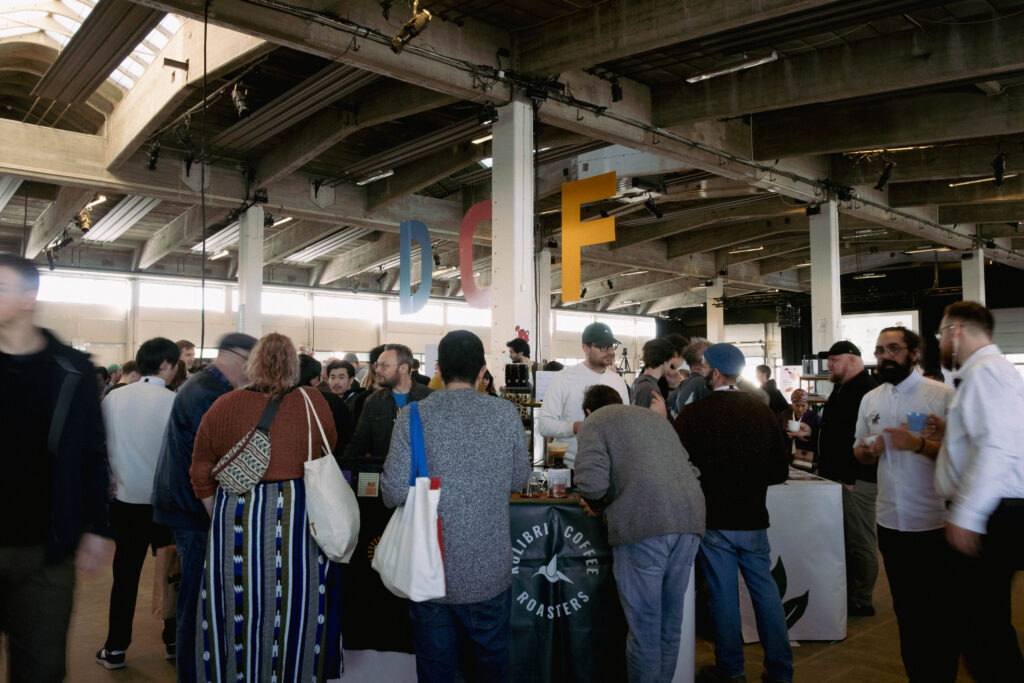
Many of the roasters took Simonsen’s advice to heart, and found additional ways to provide new and innovative booth experiences, engage visitors, and get noticed. Here are three strategies they used—and which exhibitors at upcoming coffee festivals can capitalize on.

1. Bring Everyone to the Table With an Interactive Tasting
Many visitors arriving at the Danish Coffee Festival made their first stop at Bellas Coffee Lab’s booth, which was situated close to the exhibition hall’s entrance. The booth offered a tasting of four coffees in a specific order and engaged guests to discuss and compare the sensory experiences of each.
“The tasting was a journey, starting with an exclusive gesha bean, followed by two arabica coffees with the same flavor notes but very different roast profiles: a lightly roasted Colombia and a medium-roast single-estate from El Salvador, and finishing with gesha again,” says Bellas Coffee Lab’s head roaster, Baki Dölek.
One by one, the baristas working the booth led visitors through the intricacies of each coffee, encouraging festival attendees to notice the terroir and roasting qualities as the tasting progressed. “This way, guests could truly experience how roasting shapes flavor and opens new dimensions in every bean,” says Dölek. “We want everyone who visits us to leave with a ‘wow’ moment.”
These kinds of engaging experiences can keep prospective customers buzzing long after the festival ends. The Bellas booth was reminiscent of the interactive “Guess the Origin” challenge, a blind cupping competition that the New York City-based roaster-retailer Coffee Project NY has offered at the the New York Coffee Festival.
Although origin information was visible at the Bellas booth, visitors were encouraged to formulate the sensory questions just on the tip of their tongues as the final coffee—a washed orange gesha from Finca La Hermosa in Acatenango, Guatemala with notes of jasmine, apricot, Turkish delight, and brown sugar—widened the horizons of the experience.
The festival was equally memorable for the Bellas team. “It was a paradise for us coffee nerds,” Dölek puts it. “Meeting visitors, sharing the stories behind our beans, and watching their eyes light up as they tasted the differences between our roasts [is] exactly why we make coffee. Our small team left energized, inspired, and filled with conversations about coffee.”
2. Watch the Clock for Over-Caffeination
If there’s anything visitors should be wary of at coffee festivals, it’s ingesting too much caffeine. Because nearly every booth offers coffee tastings, it’s easy for attendees to accidentally overindulge—and feel on edge for the rest of the day as a result.
By the early afternoon, some exhibitors at the Danish Coffee Festival switched up their strategy, prepared to draw in wired and wary guests with decaf options.
One such exhibitor was Wilden Herbals, an Italian herbal tea company that also produces the Herbpress, a system that allows any espresso machine to brew purely botanical infusions. Wilden Herbals collaborated with the Italian espresso machine company IMS Filtri to develop the patented extraction system, which slots right into an espresso machine’s portafilter.
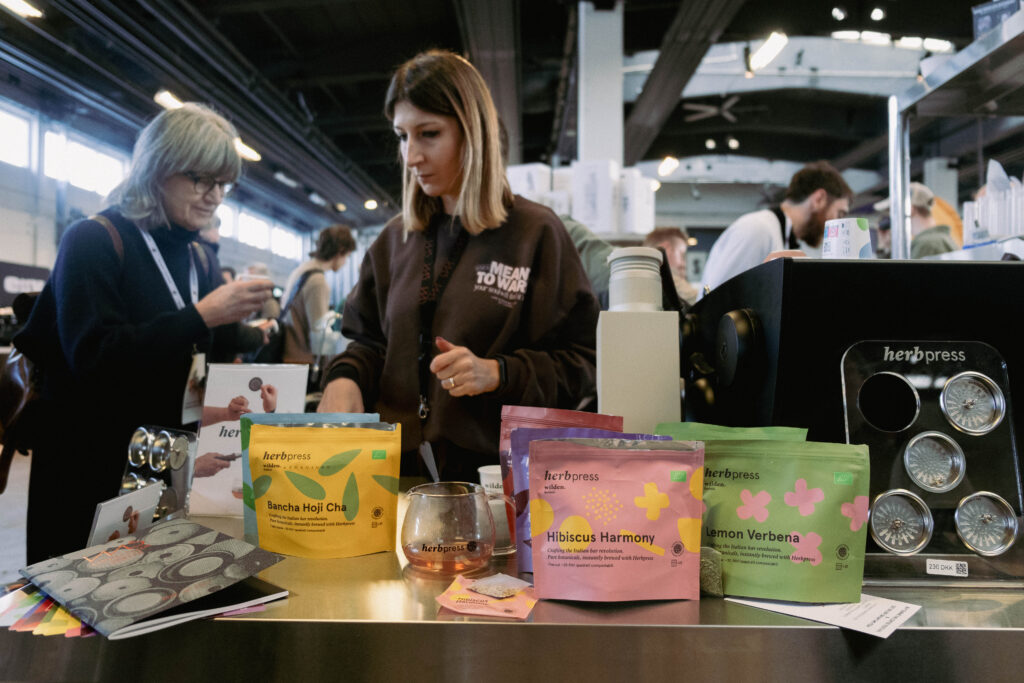
Wilden Herbals founder Nicola Robecchi says the product enables coffee businesses to serve tea faster, with more consistency, and in a way that “feels as crafted as espresso.” At the festival, the team illustrated its use, brewing with ingredients from chamomile and linden to cacao and cascara.
“The first reaction was almost always disbelief,” says Robecchi, who reports that visitors often paused to ask, “You’re pulling … herbs?” But tasting the result made an impression.
Several baristas sought out the Herbpress booth during the festival, particularly in the afternoon. “They said, ‘Now we actually need this,’” Robecchi says. Ultimately, the team served hundreds of interested guests, and confirmed its place in a landscape that’s opening up to low-caffeine options.
“Participating in the Danish Coffee Festival was a very intentional decision,” says Robecchi. The Wilden Herbals team traveled more than 700 miles from Milan to Copenhagen with the city’s advanced coffee market in mind. For Robecchi, the interest confirmed that “we were in the right place […] If you want to test a disruptive idea in the coffee space, you bring it to an audience that truly understands extraction, pressure, and sensory detail,” he says.
3. Diversify Your Beverage Lineup—and Your Serving Style
Herbpress wasn’t the only business that showed up at the Danish Coffee Festival with a coffee alternative.
Latvian roaster Rocket Bean had a wide range of drinks on offer, including a tea selection that nearly rivaled its coffee range. It also had two kombuchas available to try, plus an award-winning sugarcane decaf from Jairo Arcila, a famed producer of funky Colombian coffees.
“Visitors want to see what the fuss is about, where the industry is heading, so it should be festive,” says Ancis Romanovskis, brand manager for Rocket Bean, of the decision to exhibit its larger product lineup. “We don’t sell as much tea as coffee, but there’s a huge interest.”
Rudy’s Kombucha was stationed just before the main doors of the Danish Coffee Festival, where overextended guests could take a break. The award-winning Dutch brand drew attention with flavors like raspberry basil and mandarin yuzu.
Offering guests the chance to sit and stay awhile was also a winning strategy. Copenhagen-based Prolog Coffee stood out for its dedicated seating area, as well as its carbonated cascara beverage. Both offered a lower-caffeine change of pace, and a palate cleanser for anyone needing a break from freshly brewed coffee.
At the end of the day—and in a landscape that sometimes feels like it’s evolved into homogeneity—it’s precisely the coffee festival exhibitors taking chances who get noticed.
“The specialty coffee industry is so creative,” says Romanovskis. “Some coffee purists want to be strict. Just black and white, no other colors. But isn’t specialty about the colors?”
Photos courtesy of Herbpress