Over the past decade, coffee consumption in China has surged nearly 150%. Once a niche habit, coffee has gone mainstream among younger urbanites in particular. The factors motivating that growth include everything from convenience and interest in global trends to the desire for connection and communal spaces.
Shanghai, the country’s most mature specialty coffee market—and the city with the largest number of coffee shops in the world—illustrates this shift. The city now has more than 9,000 coffee shops, according to China Urban Coffee Development Report 2025, an increase of close to 7% since 2023.
As demand has grown, China’s coffee imports have increased in parallel, rising sixfold in five years. But the most notable impact of this growth is the evolution in the role of the barista. Increasingly, the job is no longer seen as just service work, but as a specialized, professional occupation.
More broadly, that evolution represents changes in how people in China view youth employment and professionalization—and even national identity.
Coffee and Market Acceleration
In China, the rise of specialty coffee unfolded against a specific economic and cultural backdrop. Compared to the U.S., foreign cafe chains like Starbucks entered the Chinese market with significantly higher price points, positioning drinks like lattes as luxury items. In Shanghai, a Starbucks latte can cost nearly twice as much as it does in New York.
Starbucks spent more than two decades building some 7,000 stores across China, shaping the country’s early perception of coffee shops as “third places.” Founded in 2017, the homegrown Luckin Coffee chain surpassed that number in under six years. It was followed by other fast-growing domestic chains like Cotti, Manner, and SeeSaw, which were designed around a digitized, lower-priced format during the pandemic.
By 2023, China had become the world’s largest branded cafe market, surpassing the U.S. While per capita consumption remains comparatively modest at around 20 cups per year, compared to roughly 400 in the U.S. and 1,000 in Norway, that figure has nearly doubled in three years, rising from nine cups to 20.

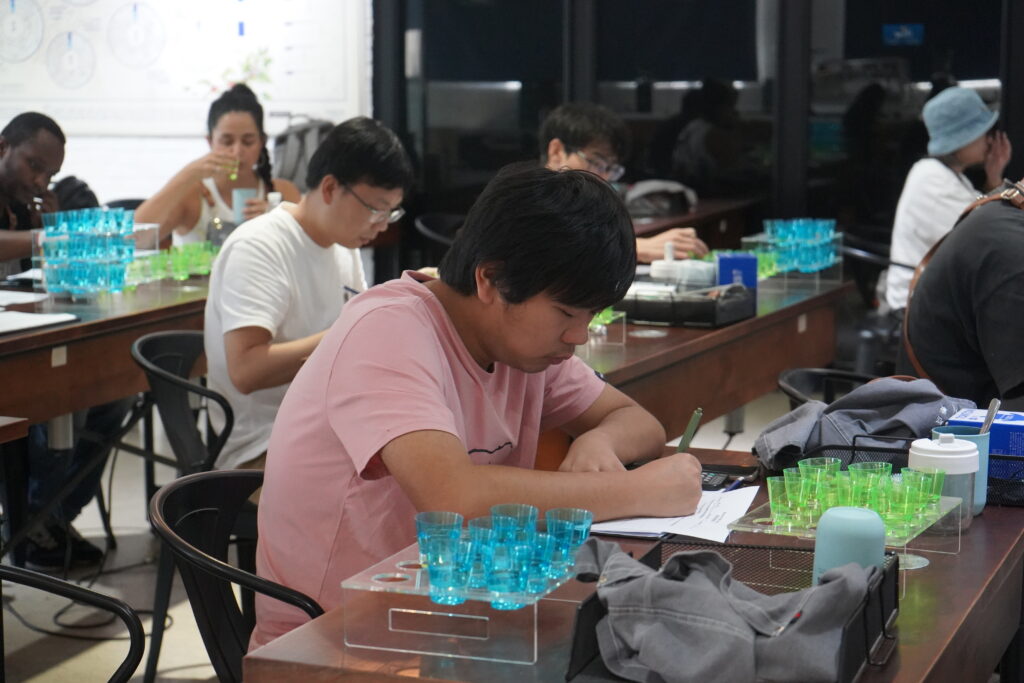
But all this growth means that coffee shops have been left scrambling to hire thousands of new baristas.
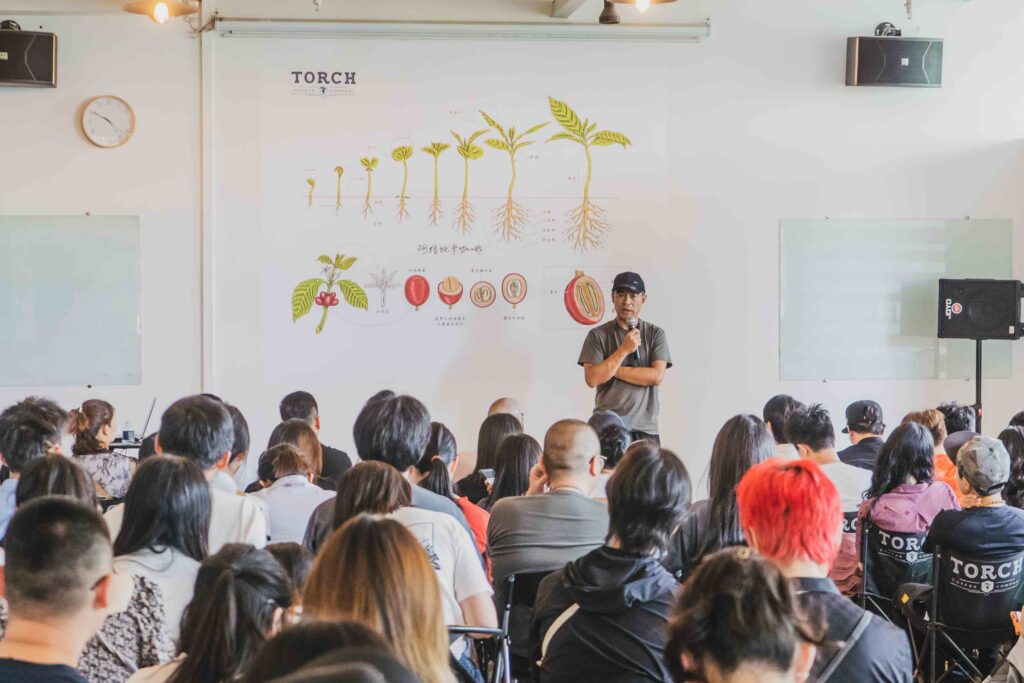
“This scenario created a new pressure point: how to staff and professionalize a segment growing at breakneck speed,” says Marty Pollock, managing partner of Torch Coffee, a Yunnan-headquartered coffee company with operations spanning training, trading, and production across China, Guatemala, the UAE, and Kenya.
Since 2014, Pollock and his instructors have trained more than 4,000 students, including teams from Starbucks, Nestlé, and Luckin. “With more consumers, more shops, and more complexity, the barista’s role becomes essential—the final step in the value chain, and a symbol of rising service expectations,” he says.
The New Meaning of the Barista Vocation
Coffee, according to Pollock, plays a dual role among Chinese consumers: It is part functional fuel for the high-pressure “996” work culture—a grueling and controversial work schedule from 9 a.m. to 9 p.m., six days a week, which originated in China’s tech sector—and part lifestyle ritual for younger consumers seeking aesthetic, social, or emotional value.
In 2023, 68% of Millennials living in China reported drinking coffee daily or several times a week, accounting for the bulk of current spending. Gen Z, meanwhile, is shaping demand for new product formats and evolving consumption experiences.
Pollock has worked in the coffee industry in China for more than 20 years, and says that while Millennials shepherded the growth of the sector, it’s Gen Zers who are defining what coffee looks like now. “They grew up in a consolidated coffee market with accessible price points, strong visibility, and an aesthetic culture that blurred lifestyle with consumption,” he says. “Coffee has always been part of their landscape because the breakthrough happened with the previous generation.”
More young people aren’t just drinking coffee, but are looking to the industry for employment. Working in the coffee business “offers both accessible, entry-level work plus social identity,” Pollock says. Luckin Coffee alone employs more than 130,000 baristas.
A key factor driving people to explore coffee as a profession is the rate of unemployment among younger generations, which has been high in recent years. While China’s overall urban unemployment rate is about 5–5.1%, for those aged 16–24, it peaked at 21.3% in 2023, and remained at 18.9% in August 2025.
But that’s beginning to change. “Parents today are more willing to support non-linear paths, especially in big cities,” explains Lydia Li (李艳), vice general manager at Bloom Coffee College, a barista training academy in Shanghai.
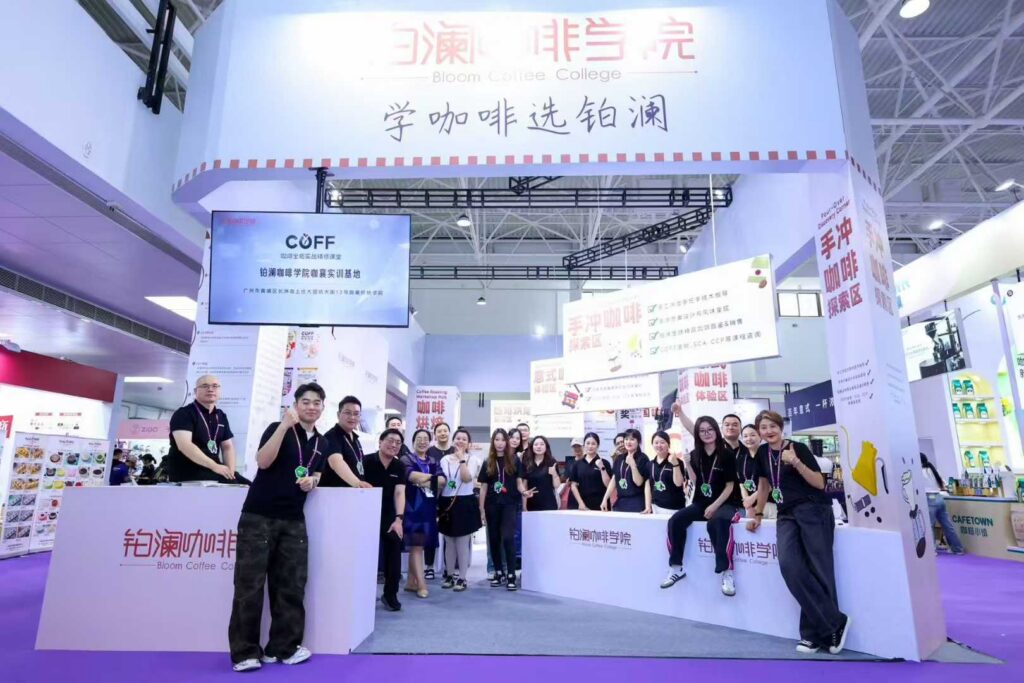
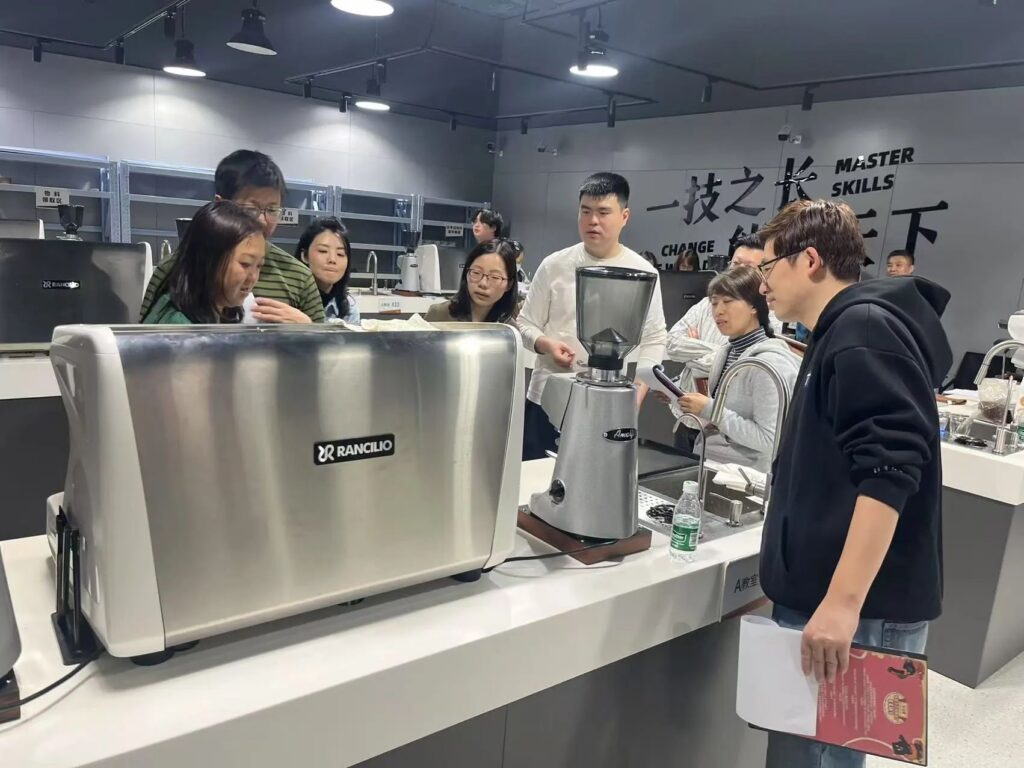
Over her 10 years as an instructor, she has trained hundreds of students across Hong Kong and Mainland China—from first-time learners to advanced professionals pursuing coffee certifications. “There is a growing understanding that traditional roles no longer guarantee security. Society is beginning to trust that coffee can lead to stable positions in operations, training, or entrepreneurship,” she says.
At Torch’s shops and farms, Pollock has hired baristas in their early 20s who relocated from large cities to work for the brand, as well as Millennial workers looking to escape white-collar jobs and big-city life, but who still need jobs that offer long-term stability.
Li says this shift was spurred by changes in societal perception. “Officials have begun codifying creative and experiential careers to cater to an expansive, broadening labor demand, which now includes barista work,” she says.
Training Pathways
In 2023, China’s Ministry of Human Resources and Social Security introduced a five-tier barista certification program, an official program that made baristas a state-recognized profession.
The program originally started in Shanghai, and trained people in all facets of barista work. In 2024 alone, more than 5,000 candidates sat for the certification exam in Shanghai. “In 2023, there were 1,000 students”, says Diana Xu, marketing coordinator at the Shanghai Coffee Chamber of Commerce (SCCC), part of the Hongqiao International Coffee Harbour.
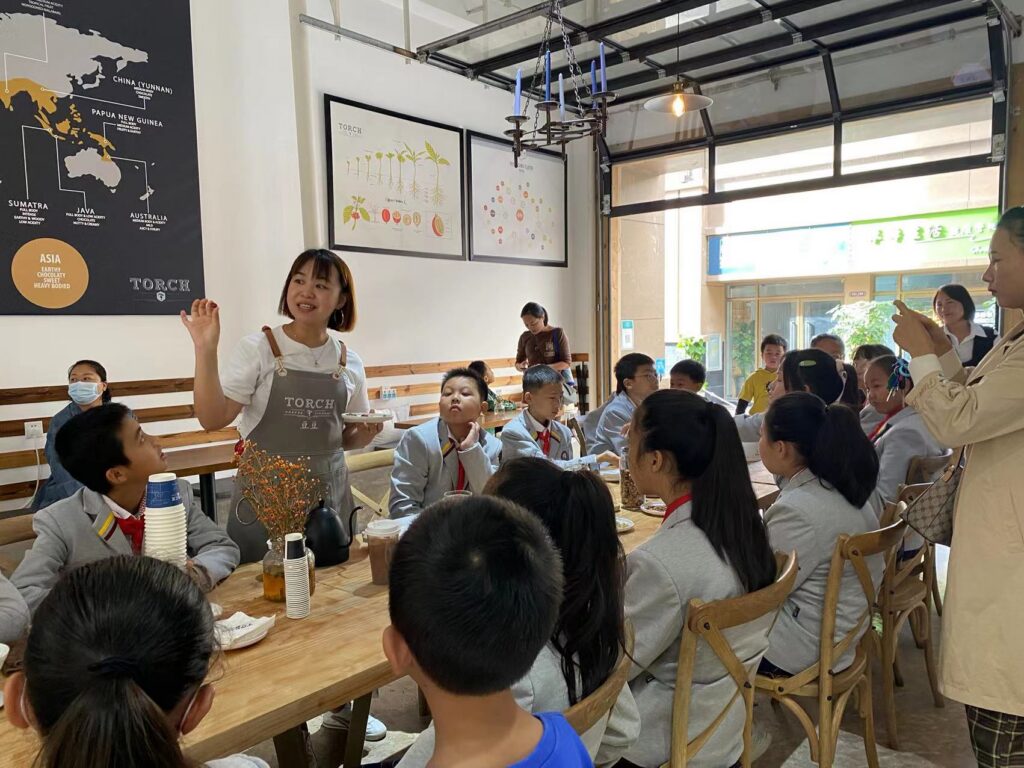
The barista certification system has five levels. The entry levels focus on employability and basic service skills, while the advanced levels cover leadership, research and development, and business management.
Graduates also benefit from active job placement support. “We introduce job opportunities to our graduates, connecting them to potential employers,” Xu adds. For those who meet the certification criteria, course fees are covered by government subsidies.
According to Xu, the certification program has already reshaped the employment landscape: Major coffee chains in China like Starbucks, Luckin, and Cotti now use the certificate to benchmark salaries and promotions. On average, she says, certified baristas make 15% more in wages than non-certified baristas.
Li and Pollock—who are longtime collaborators—have worked together on Specialty Coffee Association training programs across China and Asia. They both welcome and celebrate the advent of the Chinese government’s program as an additional training system. “Waiters and clerks don’t get that kind of formal recognition. Baristas now do,” Pollock says.
Even with the government certification program, specialty coffee and SCA courses are still in high demand. “Each training system has its place: The government program helps you get hired locally; SCA is still the benchmark for international development,” says Li.
Li and Pollock also work together to organize the annual Yunnan Coffee Flavor Map project, run by Torch. Now in its fourth year, the project brings together Q graders from around the country to conduct sensory profiles of coffee grown in China’s Yunnan region. Last year’s event attracted around 700 Q graders.
“Young people today want a clear development path. And when it comes to coffee, they take it seriously,” says Li. “It’s a sign that both the industry—and what a barista can aspire to—are maturing.”
A National Identity
As demand grows, China has increasingly bought more coffee from places like Brazil, Ethiopia, and Colombia to keep pace with rapidly growing consumption. At the same time, domestic production has expanded as part of a national effort to define and elevate China’s coffee identity. Yunnan’s coffee exports rose 358% in 2024, a surge driven by a coordinated, state-backed push to improve quality and productivity.
President Xi Jinping has highlighted Yunnan coffee in public remarks, framing coffee from the region as emblematic of China’s emerging coffee identity. Commercial chains have also been sourcing more domestically grown coffee. In 2022, Luckin became the first major Chinese chain to launch a specialty coffee line using Yunnan-grown beans.
Beyond China’s coffee, the country’s baristas are also seeing their profiles rise.
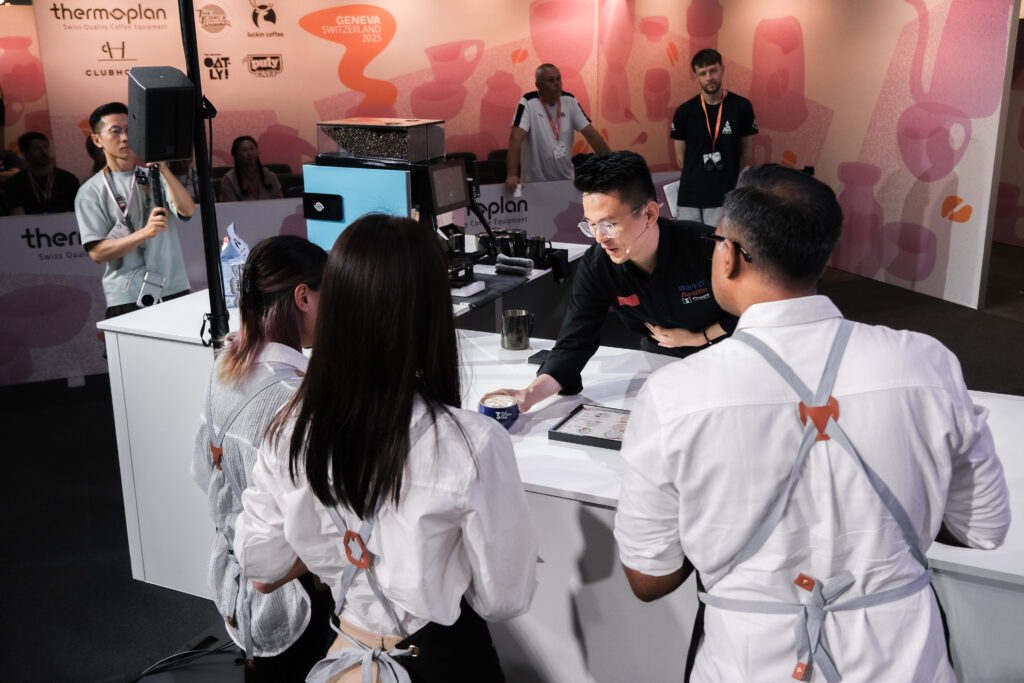
Simon Sunlei is from Suzhou in the Jiangsu province, and is owner of Marus Coffee. He is China’s current national barista champion, and finished second at the 2025 World Barista Championship held in Milan. Earlier in 2025, Chen Zhuohao—who hails from Hangzhou in the Zhejiang province, and is the owner of the Moment Coffee Studio training hub—won the World Latte Art Championship.
Li sees social platforms like Xiaohongshu (Red Notes) and Douyin as central to amplifying the rapid professionalization of China’s barista community. “These platforms democratized access to knowledge: advanced techniques became accessible to anyone with a phone,” says Li.
For Zhuohao, his rising visibility brings responsibility. For professionals like him, who have seen the barista profession grow from the inside, “It’s exciting to see how this growth is shaping a distinctly Chinese coffee culture—one being defined by our generation.”