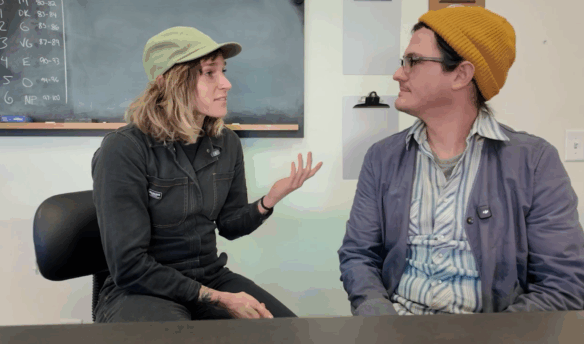
Fresh Cup partnered with coffee roaster and communicator Kat Melheim to produce a series of interviews with coffee leaders and innovators. We gave Kat full creative control to interview the people she finds fascinating, and dig into the topics she’s most curious about.
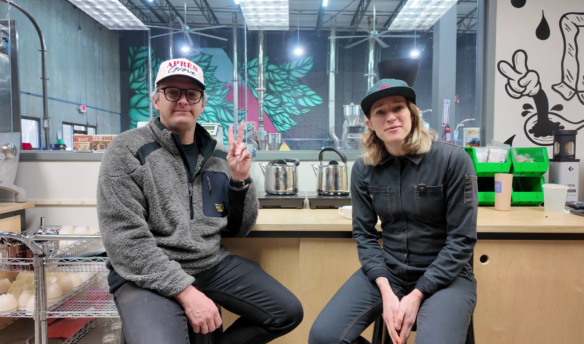
For this conversation, Kat sat down with Areli Barrera Grodski, co-founder of Little Waves Coffee Roasters and Cocoa Cinnamon in Durham, North Carolina. Little Waves won Roast Magazine’s Micro Roaster of the Year award in 2022, and has built its mission on the pillars of quality, relationships, and impact. The company’s approach to sourcing emphasizes racial and gender equity, while its range of offerings—from peak specialty lots to approachable, full-bodied coffees—is designed to appeal to a broad customer base.
To catch up on the conversation, watch the full video below, or read through the following transcript.
This conversation has been edited for clarity and concision.
Kat Melheim: Could you give a quick intro to Little Waves, and how you came to be here?
Areli Barrera Grodski: Little Waves Coffee Roasters is based in Durham, North Carolina. We won Micro Roaster of the Year in 2022. We’ve been slowly growing, and the pandemic really helped us expand our roastery side. It’s actually what kept Cocoa Cinnamon in business and staying afloat.
Little Waves is your roastery operation and Cocoa Cinnamon is your cafe implementation?
Exactly. We started roasting in 2017. Cocoa Cinnamon started in 2010 in my mom’s kitchen in western North Carolina. Leon [Areli’s husband, business partner, and coffee scientist] and I moved to Durham in 2011 with the intention of opening up a coffee shop. We started as a bike cart in Durham, and slowly but surely, we cobbled things together. We always knew we wanted to eventually roast.
Leon had some roasting experience already. When we first started on the bike, we were a multi-roaster company. That was always something that excited us—being able to taste coffee roasted by various different roasters. When I first started roasting in 2017, it was my first time learning the craft of roasting, learning the science and the art of it. It’s an always-learning experience.
I feel like when you don’t really have the experience, Leon had the experience, so I had a lot of support. She started our program off knowing that I would eventually take it over. I took some courses at Coffee Expo when that was still happening, but really it’s the hands-on that teaches you the lessons you need to learn. Also reading books, learning from colleagues, going to Roaster Guild retreats—those have really helped get us to where we are right now.
Our roast style has evolved over the years based on our palate and how we want to showcase our coffees. It’s also evolved based on who our customer base has been. The foundation of our program has always been having an array of really beautiful ‘peak’ coffees while also having beautiful, full-bodied coffees that my mom would enjoy.
How did you start thinking about equity and values in your sourcing?
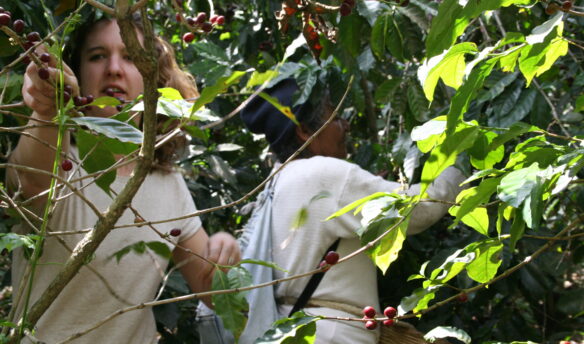
I think we started with the idea of wanting to be good partners to producers, and really understanding how to do that. For me, I never really wanted to travel to origin until I had a track record with someone and was building relationships.
Tierra de Mi Padre is a coffee from Mexico, from Nayarit, and that was my first farm visit. My family is from Nayarit. My dad is from Nayarit. We were there in 2015 visiting my grandpa, and we decided to look up who was importing coffee from there. I saw it for the first time in 2014 at Victrola Coffee in Seattle, and it blew my mind because I didn’t even know that Nayarit was a producing state.
By that time, you’d had four years of Cocoa Cinnamon, so you knew the coffee world a bit.
Yeah. Mexico also wasn’t necessarily on the map as much either. Maybe Chiapas and Oaxaca, but that was about all you could see. When I saw Nayarit, it was natural—I was so excited. In 2015, we visited family and we looked up where this coffee was coming from. We wrote them an email with our super slow internet there, and I got in touch with Jim Casalos. Him and his wife Deborah are the owners of Café Sustentables de México and San Cristobal Coffees.
I love how people get into coffee. This guy’s a geologist that fell into coffee. I think that’s why it’s both an art and a science—you’ll find many scientists who turn into coffee professionals. Jim started building relationships in Nayarit and trying to promote the market of specialty coffee there. When we reached out to him, he was still in that process of building those relationships and trust with the community and the producers.
How did this influence your sourcing philosophy over time?
The foundation of our sourcing program is connecting quality, relationship, and impact. Within those pillars, we’re trying to figure out where do we go and how do we keep that tasting experience alive, and keep evolving as humans, as a business, and as coffee tasters.
We use the patterns of buying and selling as a way to create sustainable livelihoods for everyone involved in the industry. I’m thinking about us as a team and me as a person—moving to the U.S. as a kid from Mexico, being an immigrant, being a woman, trying to find myself within that supply stream as well. Racial and gender equity is really important to me. We’re trying to prioritize those things while searching for beautiful coffees, but not negating it if it’s not aligned.
We’re trying to do that across the array—not just in the blenders, but also in the peak coffees. We’re trying to find amazing, beautiful, wonderful women of color out there doing peak coffee.
Did you have that perspective even when you started buying and roasting in 2017, or did that develop over time?
Both. We definitely started with wanting to be good partners to producers. But it’s also evolved by being in the industry and seeing the landscape. When you’re tasting some of these 90-plus coffees, it helps your palate evolve. But not everyone’s going to be buying those. That’s why our program is important to have an array—being able to have a customer base that’s interested in peak coffees while also having our bread-and-butter coffees.
Walk me through your approach to roasting and menu development.
I think it’s changed over time. At first it was like, ‘What is going on?’ Then you start to figure out you like lighter coffees. And then our cafe team was telling us they like lighter coffees. Our roast style has evolved based on our palate, but also based on what our team and customers are responding to.
We have one head roaster now who mostly roasts our coffee, but we still taste as a team. That has been really beneficial because we all have different palates. I think it’s really important to stay true to yourself, and I think it’s really important to be approachable. Coffee’s so cool and has so much to offer. That’s my goal when I approach it.
I keep leaning lighter and lighter as time goes by, but not every coffee is going to shine like that. You have to learn those moments and those boundaries.
Have your team’s palates developed alongside yours?
Yeah. Tasting other people’s coffees is really helpful because that helps us understand what is out there, what are people drinking, what are people enjoying. How do I perceive these coffees, and what can we learn from them for our own roasting style? Sometimes coffees will inspire a new approach or direction.
Are you looking to expand your physical space?
Yes. This space is a little tight. It’s great, but once the pandemic came, we’ve grown exponentially—for us, measure-wise, we’re at a little bit over 100,000 pounds a year at this point. For this space, it’s tight. We have a lot of bins, and when we get a fresh coffee delivery, we have to take everything out to put coffee in. That’s always a pain, and I’m excited to not have to do that anymore. We have a building and it just needs to get up to shape for us to move into it.
What else is next for Little Waves?
We’ve been wanting to really implement a subscription program that is focused on peak fresh coffees—that’s our verbiage for our top lots. That’s always been a question mark for me. What does ‘peak’ mean for Little Waves? Where’s the threshold? How do we make it exclusive while being inclusive of the ideas I brought up earlier—gender and racial equity, and really wanting to highlight origins that aren’t necessarily on everyone’s map?
Mexico was rare eight years ago. Thailand coffees are amazing. Edwin’s [Edwin Enrique Noreña, a coffee producer in Colombia] coffees are getting so popular, and I love that for him. But now the question for me is, where do we find the women? Those are the types of questions I have going into the peak program.
I think that’s our next step—we’ve defined it, and now it’s connecting the dots. How do we implement it and create those relationships to bring those coffees into fruition? How do we build that customer base? It’s not getting stuck being seen as just medium and full-bodied coffees, but showcasing that we can also do these lighter, beautiful, fruity fresh coffees.