Until recently, few people had ever heard of specialty coffee from Rondônia, Brazil. Once known for its dense rainforests and diverse Indigenous communities, the Amazonian state now has a population of nearly 2 million residents and, as of 2024, produces more than 20% of Brazil’s robusta coffee.
But that growth hasn’t come without costs. In 2024, the Amazon was on fire, a result of climate change and extreme deforestation. More than 6 million acres of Amazonian rainforest have been degraded, with 66% of that loss caused by wildfires.
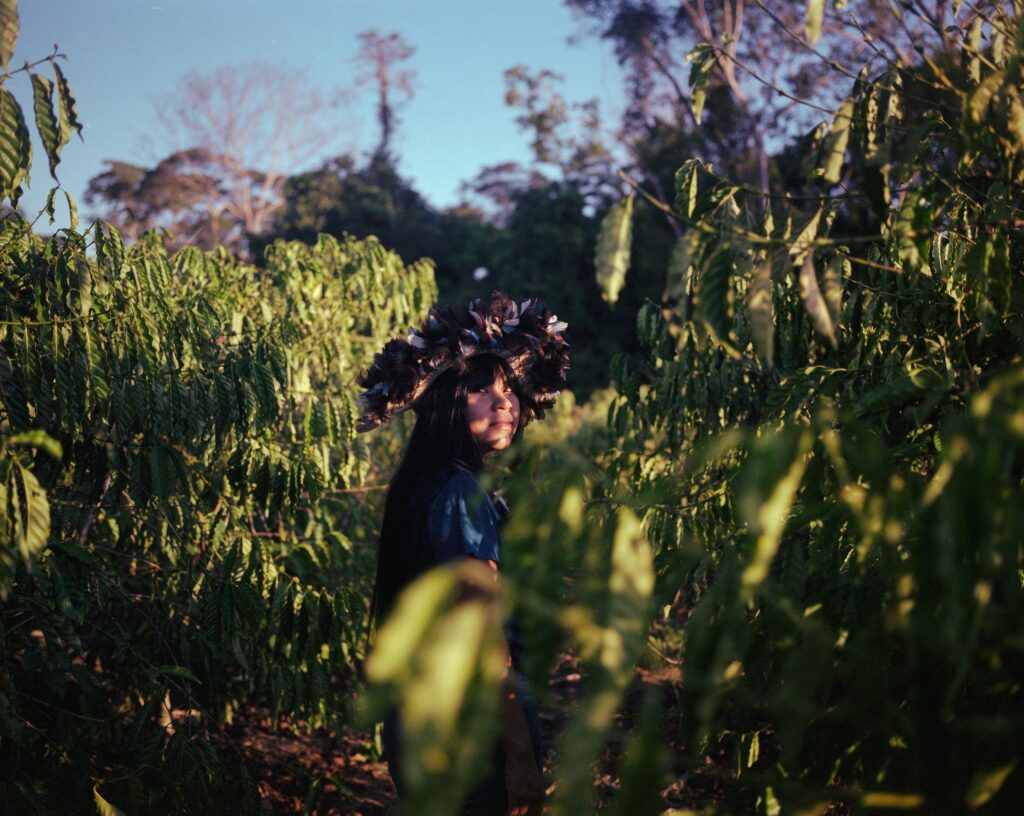
In the meantime, Rondônia has experienced increased demand for its Amazonian coffees. Just last month, the highest-ever score for a robusta coffee was awarded to Rafael Mopimop Suruí, a chief of the Paiter Suruí tribe in the Terra Indígena Sete de Setembro region. But as Rondônia gains a stronger foothold in the coffee market, does that invite more rainforest destruction?
To try and make sense of it all, Alexander Eliscu sat down with Celesty Suruí, Brazil’s first female Indigenous barista. Since 2023, Celesty, who is from the Paiter Suruí tribe, has made headlines for using sustainable practices to grow Amazonian coffee in her village of Lapetanha.
Below, she describes what sets Amazonian coffee apart—and how coffee can help support reforestation efforts.
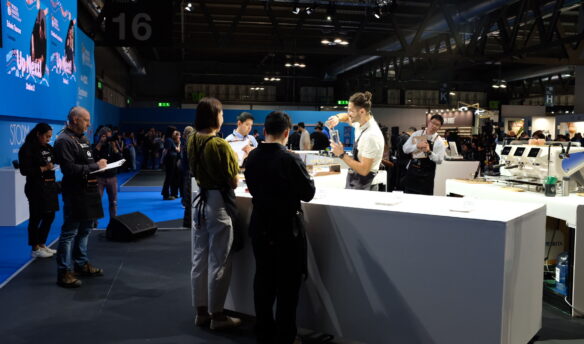
Celesty! The last time I saw you was this year at the São Paulo Coffee Festival, where I tasted—and really enjoyed—your coffee. I had never tried Amazonian coffee from Rondônia and was really shocked at how balanced it was. What makes coffee grown in the Amazon—and produced by your Indigenous community—“specialty” coffee?

For us, we prefer to call our coffees “Amazonian” in terms of categorization. It’s about the way the coffee is cared for, from the seedling to the cup, and how we have always worked with systems of agroforestry and regenerative agriculture in the Amazonian rainforest. We really limit the use of any chemicals and recognize the importance of our soils in producing excellent coffees. Therefore, even though my family only has a few hectares of land for coffee production, we can produce really high-quality coffee because we work within the rainforest itself.
When did your tribe, the Paiter Suruí, first start growing robusta coffee? And what were some of the challenges?
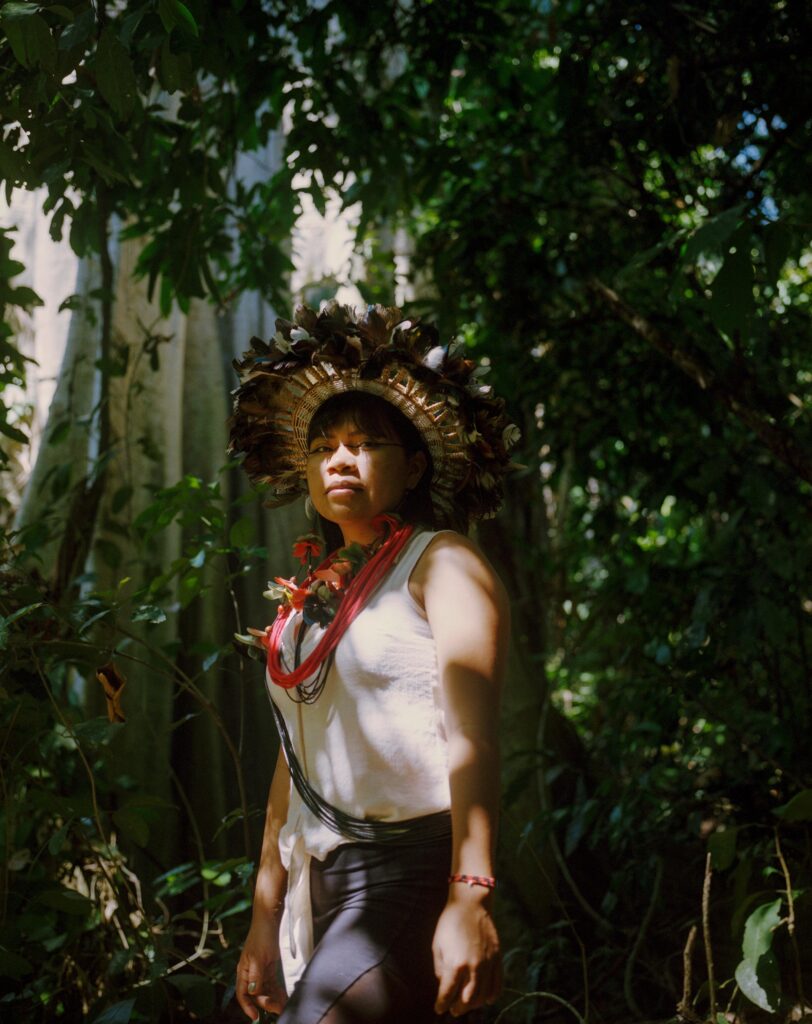
In 1969, the Paiter Suruí made their first contact with non-Indigenous peoples. After invading our lands and killing many of our ancestors, the colonizers took over the territories and began planting coffee, soy beans, and corn.
My dad, Agamenon Gamasakaka Suruí, was there when the Paiter Suruí first met the colonizers. He saw war, death, and destruction as people fought for territory. Lots of terrible things. In 1983, with the demarcation of our Indigenous territory, we reclaimed these lands and, fully cognizant that the crops were planted by people that had killed our family members, we made the decision to keep growing coffee as a method of reforestation. We had no intention of producing coffee. But after a few years, the coffees began to produce fruits, and our community saw the opportunity in simultaneously growing coffee for reforestation and as an additional income.
It wasn’t until 2019, when we started the Tribes Project with the Tres Corações coffee corporation, that we transformed our quality standards. From our harvesting techniques to post-processing and fermentation, we really started to focus more on producing specialty coffee.
Let’s talk about your state, Rondônia. It’s a part of the Amazon biome, and biologically should be one of the richest regions in the world. However, present-day Rondônia is known as “the most devastated state in the Amazon,” and has some of the highest rates of deforestation in the country. How has this destruction impacted your mission?

It’s been difficult, really difficult. People always ask us how we are practicing sustainable agriculture living in the most deforested state in Brazil. When my dad was young, he lived in a Rondônia that was entirely Amazonian rainforest. Nowadays, because of land degradation and crime, we have to deal with extended periods of drought and criminal fires in the Indigenous territories. This not only affects our coffee production, but our fight against Indigenous oppression and [for Indigenous sovereignty].
As my dad always says, it’s incredibly important that we know about our past. He tells me, “Celesty, your origins and the history of the Paiter Suruí, they cannot be forgotten.”
You’ve discussed how agroforestry and regenerative agriculture are key to producing coffee sustainably, and are also how your family has cultivated coffee since the beginning. But the rainforest is still disappearing at an alarming rate, and fires are burning throughout the state. What efforts are you and your community making to push back against the destruction of the rainforest?
We, the Paiter Suruí, want to be a role model for sustainable farming in the region, to show that it is possible to grow coffee in the rainforest. And reforestation was something we always worked with. Many years before we started producing coffee, we used reforestation practices to bring back areas that had been degraded. We planted fruit trees, such as cherry, banana, açai and cashew, as well as native plant species. And we’ve seen the positive impact of our efforts. People come and see the original trees that we planted and how big they’ve grown.
Working with the local group of brigadistas [trained volunteer firefighters], we’ve also been mapping the rainforest in our territory to see which animals are returning. Just recently, we’ve noticed several native bee species buzzing around the coffee plants that we’ve never seen before. These are positive signs.
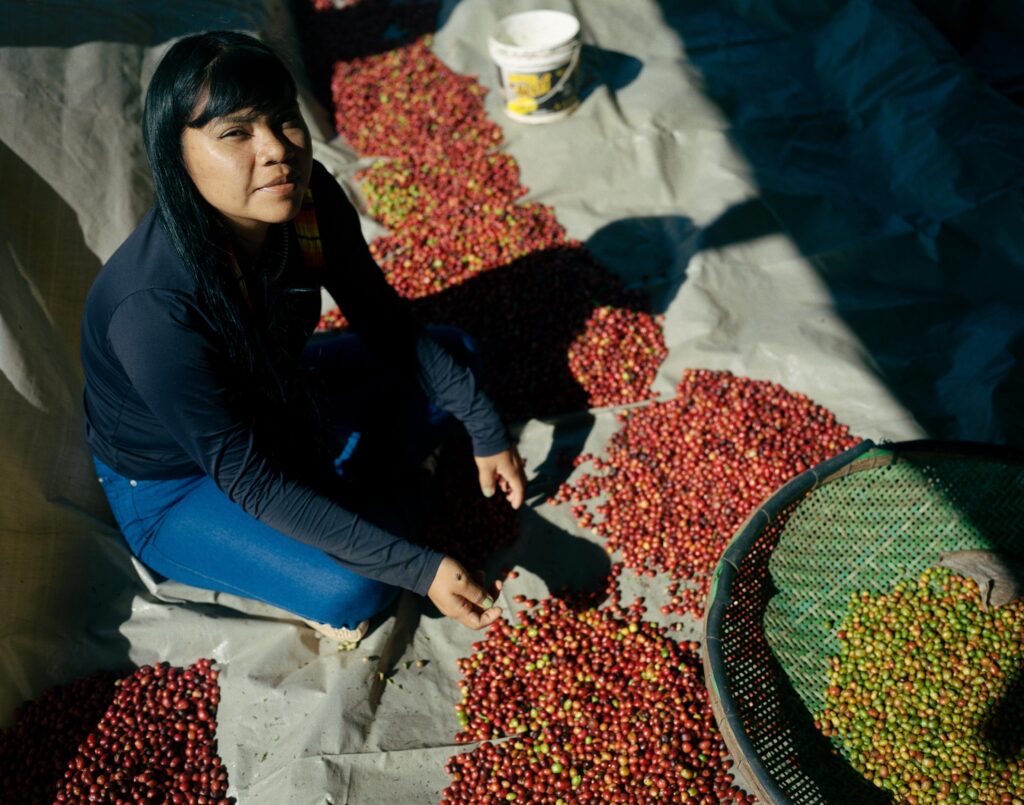
It’s important that we bring people together to be more in touch with nature and understand how to continue with the progress that we’ve made. There are still lots of people who don’t know our history.
You are just 24 years old—and in the last few months, you’ve made coffee for Brazilian President Luiz Inácio Lula da Silva, partnered with Michelin-starred chef Alex Atala, and were on the cover of Brazil’s “Revista” coffee magazine. Did you ever imagine that you would arrive at this point?
No, no, I never imagined all of this! Meeting the president, being on the news, in magazines—I never thought it would come to this. When I started working with coffee, it was a little hard for me because my parents were scared of me leaving the community, that—based on their own life experiences—something bad would happen.
As part of the second generation, I am now building upon what my parents already did: I am a certified barista and roaster in the community, and I hope to one day have a shop here in the community.
In the end, what’s really important is the new generation. My parents, my grandparents—-they’ve already done their part. It’s now time for the youth to embrace these practices and push forward.
Photos by Alex Eliscu. Editor’s note: This interview has been translated from Portuguese and edited for clarity.