In July 2026, the Chota Tingrai Tea Estate in India’s northeastern state of Assam released what’s being called the country’s first homegrown batch of matcha. The estate, which has been producing black tea since 1923, auctioned the 5kg lot at Rs 3,000 (approximately $31 USD) per kilogram, significantly higher than the price of standard Assam tea.
At first glance, the release seems perfectly timed to serve India’s “matcha moment.” Since late 2024, a number of matcha-only cafes have opened across India’s bigger cities, while far more cafes and coffee chains have added matcha-based drinks to existing menus. The matcha market in India is currently estimated to be worth $104 million, and is expected to grow to $167 million by 2030, according to Deloitte India.
Chota Tingrai’s move into commercial matcha may have coincided with this recent surge in demand, but the estate wasn’t making a last-minute pivot to chase trends. Rather, its matcha release is the result of a decades-long investment in Japanese-style green tea production, done in collaboration with Japanese tea experts.
Fourth-generation owner and planter Mrityunjay Jalan says his father first worked with Japanese tea experts in the 1980s to establish a green tea factory, but the effort proved short-lived. When Jalan himself took over the estate in 2016, he revived that collaboration and restarted green tea production, this time with greater success. By the time India’s matcha boom arrived about two years ago, much of the required infrastructure to grow and process it was already in place at Chota Tingrai.
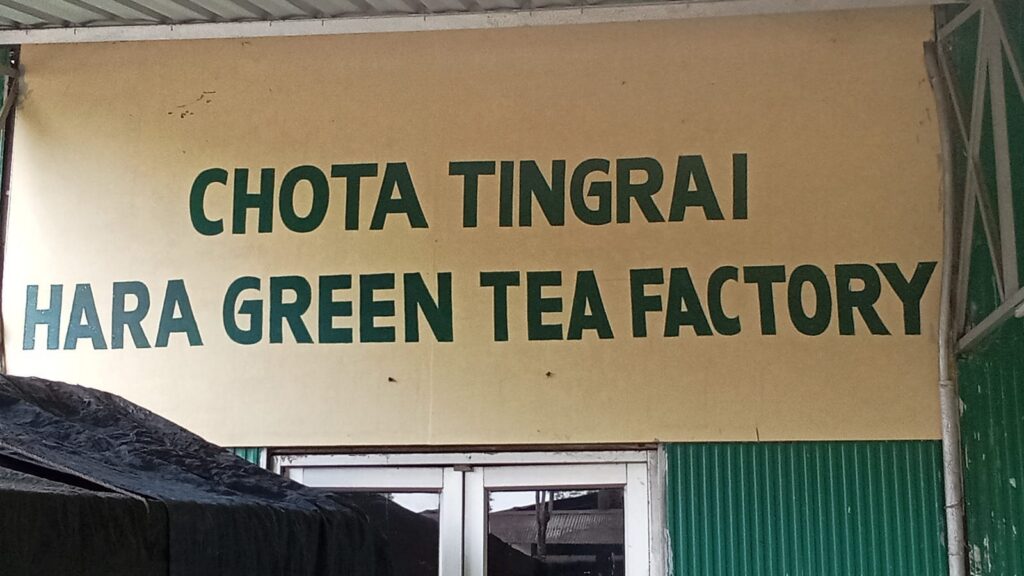
Fresh Cup spoke to Jalan about the estate’s decades-long journey from green tea to matcha, how it adapted Japanese tea-making techniques for Assam tea cultivars, why it chose to launch matcha through the traditional tea auction system—and what comes next for India’s first commercial producer of homegrown matcha.
Can you tell us when and why the estate started experimenting with green tea?
In the 1980s, my father got in touch with Ichiro Hara [of the Umenoen Tea Company], who was visiting Assam and looking for black tea and green tea to import to Japan. Together, they worked to set up a green tea factory at the estate. But importing processing machines to India was difficult back then, and the domestic market for green tea had not yet developed, so whatever we produced was purely for export. The experiment lasted only four to five years before the factory closed in the early 1990s.

When I took over the estate in 2016, the green tea market was booming in India, but very few estates were making authentic Japanese-style green tea. We revived our partnership with the Hara family, and I worked with Ichiro Hara’s son, Shoji Hara, to set up a Japanese green tea factory using imported machinery. Another Japanese collaborator, Yanagawa, worked with us for three years to perfect this machinery to ensure that it could use Assam leaf to produce green tea. This time, India was the right market for what we were producing, and the product took off.
We also experimented with matcha in 2016, but we were too early for the market. The kind of machinery we had to produce matcha was in a nascent form. It was an experimental machine mainly for home consumption, and could not be used for commercial production. But it gave us the confidence that when the time is right, we will be able to produce matcha because of the Japanese green tea infrastructure we had invested in.
When did the pivot to matcha start?
That was a decision taken last year, after we saw the matcha boom in India. We saw there was a global shortage—the production of matcha is limited to Japan, and parts of China and Vietnam—and we knew from our experiments in 2016 that we have the capability to make matcha. Last year, I started working with Yanagawa and Japanese manufacturers to develop a machine that would allow us to process matcha in India on a commercial level.
The process began in February to March last year. In February to March this year, we got the machinery from Japan required to pulverize the leaf and make it into powder. We had the advantage of having the initial 90% of the process in place, in the form of the Japanese green tea factory. This machinery was the final 10%, and the most crucial part of making matcha. It took us two to three months to work with the Japanese manufacturers to get this right, and by June we started producing commercially. In July, we had our first sale in the auction.
You put your first batch of matcha on auction instead of a direct sale. Was that a deliberate decision?
Yes, we wanted to start with an auction because it allowed us to reach a large section of buyers through one sale. We also wanted to test the market with a small batch. The final buyer was the Guwahati-based Sheosons Tea Company, and they had inquiries from cafes and restaurants in Bombay, Delhi, Bangalore, and other cities.
Even though it was a 5kg lot, the sampling process involved in the auction meant that before the auction took place, a sample of our matcha was sent to a few hundred buyers. So through one sale we could get our tea sampled by a few hundred buyers. That created awareness among the more traditional tea buyers of India that matcha has now been produced in Assam. Having said that, we are not limiting ourselves to just auction sales. We have a private network and we have received interest from cafes, restaurants, and smaller brands, and we will cater to them.
Our idea was to first make matcha available to the domestic market because imported matcha is expensive. Because of the global shortage, matcha prices have also gone through the roof in Japan. And once you import it into India, you pay 100% duty on it, so it becomes double the price on an already-expensive product. So our aim was to make matcha more affordable for the Indian consumer.
Independent of the price this specific lot fetched, what does it actually cost you to produce one kilogram of matcha?
As of now, we are producing very small quantities because we are also testing the market to see how acceptable the product is in India. We produce 7,000–8,000kg of black tea per day, but we can only produce 15kg of matcha per day. The cost of production of matcha is extremely high, and it starts right from the field. You can’t just pluck from the black tea section of the estate and make matcha from it. The fields have to be tended to in a special way. The leaf has to be processed in very small batches.
For now, because we want the product to reach the market, we are okay selling it at the current price levels. But going forward, we expect demand to keep increasing and prices to go up. Already, we are selling to smaller cafes in lots of 500g to 2kg at Rs 5,000–5,500/kg ($52.45–$57.70), which is more justifiable and matches the cost of production involved.
How is growing and processing matcha different from other forms of tea?
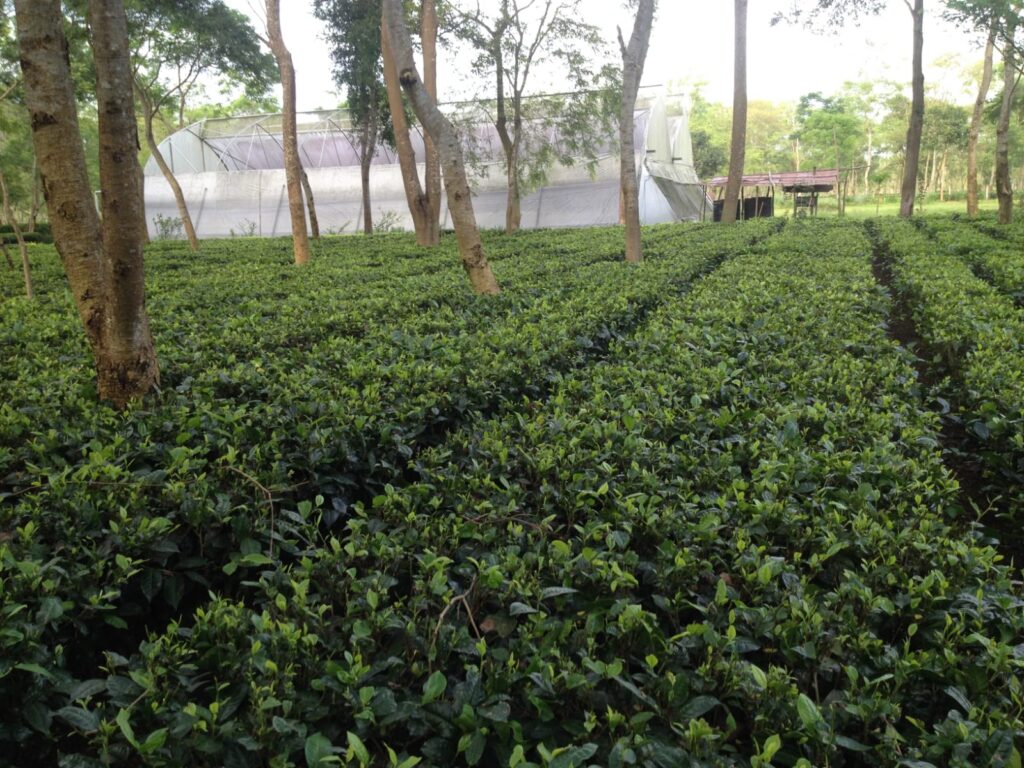
Assam is known for its kadak chai [strong black tea], and that’s because of the clonal characteristics of the tea bush, and the soil and weather here. Those bushes are suited for strong black tea, and that’s why India has never been a big green tea producer. So we’ve had to experiment with different varieties of clones. Since the 1980s, we have developed and propagated a section of our estate with Japanese tea bushes. One hectare is dedicated to Yabukita, a Japanese clone. Over the last 10 years, we have identified Assamica clones which, if treated in a different way, work well for green tea.
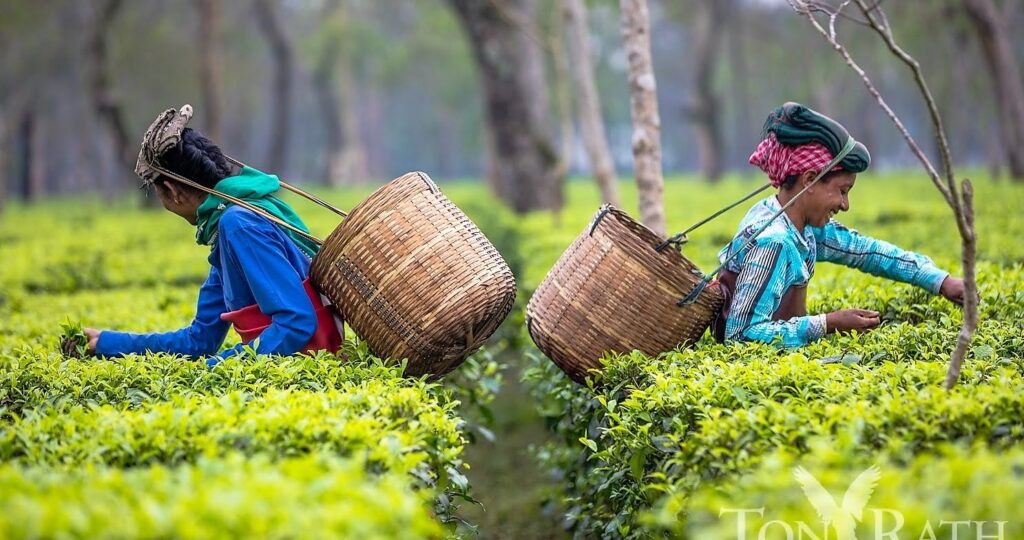
For green tea, and especially for matcha, bush selection is important. It also requires high amounts of shade. We want the matcha leaf to develop more chlorophyll while it is growing, so we add shade on top of the tea bushes. That way, the bushes struggle for sunlight and, in the process, generate more chlorophyll, making the tea greener. So you need to have special sections of the estate that are shaded. The leaf also has to be selectively plucked. While a plucker can harvest 35–40kg of leaves per day for black tea, for matcha, they can only pluck a few kilograms.
The manufacturing process is also entirely different. Black tea is a mass-manufactured product; in an hour, we produce a few thousand kilograms, whereas Japanese-style green tea and matcha go through a high-precision steaming process followed by gradual drying. The final pulverizing process that turns the leaf into powder, or matcha, is highly specialized. The machine we use took us a year to develop further for the Assam leaf and was an expensive import. All these factors make matcha an expensive product to manufacture.
Currently, are the matcha batches you’re producing from the Yabukita cultivar or from Assamica variants?
We are currently producing our commercial matcha from Assamica cultivars. We also sell it as matcha Assamica, so people understand that it comes from Assam and that there is an inherent difference in taste between the matcha we produce and the matcha imported from Japan. It’s bound to be different because of the geographical conditions and the raw material. It is very close to what a Japanese matcha is, but it is not Japanese matcha.
We just have one hectare of Yabukita, so we cannot produce all our matcha from it. We have made special batches using only Yabukita, but for now, we are using that section on a trial basis to test new products.
When you went into this experiment, was the idea to replicate the flavor profile of Japanese matcha, or was it to develop your own unique flavor profile?
We were always very clear that we will not replicate Japanese matcha, and especially Japanese ceremonial-grade matcha. That belongs to Japan, and it should always belong to Japan. It is made only using the stone grinding process, and the outputs are even less than what we do. So it’s a completely different product. We wanted to differentiate ourselves from Japanese matcha. If we call ourselves a substitute for Japanese matcha, people will not accept our product because that is not what it is.
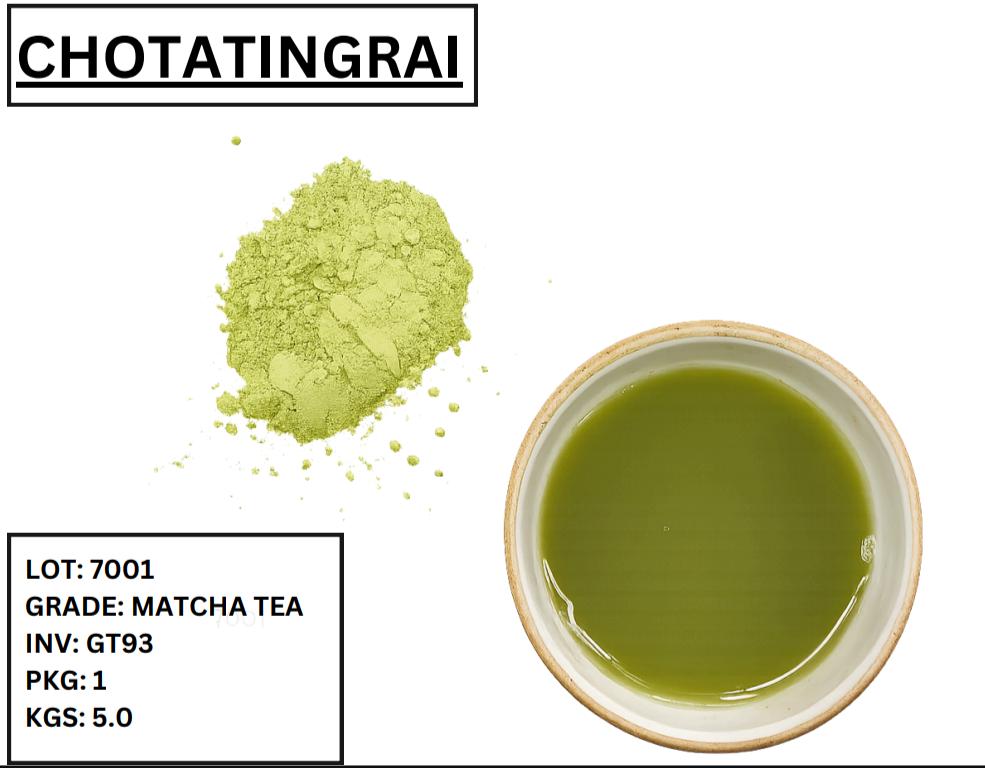
The difference lies mainly in the umami of the tea. The vegetal, grassy flavor profile that you get from a Japanese matcha is very strong. It’s a pungent, almost acquired taste. Whereas the matcha that we produce is a lot smoother. For the Indian palate, it’s an easier product to get used to as compared to a Japanese ceremonial-grade matcha, which has a very strong umami flavor that Indian consumers are not used to. Most of the other characteristics, such as look and feel, are quite a match.
Who are your target buyers both in India and beyond?
Right now, our target market is the confectionery segment; the hotel, restaurant, and cafe/catering (HoReCa) segment; and brands that are just starting out on selling matcha, who don’t know much about matcha and find the process of importing very hard. So our target market currently would be the ones that want a culinary-grade matcha for bakery items, lattes, ice creams, etc.
The future goal would be to create a product which can be sold in tea stores globally, introduce matcha Assamica as a separate category to tea experience centers and the tea stores of the world. We also want the tea experience centers to introduce people to a whole variety of tastes and let them interact with tea like they’ve not done before.
What about future production plans?
We have the capacity to produce around 5,000kg of matcha per year. Even if we don’t reach the target of 5,000 in the first year, our aim is to produce at least 3,000kg of matcha initially. If the demand can support it, if our product is consistent, and we can maintain the quality standards, then we would happily introduce another line and double it in the next two to three years.