It’s increasingly challenging to operate as a dinner-only restaurant and make ends meet. In response to economic pressures and changing consumer habits, more hospitality businesses are opting to stay open throughout the day.
By serving coffee and breakfast in the morning—and later transitioning into lunch and pre-dinner drinks service—they’re embracing a versatile, multi-use business model that keeps operations sustainable.
It’s not just the restaurants that benefit from that change. As more people work from home, there’s an ongoing need for third spaces, or places where remote workers can go when they get sick of their home offices.

For hospitality businesses that are already paying rent on a space, then, offering multiple experiences under one roof, all throughout the day, is a great way to cater to workers’ changing needs—and get more bang for their buck.
From Day to Night
When Chicago’s pasta- and vegetable-centric restaurant Daisies reopened in a new and much larger location in 2023, business partners Joe Frillman and Leigh Omilinsky imagined the space as an all-day hangout. They wanted it to be a place where people could work, meet, grab a cup of coffee—it serves beans from La Colombe—and later move into lunch, happy hour, and then dinner.
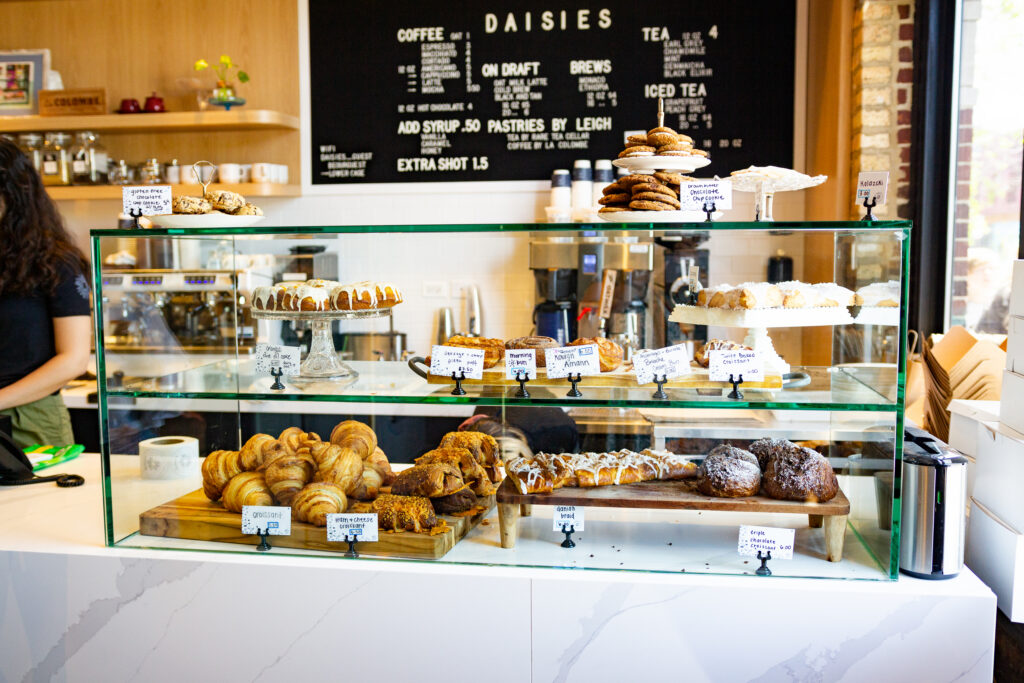
As a bonus, the all-day food and drink service lets Omilinsky show off her pastry chops in a more expansive fashion, beyond just plated desserts at dinner. Guests can order from a pastry case brimming with sweet and savory danishes made with seasonal fruit and vegetables, plus focaccia, chocolate bundt cake, kouign-amann, brioche buns, and cookies. For lunch, sandwiches, pasta salad, potato leek salad, butternut squash soup, and a killer onion dip with housemade Ruffles keep things simple and satisfying, while cross-utilizing ingredients from dinner service.

“I think it’s been an immense success,” Frillman says. “Not only has it given a fun outlet for a really talented person [Omilinsky] to do her own thing, with a schedule conducive to family time, but it also allows the dinner portion of the restaurant to have some of the best desserts in the country.
Without the cafe, we wouldn’t be able to afford the talented team we have.” Omilinsky takes most Mondays and Tuesdays off, and her work hours are around 7 a.m. to 5 p.m. during the week, so she can pick her son up from daycare. Unlike her previous restaurant jobs, she has the flexibility to coordinate her schedule with her husband, who is also in the restaurant industry and needs to work most nights.
Frillman says that only 10% of the business’s revenue comes from the cafe during daytime hours, but that still equates to more than $700,000 annually, which pays for a large portion of the management team’s salaries.
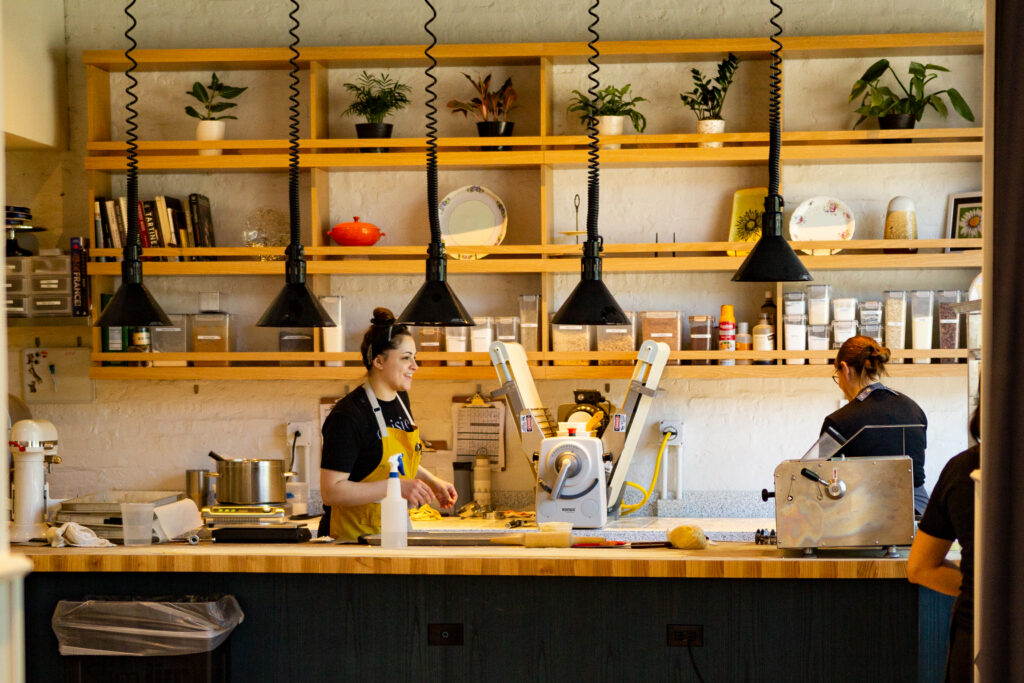
That revenue makes daytime service worth it, as does the fact that the restaurant has become a community space for meetings, panels, events, and networking, which is one of Daisies’ core pillars. “The community needs more third spaces, so we’re stoked that we can help. [The cafe] was a missing component of our original location that kept the restaurant from getting the attention it’s garnered over the past few years,” Frillman says.
Operational Efficiencies
Sometimes it makes sense for two small businesses to join forces and share overhead across more hours of the day to generate additional revenue. In Yakima, Washington, Single Hill Brewing invited Catalyst Coffee to open a cafe in its downtown taproom in late 2024, after its location a couple blocks away closed.
“Merging just felt right,” says James Stahl, co-founder of Catalyst Coffee. “Single Hill was looking at a way to add coffee to boost revenue and Catalyst needed a new home.” The coffee company serves beans from local roasters like El Jefe and Basalt Roasters, among others. Today, Catalyst represents about a quarter of sales generated in the space, and Stahl says its share is still growing.

Single Hill’s head brewer and co-founder, Zach Turner, says that bringing Catalyst into Single Hill has also boosted beer sales. “Together we introduce coffee customers to our beer and beer customers to coffee,” he says. Turner and Stahl manage the space together, and the two even collaborated on a coffee vanilla imperial stout. “James and I benefit by sharing management duties, he gets business support he didn’t have before, and Single Hill gets a manager with an owner’s mentality and experience.”
Single Hill always planned to eventually serve coffee when it began its buildout eight years prior, so the space and utilities were largely in place. “Since Catalyst already had customers and a reputation, we didn’t have to convince anyone a brewery knew how to be a great coffee shop,” Turner says.
Coffee to Cocktails
In an effort to attract both locals and travelers, the St. Anthony Hotel in downtown San Antonio redesigned its upscale cocktail lounge, Haunt, and reopened it as the more approachable Anacacho Coffee & Cantina in May 2025.

Now, in the morning, guests enjoy breakfast and coffee that’s supplied by local-favorite roaster Pulp Coffee, which created three seasonal blends for Anacacho and helped train the baristas. In the evening, the space transforms into a relaxed cocktail cantina, blending West Texas charm with inventive flavors. The restaurant was named a James Beard semifinalist in the “Best New Restaurant” category in early 2026.
Chef Leo Davila estimates that 35% of its revenue comes from breakfast and lunch, and the remaining 65% from dinner and late night service. “From an operational standpoint, having two concepts allows us to service the guest from multiple touch-points,” Davila says. Plus, seasonal homemade flavors like sweet potato and watermelon syrups can be used in both coffee drinks and cocktails.
In this volatile economic landscape, choosing to stay open throughout the day not only offers businesses a revenue boost, but also allows for more opportunities to connect with customers and create meaningful relationships. And while coffee is a smaller expenditure than cocktails and dinner, it can still be enough to make a significant difference to a restaurant’s bottom line.
Cover photo courtesy of Anacacho Coffee & Cantina.