This article is sponsored by our partner, Maya Tea’s Philters.
Alcohol is losing its grip on Americans’ social lives—and fast.
New data from Gallup shows that only half of young adults drink—a sharp drop from a year ago. Even among those who still choose to imbibe, consumption is down: The average drinker now has just 2.8 drinks per week, the lowest level Gallup has recorded since 1996.
While this poses an issue for alcohol purveyors, the shift away from booze presents an opportunity for coffee shops. Mocktails are surging in popularity, and coffee shops already employ skilled drinks professionals who have an eye for quality ingredients and the creative energy needed to craft interesting and exciting beverages.
“Mocktails have definitely grown to be an important revenue source for us,” says Chris Halvorsen, beverage manager of Coronet in Tucson, Arizona. “In the past, non-drinkers were mostly confined to sodas and non-alcoholic beer. Having more options for these folks helps them no longer feel ignored and also increases our check averages.”
Without alcohol, zero-proof drinks require no special permits or training, making them an easy addition to coffee shop menus. But how can cafes build mocktail programs without overcomplicating things? As more coffee shops experiment with zero-proof spirits, they’re discovering what it really takes to make alcohol-free drinks worth the effort—and the price tag.
We spoke to three of those business leaders to learn how they fit mocktails seamlessly into their menus. Below, they’re sharing the tools and insights—including recipes—that can help any coffee business get into the zero-alcohol game.
Don’t Overthink the Mocktail Formula
Manish Shah, founder of Maya Tea, has spent the last year working with coffee shops to implement mocktail programs in support of the company’s new Philters zero-proof spirits, a line of non-alcoholic spirit substitutes designed to mimic the experience of traditional alcoholic cocktails using botanicals, adaptogens, and nootropics.
He’s picked up a few key insights along the way. According to Shah, the biggest barrier to offering mocktails isn’t skill or equipment—it’s confidence. He’s noticed that cafe owners and workers experience a kind of imposter syndrome, as if their coffee craftsmanship weren’t relevant to the world of mixed drinks.
“People get overwhelmed with the pageantry of it all,” he says.
Shah says, doubts aside, that baristas make adept bartenders, and developing great mocktails is not as scary as it seems. “For anyone trying to make a mocktail, there’s a fairly straightforward system,” he adds.
He breaks down the process into two simple steps:
1: Nail the foundation. Shah advises that coffee shops start with the golden ratio: 2 parts spirit, 1 part sugar, 1 part sour. This creates a balanced base that works for most drinks. “In the case of a mocktail, it’s easy,” he says. “Take two parts Philters, add a syrup, a squeeze of something acidic—that’s your foundation.”
2: Add a flourish. To complete the drink, add something to the base you’ve created, whether that’s sparkling water, herbs, garnishes, bitters, or other elements.
Ultimately, the process of designing mocktails is similar to how most coffee shops already create signature beverages. Just as when building a drink around a specific espresso or single-origin coffee, it’s important to consider the flavor and intensity of your base as a starting point.
Shah says Philters’ spirits are designed to be a one-to-one substitution for traditional spirits. “If you’re making a whiskey old fashioned, just use Wiski instead. If you’re making a gin and tonic, use Jynn with good tonic and a squeeze of lime.”
When he’s looking for a mocktail himself, Shah favors “a Wiski old fashioned with a Luxardo cherry” made the classic way. He also notes that “Jynn is the easiest alcohol analog—the straight substitution works really well with just about anything.”
How Three Cafes Are Adding Non-Alcoholic Spirits to Their Menus
To find out what it actually looks like to bring cocktail alternatives into cafes, we spoke to three coffee businesses that are successfully selling mocktails to their guests. Here’s what they’re making, how they’re pricing it, and why it works in their contexts.
The Terra Incognita ($11) at Coronet

Coronet offers a non-alcoholic drink inspired by Tucson’s Southwest setting, and which demonstrates how mocktails can command cocktail-like prices.
Halvorsen acknowledges that some customers associate mocktails with lower value, and expect to pay lower prices in turn. “So we end up charging slightly less for mocktails [than cocktails], but there is just as much attention and labor going into these drinks as in a standard cocktail,” he explains. “So they are not going to be ‘cheap.’”
Halvorsen describes the Terra Incognita as “a perfect thirst-quenching drink for the desert. Bright, refreshing, and citrusy, with a touch of salinity. The coastal aperitif brings some reminiscence of a summer rain or an escape to the beach.”
Recipe:
- 2 oz Philters Jynn
- 1.5 oz Pentire Coastal Spritz (a non-alcoholic aperitif)
- .5 oz fresh grapefruit juice
Shake together and top with tonic water in a Collins glass.
The Silk Road ($7) at Middle Ground
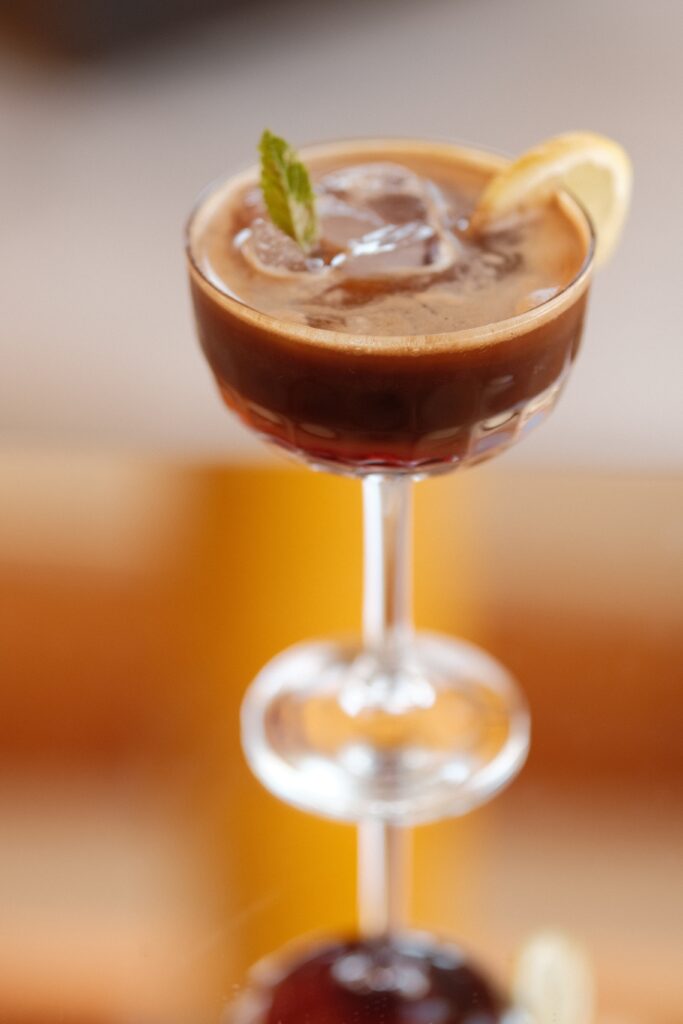
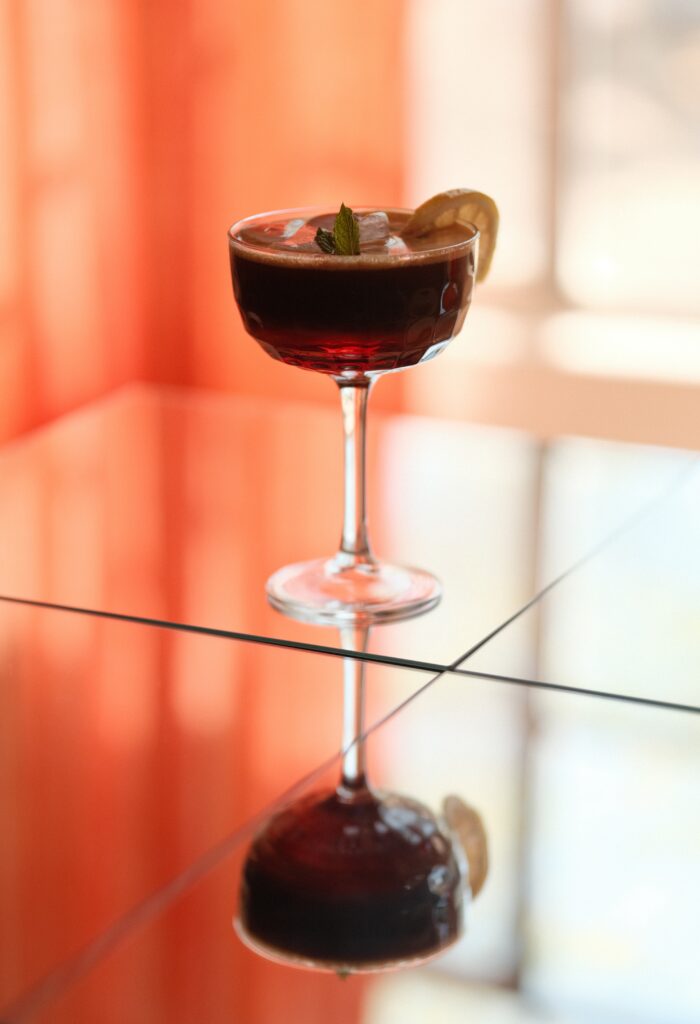
Darryl Laforteza at Middle Ground, a Los Angeles-based coffee and mocktail mobile cart, created a unique mocktail for the company’s autumn pop-ups.
“We’re big fans of The Silk Road because it gives us something unique and cozy to feature on our fall menu—especially for guests looking for non-coffee options,” Laforteza says. “Our customers also love the story behind it: Philters is made from tea and contains beneficial adaptogens, which makes the drink both flavorful and functional.”
Recipe:
- 2 oz Philters Wiski
- 1 oz house-made spiced pumpkin syrup*
- Tonic water
*For the syrup: Combine pumpkin puree with cinnamon, cloves, nutmeg, and chai spices in a simple syrup base.
Shake Philters Wiski and pumpkin syrup over ice, then top with tonic water.
Reserva Tiramisu ($9.99) at Reserva Coffee

While most cafes will focus on drinks, zero-proof spirits can work in other applications once you have them in-house. Michelle Quiroz at Reserva Coffee, a roastery with four locations in Texas, uses Philters not only for beverages but also as a flavor component in signature desserts.
Using Philters Ruhm in place of traditional rum, Reserva makes two varieties of tiramisu—one with an espresso base, and one with matcha—that mimic the flavors of the Italian dessert while remaining alcohol-free.
“We wanted to create a tiramisu dessert using our Reserva Coffee Roasters-branded coffee and a non-alcoholic base to the tiramisu recipe,” Quiroz says. “Philters was the perfect solution for us to create the product.”
Recipe:
- Ladyfingers dipped in Reserva Coffee Roasters Vintage Espresso (or matcha shots for the matcha version)
- Mascarpone infused with Philters Ruhm
- Cocoa powder for topping
Layer the coffee- or matcha-soaked cookies with the Philters-infused mascarpone, then dust with cocoa powder.
Making the Mocktail Math Work
For coffee shops, implementing any new drink category means new recipes, new training, and new risks. It’s worth questioning whether mocktails are worth it from a financial perspective.
But Shah points out that many cafes can charge more for mocktails than they would for signature coffee drinks. “We see cafes charging $8 to $9 for mocktails,” Shah says. “Bars and restaurants can justify even higher [prices].”
Each bottle of Philters sells for $25 wholesale (about $1 per ounce). Drinks made with Philters typically cost under $2.50 to make. This puts mocktail margins in the ballpark of cocktail margins, but without the requirement for a liquor license.
Beyond the drink margins, mocktails can also open up additional revenue streams. Coffee shops typically see traffic taper off in the late afternoon and early evening. A mocktail menu can change that equation, giving customers a reason to visit during traditionally slow hours.
“Coffee shops are the ultimate dry bar,” Shah says. “They have all the tools, ingredients, and recipes to begin serving drinks beyond the typical cafe menu.”

Sponsored by Philters By Maya Tea
Philters, created by Maya Tea Company, offers a line of zero-proof spirits that combines classic infusions with modern functional ingredients. Crafted by plant-based beverage veterans with over 25+ years of experience, the Philters portfolio includes alternatives to traditional spirits named Wiski, Jynn, Mezkahl, and Ruhm.