✉️ This story was featured in this week’s Coffee News Club
👋 Get the Coffee News Club newsletter in your inbox weekly—sign up.
The Specialty Coffee Association (SCA) has officially opened enrollment for what it calls its new “evolved” Q Grader program. Some courses are available now, with others scheduled to go live in the coming months.
For nearly two decades, the Q Grader program was managed by the Coffee Quality Institute (CQI) and was responsible for certifying tasting standards for thousands of coffee professionals worldwide. In April, the SCA announced that it was taking over management of the program from CQI, in what the two organizations called “a historic partnership.”
The move aligns the Q professional certification and training program with the SCA’s updated cupping standards, the Coffee Value Assessment (CVA). When announced, the move was met with controversy, as coffee professionals who made a living teaching the old Q course worried that they would lose their livelihoods. Others cautioned that updating the program risked losing a globally shared standard for coffee quality communication.
However, becoming a certified Q Grader is expensive, and classes can cost thousands of dollars. A month after taking over the Q, the SCA announced a new pricing structure designed “to make learning more accessible, affordable, and equitable for coffee professionals everywhere.” Prices vary by country.
The new Q is based on the CVA, which launched in November 2024 to replace the SCA’s legacy cupping form used to evaluate coffee quality. Unlike the old cupping protocol, which relied on a single 100-point score, the CVA aims to give “a holistic picture of a coffee’s unique sensory and affective attributes,” according to the SCA. Following the CVA’s adoption, the SCA struck deals with multiple regional coffee associations to promote the new standards and encourage wider use.
“The Q Grader Program has long served coffee professionals around the world,” said SCA CEO Yannis Apostolopoulos in a press release. “With the addition of the Coffee Value Assessment, our goal is to provide resources that reflect the needs of today’s coffee community and help us work collectively to make coffee better.”
Read more on the new Q course from Daily Coffee News here.
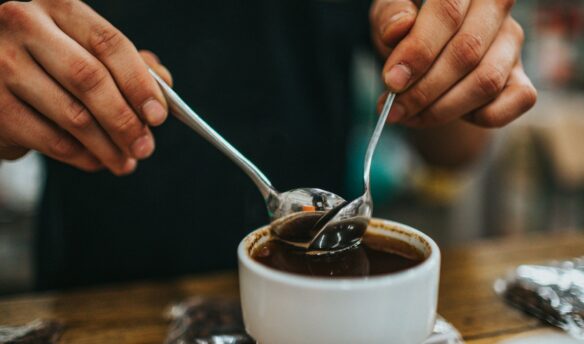
Photo by Sean Benesh on Unsplash