The Coffee Tech Stack series is presented by our partner, Square.

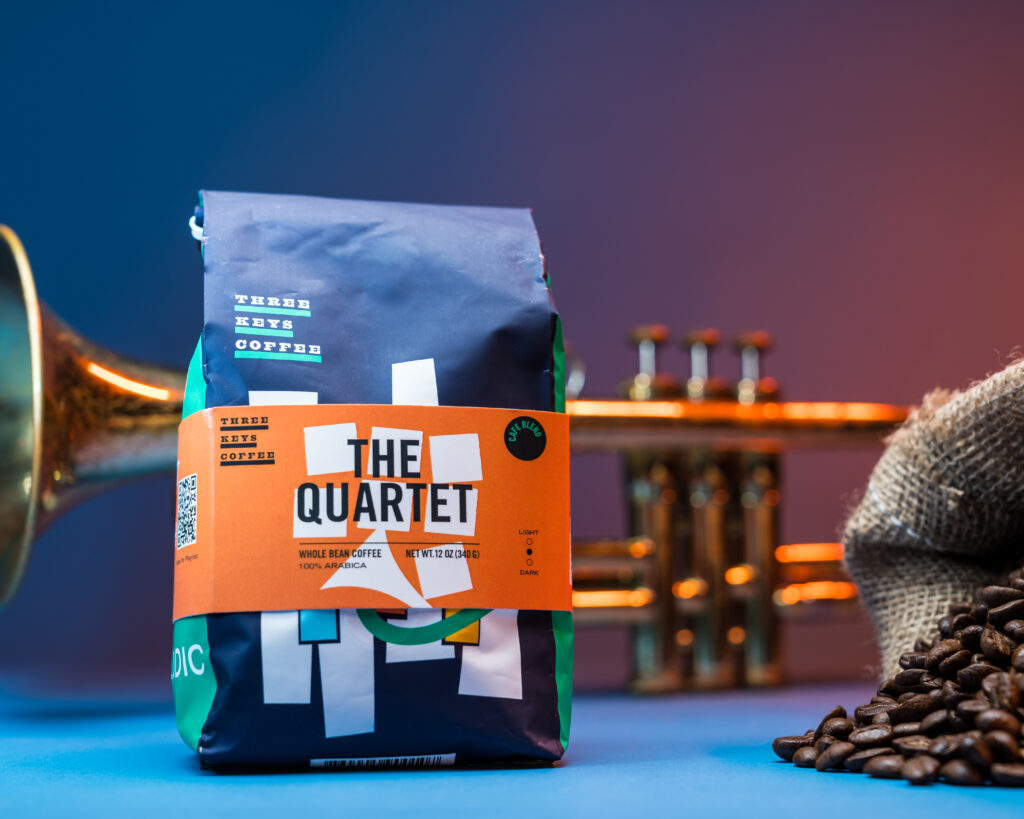
Three Keys Coffee in Houston, Texas has the aura of a coffee brand that has everything figured out. It boasts an impressive set of accolades and accomplishments: A solar-powered roastery. Two cafe locations. Coffee bags on the shelves of Trader Joe’s, Whole Foods, and Walmart. Three consecutive finalist nominations for Roast Magazine’s Micro-Roaster of the Year award.
Following on from these successes, Three Keys is exiting its scrappy startup phase and entering a new era of scaling up the business. But co-founder Kenzel Fallen says there’s still lots to learn, and the team is still testing systems to see what works.
“[W]e’re still figuring things out. There are so many asterisks I feel like I have to put on everything,” she says. “We have so many different tools and apps and different kinds of technology. We’re still working through a lot of trial and error and learning things the hard way.”
For Three Keys, that means rethinking its point of sale system; streamlining ecommerce and in-cafe gift cards; and building toward a leaner, more connected tech stack for the next stage of the business.
Three Keys Was Built On Spreadsheets
Three Keys Coffee—which Fallen co-founded with her husband, Tio—officially launched in 2019, but didn’t really take off until early 2020. That’s when the duo rolled out their online store, and quickly found a customer base. In the early days, the company was built using just a few tools: Shopify to sell coffee, QuickBooks to track money movement, and Microsoft Excel for everything else.

“In the early days, it was just myself and my husband,” Fallen says. Because they didn’t have employees, they didn’t have to “think about payroll or timekeeping or anything employee-related.”
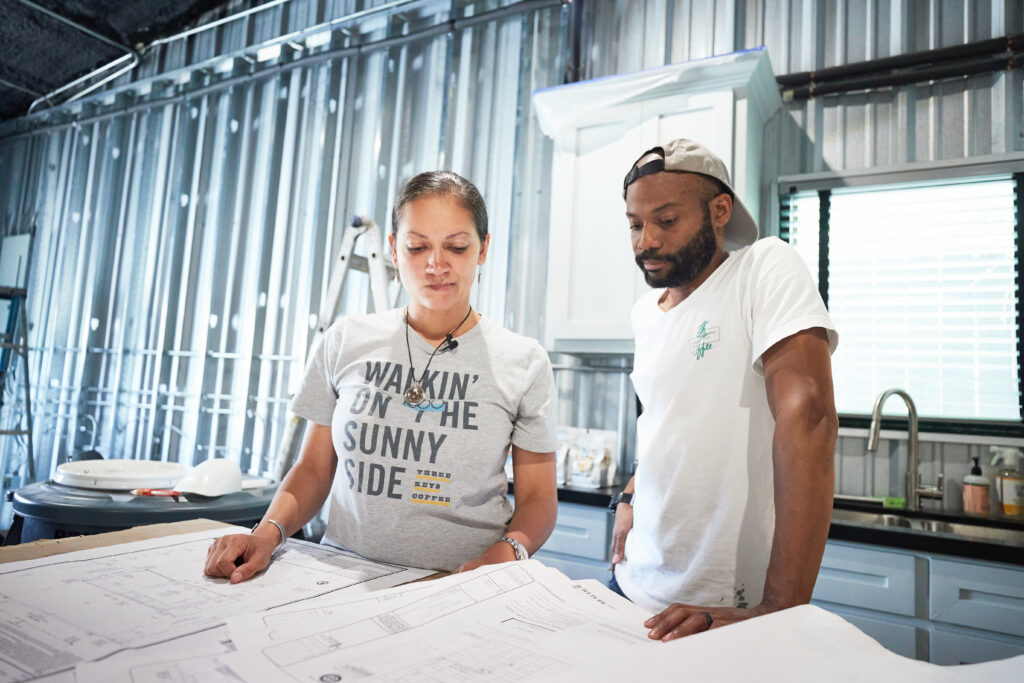
While certain tools have come and gone, Excel has remained a workhorse for the business. Because of Fallen’s banking background, the app was a natural choice. “I love Excel,” she says. “I’m using Excel for everything.” Complex spreadsheets became the basis for all tracking and planning at Three Keys, financial or otherwise, including recipe costs, green coffee invoices, and long-term projects.
That preference has shaped Three Keys’ tech stack. The team has tried using other project management tools, including Asana, Monday, and Trello, but keep going back to the homegrown spreadsheets instead. Even Quickbooks’ built-in reports aren’t customizable enough for Fallen: “I’m not happy with QuickBooks, so I do a lot of my own tracking in Excel,” she says.
Spreadsheets don’t work for everything, though, and as Three Keys has grown, managing communications has become another important need. Currently, the team uses Band as their core communication tool. Fallen prefers Band to other tools, like Slack, because it works as a digital workspace with folders for reference documents, chatrooms for different teams or purposes, an embedded calendar, and photo albums. “I have one chat room for my cafe team, one for my roastery team, and one for all staff,” Fallen says.
The company also uses Microsoft’s OneDrive for file storage and knowledge management. Gusto is the tool of choice for handling payroll and time tracking, and Calendly helps the team schedule meetings with customers and partners without the back-and-forth emails.
Tech Inside the Roastery
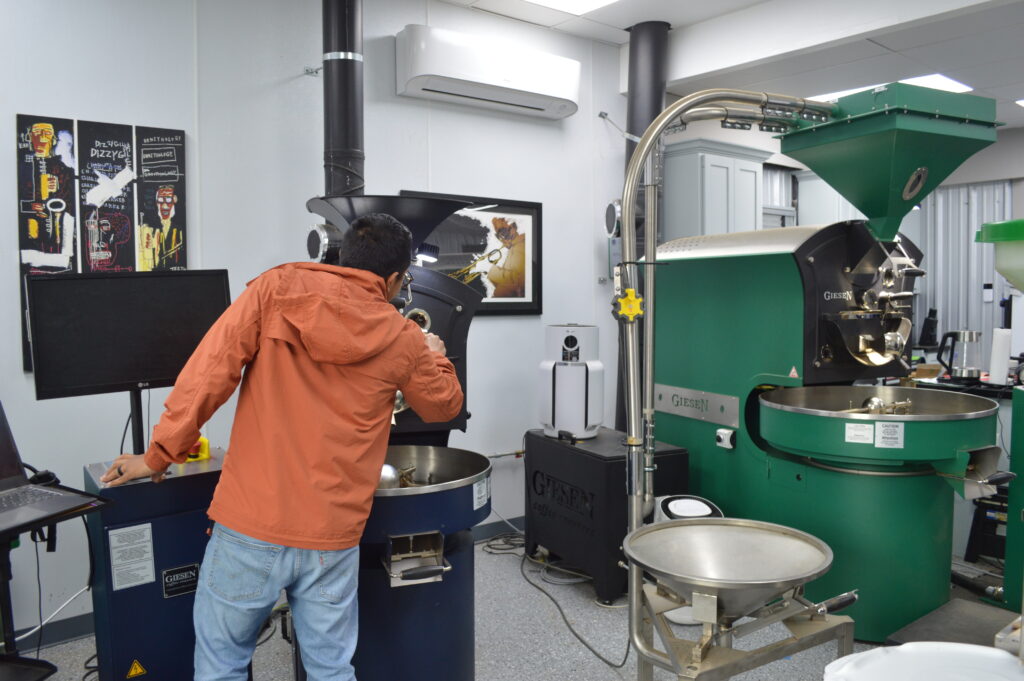
The centerpiece tech inside the Three Keys roastery is Cropster. Fallen uses it primarily for roast profiling and green coffee supply chain management. “I like how you can set the parameters and the goals to be able to tell if there’s a roast that’s out of spec,” Fallen says. “It really helps from a consistency perspective to make sure all of those are staying within the allowable ranges.”
Fallen also uses Cropster to track green coffee inventory. As coffee is roasted, the platform automatically deducts each batch from the roastery’s inventory. It additionally tracks how much green coffee Three Keys has contracted with an importer and is stored in that importer’s warehouse. “It also allows us to have that visibility on what’s coming,” she says. “If I have a hundred bags on contract, but I actually only have ten in-house, it’s great in that it can show that I have some that’s accessible to me, but I just need to put in the order to get that [green coffee from the importer].”
For wholesale relationships, Three Keys uses a custom Google Sheet as a makeshift customer relationship manager. Google Sheets has many of the spreadsheet capabilities that Fallen is familiar with, but is a little more accessible to the rest of the team. All wholesale orders, meanwhile, flow through Shopify.
Getting coffee into Trader Joe’s and Whole Foods required Three Keys to become EDI (Electronic Data Interchange) compliant, which means the roastery follows a very specific and standardized format for invoices, purchase orders, and shipping tracking. It accomplishes this with a dedicated software that creates, sends, and receives those documents in the proper formats. This setup allows retailers and suppliers to communicate supply chain updates automatically, which keeps goods flowing efficiently and with fewer disruptions.
Fallen’s chosen EDI software provider is CRSTL, which is less costly than the big-name software providers in the space. “It might feel arcane to a lot of readers, but for any roaster that wants to get into grocery, it’s a real requirement,” she says.
For a deeper dive into roasting operations, check out Three Keys’ edition of Roastery Breakdown, where Fallen shares the equipment and workflows that the roastery uses.
The Solar-Powered Roastery and the ChatGPT Question
Three Keys Coffee’s roastery is fully solar-powered, which it was able to achieve after winning Oatly’s Big Idea Grant. The company’s low carbon footprint is a major point of pride for the team, and an important part of its brand value and story.
So the question of whether to use generative AI at Three Keys was complicated. The team had been using a shared ChatGPT account for tasks like analyzing spreadsheets and research. Then an employee raised an ethical concern.
“One of our team members thought that we should reconsider using AI because of the impact [of data centers] on the environment,” Fallen says. The team member believed that AI might be in opposition to Three Keys’ values. “I want to know if there’s something we’re doing that maybe I’m not aware of that’s problematic. So I promised to look into and research more.”
According to Fallen’s findings, the average ChatGPT query consumes roughly 0.3 watts of energy. This calculation was the conclusion of an analysis by Epoch AI, a nonprofit research institute studying the impact of AI. Meanwhile, the solar-powered roastery harnessed 28 megawatts of energy from the sun over roughly five years—enough to theoretically offset around 93 million ChatGPT queries. “I don’t think we’re ever going to get to 93 million queries,” Fallen says.
But the research clarified something useful: Generating images and videos is significantly more energy-intensive than making text-based queries. This distinction informed a new policy at Three Keys: text-only usage of AI for the business. Visual and creative content stays human-made, which aligns with the brand’s values of creativity, artistry, and expression anyway. “The whole core of our company is around creativity,” Fallen says. “I want people to just craft that stuff on their own.”
Next Step: Consolidating Data From Parallel Channels
Currently, Three Keys runs two parallel commerce channels. Online orders flow through Shopify, which has been the backbone of the business since the beginning. In-person transactions at the cafe run through Square. Fallen says both point of sale providers have been great to work with, and generally things have run smoothly. But now, as Three Keys begins to scale, consolidation has become a likely next step.
“I think most businesses, when you hit that five-, six-year mark, you’re thinking about scale. And with scale, the important focus point is efficiency,” says Fallen. “So my whole big thing is I need to consolidate the tools and systems that I’m using so that I can increase my efficiency and therefore scale better.”
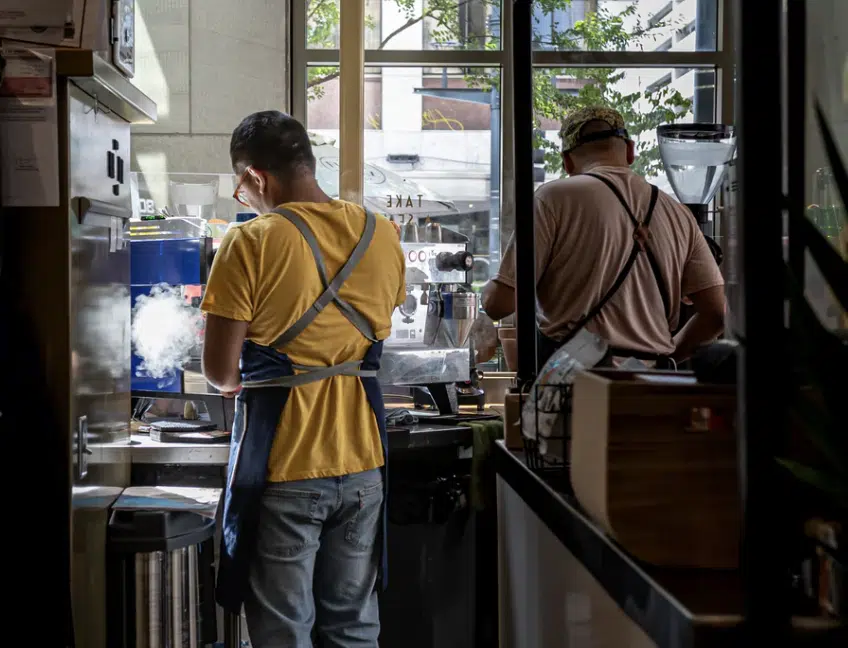
She identifies gift cards as one of the areas that is complex to manage across two commerce channels. “A customer who buys a gift card online can’t use it in the cafe,” Fallen says, “because Shopify and Square are two different [gift card] systems.” This kind of customer data fragmentation has kept Three Keys from developing the loyalty programs, cross-channel marketing automations, and customer databases they want to be be able to build.
For this reason, Fallen wants to eventually move to using a single platform that handles both ecommerce and in-person sales, so the customer experience and sales data can be fully unified. Data unification would mean one record of sales, customers, loyalty, and gift cards, and an easier time using that data to grow the business.
“We want to compound and expand what we do—our outputs—by minimizing our inputs,” Fallen says. “And that means having the technology that supports where that direction is for us.”
Where Three Keys’ Tech Stack Is Heading
Fallen is six years into building Three Keys Coffee, and she says most decisions are made with an eye towards optimizing for scalability. That means Three Keys is looking less at shiny new tools, and instead trying to use fewer tools that work together more efficiently.
When it comes to choosing tech tools, the underlying philosophy Fallen keeps coming back to is this: Get more done with less. Technology is how you do that at scale—but only if you’ve chosen the right tools, built the right connections between them, and made them usable for everyone on the team.
“You can get far with a lot of fragmentation when you’re a company of two,” Fallen says. “But as you add more people to your team, you have to think about what works for everyone else.”
Building out the tech stack is a seemingly never-ending process, but she’s found some comfort in realizing that that is true for companies large and small, established and new. “Even if you’re a ginormous company, they still have a lot of inefficiencies from a tech perspective.” It’s a reminder, she says, that Three Keys is not as behind as it sometimes feels from the inside.
“I am very grateful for where we are. Even if we take a step back, we’re still continuing to take two steps forward,” Fallen says. “That’s really the goal—we still have a long way to go, but we just want to always be moving in a positive direction.”
Three Keys Coffee Tech Stack: At a Glance
- Point of Sale: Square (cafe) / Shopify (ecommerce)
- Email Marketing: Mailchimp
- Design: Adobe Creative Suite
- Wholesale Commerce: Shopify / Faire
- CRM: Google Sheets
- Bookkeeping: QuickBooks / Excel
- Payroll & HR: Gusto
- Team Communication: Band
- File Storage: OneDrive
- Project Management: Google Sheets
- Roasting & Green Inventory: Cropster
- Inventory Management (Cafe): Google Sheets
- Internet (Cafe): T-Mobile
- Internet (Roastery): AT&T
- Security (Cafe): Wyze
- Security (Roastery): SimpliSafe
- EDI Compliance: CRSTL (syncs with SPS Commerce)
- Scheduling: Calendly
- AI: ChatGPT

Sponsored by SQUARE
The Coffee Tech Stack series is presented by Square. Square is a point of sale technology provider and longtime innovator that now offers a comprehensive suite of tools built specifically to help coffee shops and roasters operate smoothly and profitably.