First there was the kombucha boom. Now, sparkling tea more broadly is poised to be the non-alcoholic beverage of the year. Brands like The Republic of Tea and MaraBela have launched sleek new bottled options in recent months, broadening the category and raising consumer awareness in the process.
Sparkling tea is still a fairly new concept. Pioneers like the Copenhagen Sparkling Tea Company, Muri, and Minna were all founded within the past decade. Luxury hotels in Asia, such as the Four Seasons Hotel Singapore and Regent Hong Kong, have also started making their own sparkling teas, which—with their delicate tannins, layered aromatics, and lively effervescence—are designed to pair with food like a fine wine would. In Denver, The Wolf’s Tailor, Colorado’s only two-star Michelin restaurant, makes their own sparkling jasmine tea with preserved squash juice as the non-alcoholic pairing for a corn crème fraîche and caviar course.
Scott Stroemer, beverage director of the Michelin-starred Galit and Cafe Yaya in Chicago, serves sparkling tea throughout the day, including Copenhagen Sparkling Tea and Proxies, which incorporate tea into a grape juice base. “[Sparkling tea] is a cool category with a lot of creativity pushing it forward,” he says. “As an alternative to alcohol-removed wines, makers have more ingredients to build the final product. It’s more akin to vermouth, using a base and layering flavors onto it. I think guests are taking to it in ways that they haven’t to alcohol-free wine.”
Adagio Teas supplies loose-leaf tea to both consumers and other businesses, including several clients making sparkling tea. Stepas Parulis, director of Adagio Teas’ United Kingdom operations, says the company has seen double-digit annual growth in the sparkling tea category over the past few years.
“Sparkling tea has shifted from a niche curiosity to a real growth category over the past two-to-three years,” he says. “The format of the final beverage varies greatly, and reflects tea’s diversity in terms of its flavors and drinking occasions. Sometimes it’s a natural formulation that’s simply carbonated to showcase the taste of a specific tea, and act as a natural pick-me-up. Other times, the tea is used as a base to be layered upon with other flavors to create a more intricate brew. So a sparkling tea may replace a coffee in the morning, a soft drink at lunch, or a wine at dinner.”
Parulis says that the tea varieties that work well for sparkling tea tend to fall into two camps: those with an identifiable flavor and unique provenance, like Japanese green teas and Taiwanese oolongs, or those that amplify and complement other ingredients like fruit and spices, which is where the finest Ceylon and Assam teas shine.
New Kids on the Block
Bay Area tea purveyor The Republic of Tea debuted its first sparkling tea in a glass bottle last month, inspired by the growing demand for elevated, alcohol-free beverages. “We wanted to create something that feels just as celebratory and sophisticated as sparkling wine, while showcasing the craftsmanship of exceptional tea,” says Todd Rubin, president at The Republic of Tea. The company’s white jasmine sparkling tea is brewed with jasmine extract and organic white tea from China’s Fujian province. After being sweetened with organic cane sugar, it’s bottled and force-carbonated.

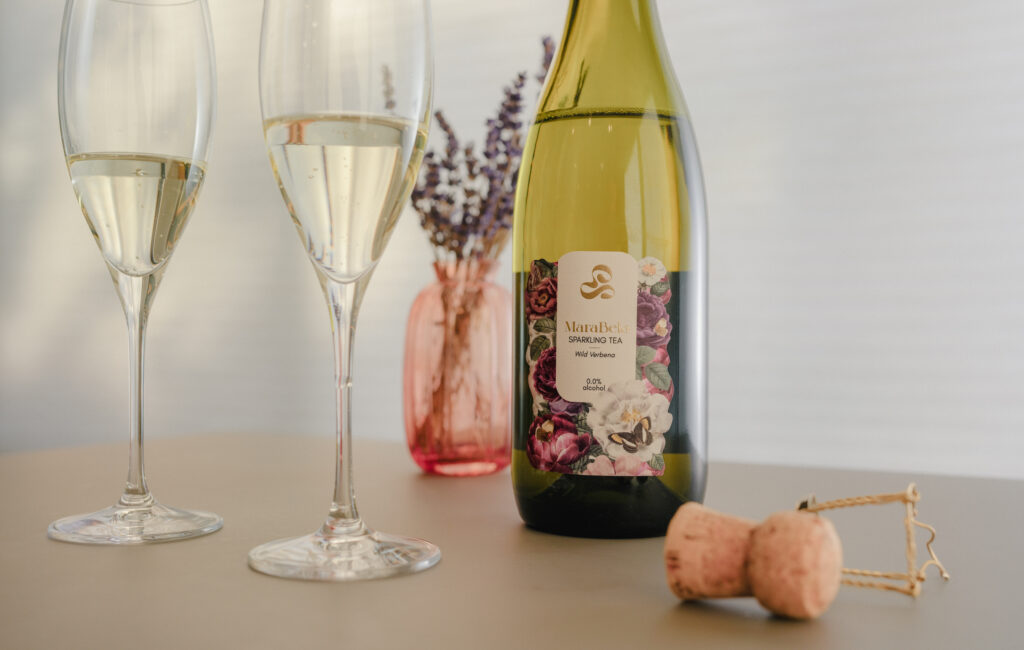
Even wineries are getting in on the game. Valdemar Family, a fifth-generation winemaking operation from Rioja with vineyards in Washington State, recently launched its first non-alcoholic beverage. MaraBela is a wild verbena sparkling tea with sencha, Chun Mee green tea, white peony tea, and a touch of lavender. It’s a bright, floral drink with fine bubbles that’s made to pair with food and be served cold in a wine glass.
“It sits at dinner where a sparkling bottle would sit, but on its own terms,” says Jesús Martínez Bujanda, CEO of Valdemar Family and co-creator of MaraBela. “Our most common customers are the ones drinking wine at the same meal—they pour MaraBela alongside it, not instead of it. It’s for anyone who wants the ritual of opening and sharing a beautiful bottle.”
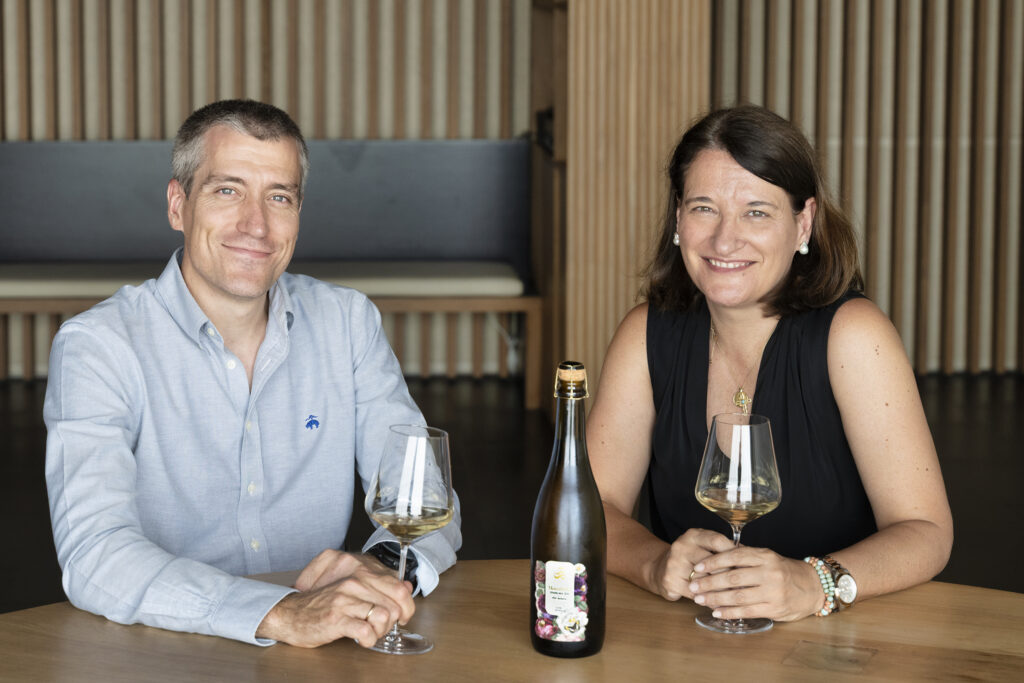
Martínez Bujanda says that existing non-alcoholic options had too many ingredients and too much sugar. “Coming from wine, I also knew the limits of dealcoholized wine,” he says. “Remove the alcohol and you lose structure and balance. Tea lets us start from a completely different place. It brings natural tannins, aromatics, and texture, so we could build something gastronomic from scratch instead of subtracting from something else.” MaraBela is brewed and blended at the company’s winery in Walla Walla, then force-carbonated and bottled nearby.
Adagio Teas’ Parulis says that younger generations choosing to limit alcohol intake has been one of the major drivers behind the growing category. The increasing influence of Asian food and drink culture, including the recent boom in Japanese matcha and Taiwanese bubble tea, has also had an impact. “Modern drinkers know the diversity of Chinese teas or the variation within India’s Darjeeling region,” he says.
With its ability to bridge the gap between refreshment and fine dining, sparkling tea carves out a place that neither soft drinks nor alcohol-free wine have fully claimed. For producers, restaurants, and consumers alike, sparkling tea is emerging as one of the most compelling new categories in modern beverages.
Photos courtesy of MaraBela