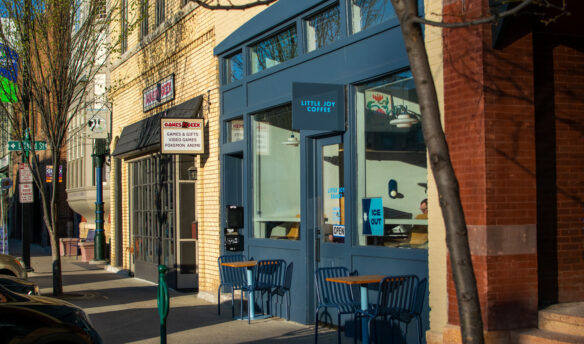
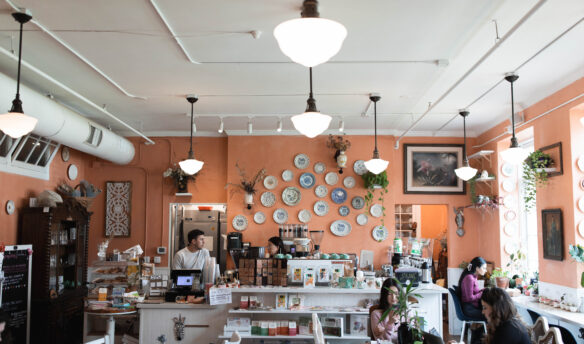
When Kaffefuglen (“The Coffee Bird”) opened in Oslo, Norway, in 1963, its three co-founders were unaware their coffee and tea concept would eventually have more locations in Japan than in their home country. The name, it turned out, proved remarkably adaptable as their single shop evolved into the international chain now known as Fuglen.
By 2008, Fuglen had begun to grow into a multi-concept coffee bar, cocktail bar, and vintage design shop, says owner Einar K. Holthe, a former Fuglen barista-turned-manager and the 2007 Norwegian Barista Champion.
“Fuglen, meaning ‘The Bird’ in Norwegian, has many nice connotations and represents the way we work and create value: Free as a bird, and flying around the world,” Holthe writes in an email.
Behind every name is a story, rooted in founder identity and business values. Founders often grapple with whether to name their business in the language of their home market, such as Norwegian or Spanish, or to align with global trends by using English, French, or another widely spoken language. Some entrepreneurs from coffee-growing countries channel their heritage into their name; others name—or rename—with the intention to expand their coffee ethos and loyal following beyond their original borders.
From birds to beans to new beginnings, it all starts with the decision to open that first cafe—and what to call it.
The Story Behind the Craft
Kaffefuglen was originally named for Jacco, the shop’s pet parrot, who “symbolized the origins of the coffee beans and tea leaves from around the world,” according to Holthe. Jacco’s large cage sat in the window until the late 1980s, when, Holthe says, Norway made it illegal to have birds in food stores. (Jacco lived with one of the owners into his 50s.)
When Holthe bought the business in 2008, “Kaffefuglen was becoming more than just coffee,” he says. The team expanded the original store to host Norwegian vintage furniture and was developing a nightlife concept. “Everyone who loved it just called it Fuglen. So we chose to shorten it and at the same time give it more meaning.”

Fuglen’s red-and-white logo depicts the red-beaked Arctic tern, a seabird that Holthe grew up seeing outside his home on Norway’s west coast. This resonated both with the brand’s past and Holthe’s vision for its future: Today, Fuglen has 14 shops and two roasteries, including two locations in Norway, eight in Japan, and two each in Korea and Indonesia, with “more in the pipeline now,” according to Holthe.
While some names emerge organically, others are rooted in a founder’s commitment to preserving and celebrating their community’s legacy.
Pueblo Querido Coffee Roasters, a family-owned Colombian coffee business, says it is “rooted in the highlands of Calarcá, one of the most celebrated coffee-growing regions in Colombia.” Its founders aimed to preserve this heritage while migrating from Colombia to New York “in pursuit of opportunity, carrying with us the memory of our land, our people, and the aromas that defined home.”
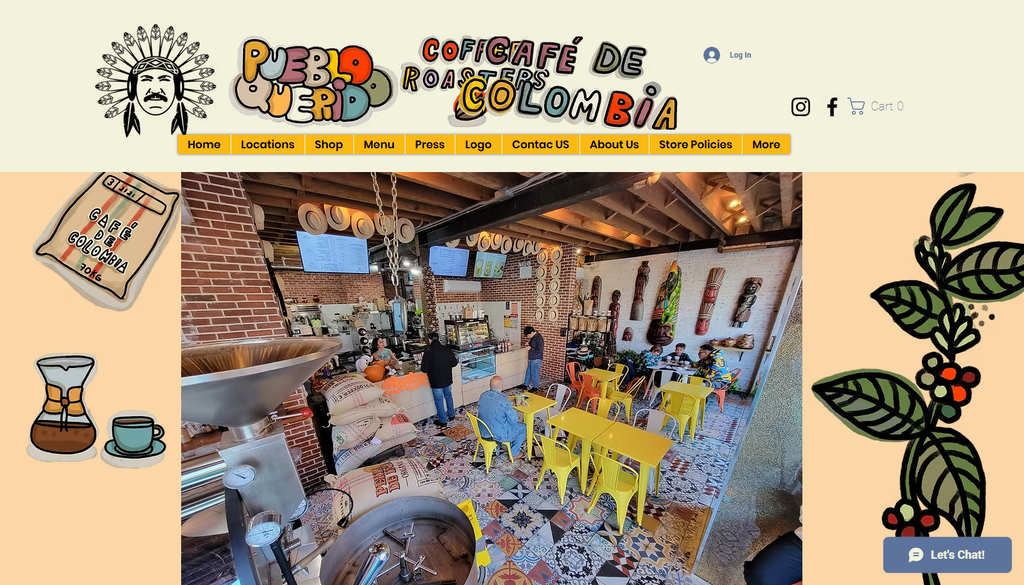
The family’s journey, and the longing and pride it contains, led to the name Pueblo Querido, or “beloved town.” The brand’s iconography is full of colorful patterns and imagery of coffee plants, toucans, and Colombians in traditional dress. The logo, which depicts an Indigenous Colombian man wearing a headdress, was modeled after the father of the family.
From the first location to the five that are now spread across Brooklyn and Queens, the Pueblo Querido name is “a tribute to origin, nostalgia, and belonging … a name that honors the place you never stop loving, no matter how far life takes you,” the founders write.
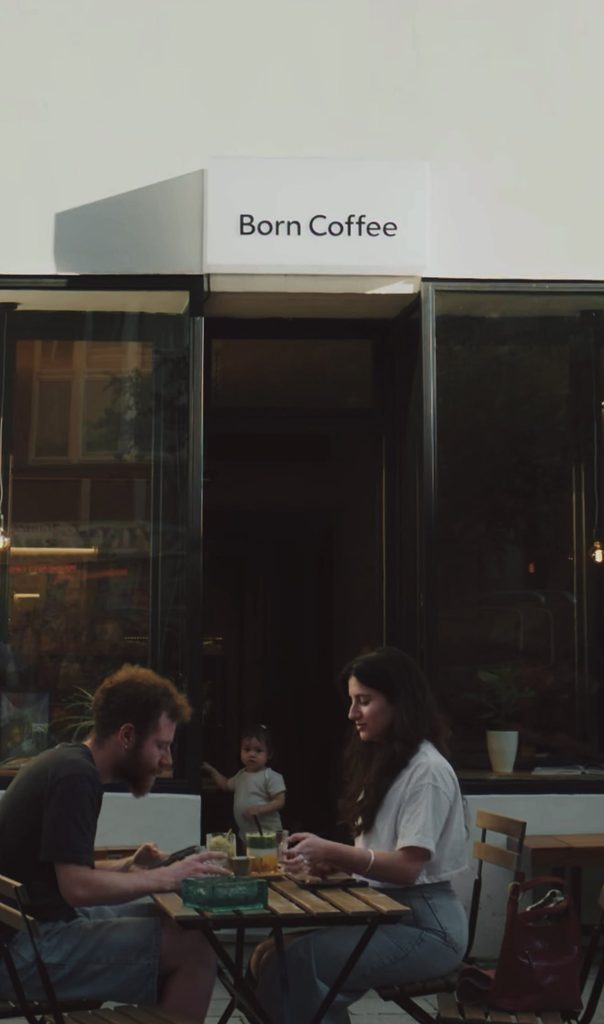
Meanwhile, Bá Vu, founder of Born Coffee in Brno, Czechia, recently posted a reel explaining how he chose the cafe’s name—a story that ties his personal journey to the city where he’s making a name for his business.
“Part of it comes from my personal struggle with a choice: should I keep a job with a stable income, or take a leap of faith to start my own business around my passion?” Vu writes Fresh Cup in an Instagram message. For him, the name “represents the idea of being born again—symbolizing a fresh start in my life.”
The name also hides some clever wordplay. “As for why I chose an English name: there’s actually a fun little detail! If you take the letter ‘O’ in the middle of BORN and move it to the end, it spells BRNO. That was the exact moment the name clicked for me.”
Weaving Together Words and Meaning
While growing a brand, founders sometimes discover that the right name unexpectedly finds cross-cultural resonance in new markets.
As the specialty coffee market continues to expand across Asia, Norwegian chain Fuglen has discovered something surprising about its name. Soon after Holthe rebranded Kaffefuglen as Fuglen, he set his sights on Japan, whose coffee culture he discovered through barista competitions. Fuglen Tokyo opened in 2012, and Japan is now the brand’s biggest market.
“It’s only been positive having a unique name,” says Holthe, who adds that people easily connect the logo and the word’s meaning. He was also happy to find that Fuglen’s customers across Asia say the name in a way that’s more similar to his pronunciation than that of most Norwegians.
“I have a strong dialect from the west coast of Norway [and] we pronounce the ‘G’ of FUGLEN, while the majority of the Norwegian population says FULEN,” says Holthe. “The spelling is FUGLEN in both cases. But in Japan, Korea, and Indonesia, it has become FUGLEN with a clear G.
If you’re part of the one-fifth of Copenhagen residents of international origin, you may also be surprised to learn that the Danish pronunciation of popular local coffee chain Prolog Coffee lacks the hard English “G” at the end.
Does that pronunciation gap ever cause confusion at Prolog? CEO and co-founder Jonas Gehl says no.
“I don’t think there is a mispronunciation. Danish, English, French: It all works,” he writes in an email. So, what does the name mean to him, and does it come across to Prolog patrons?
“It means that we are always in a process, and that every day is a new beginning,” Gehl says, adding that it makes “intuitive sense” to his customers.
“To me, that’s what a good name is all about. If you have to justify a name, I wouldn’t choose it.”
header photo courtesy of Fuglen