A Starbucks on every corner? Maybe not for much longer. Plus, Mexico passes landmark coffee legislation, and drinking a mocha might make you younger (sort of).
‘Mexico Enacts Sustainable Coffee Development Law’ – via Mexican Business News
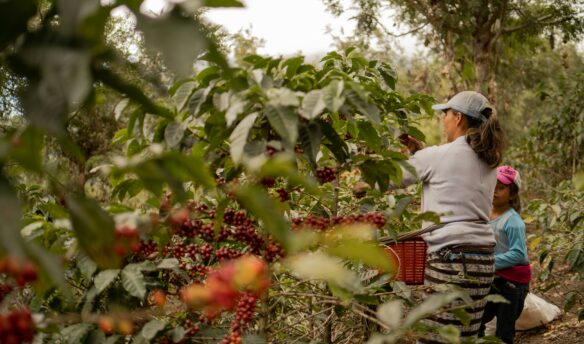
For more than three decades, Mexico, the world’s ninth-largest coffee producer, has operated without a national governing body. The Mexican Coffee Institute (INMECAFE) was shut down in 1989, leaving producers to navigate the international coffee market on their own. Since then, cooperatives have worked to assist the country’s more than 500,000 coffee farmers with little help from successive governments.
That may now be beginning to change. Mexico has enacted new legislation that aims to formalize and expand its support for coffee producers.
The Sustainable Development of Coffee Farming Law is Mexico’s first legal framework covering the country’s coffee sector. It aims to set national standards across the industry and promote coffee quality and sustainability, particularly shade-grown and agroforestry farming systems.
According to Mexico Business News, the legislation aims to “reduce market imbalances by improving access to reliable information on prices, costs and markets, allowing producers to negotiate with greater transparency.”
The law establishes mechanisms like a Price Monitoring Committee that will publish reference prices for coffee at various stages, from coffee cherries to fully processed green beans. These references will help producers negotiate prices, whether they process the cherries themselves or sell freshly harvested cherries to an intermediary.

Other mechanisms created by the legislation include a National Commission for the Development of Coffee Farming and a National Coffee Farming Information System. The former, composed of producers, government officials, roasters, and other stakeholders, will help develop regulatory guidelines and public policies. The latter will centralize key agricultural and economic data, and give farmers access to financing, up-to-date climate conditions, and price information.
“This is the first time Mexico will have an integral legal framework for the entire coffee sector,” said Julio Berdegué, Minister of Agriculture and Rural Development. “At the end of the day, what we want is a fairer and more balanced market for coffee producers and for the entire value chain.”
Read the full story on Mexico’s new coffee law here.
‘Starbucks Doesn’t Want To Be on Every Street in New York and Los Angeles Anymore’ – via CNN
Throughout the 1990s and 2000s, Starbucks expanded across the U.S. using a “cluster strategy,” opening stores in close proximity to one another. Starbucks believed this would help build its brand and showcase convenience for the customer—there would literally be a coffee shop on every corner.
By 2017, however, store density had reached a point that locations were “cannibalizing” each other by competing for the same customers. Starbucks saturation became a running joke, lampooned on an episode of The Simpsons and the subject of a headline in satirical newspaper The Onion: “New Starbucks Opens In Rest Room Of Existing Starbucks.”
Starbucks once dominated big cities—in 2015, for example, it had 220 locations in Manhattan, more than rivals like Dunkin, while in 2014 someone driving between Boston and Philadelphia would never be more than 10 miles from a Starbucks. However, as Nathaniel Meyersohn reports for CNN, it is now pulling back from that focus.
In September, the company announced it would close around 400 stores over the next year. The move is part of CEO Brian Niccol’s ongoing “Back to Starbucks” plan, designed to reinvigorate the ailing coffee giant amid years of declining sales.
According to Meyersohn, urban stores are being hardest hit: Starbucks will close 42 locations in New York, 20 in Los Angeles, and 15 in Chicago. In a statement, Starbucks said it “closed locations that were underperforming or unable to meet our brand standards.”
Meyersohn cites increased competition from smaller chains and local coffee shops as one reason for the closures. “Urban America has seen a dramatic increase in competitive coffee shop openings that eat away at the store’s volume,” said Arthur Rubinfeld, a former Starbucks executive who helped lead the brand’s growth in the 90s and 2010s. Closing some can help increase sales at the remaining locations, Rubinfeld said.
Starbucks’ closures can also spell opportunity for other coffee brands. The Canadian chain Good Earth Coffeehouse announced in October that it planned to take over several former Starbucks locations. Similarly, the New York Post reported last week that Luckin, the fast-growing Chinese chain, could take over some closing Starbucks locations in New York as it continues to expand into the U.S.
Read more on Starbucks anti-saturation strategy here.
More News
‘Ethiopian Coffee Trading Center Unveiled in Zhuzhou’ – via China Daily
‘Local Bend Coffee Icons Unite: Thump and Backporch Merge for Synergy’ – via the Bend Bulletin
‘Cup of Excellence Coming to 11 Countries in 2026’ – via Daily Coffee News
‘New Study Identifies Key Drivers of Ethiopian Coffee’ – via Global Coffee Report
‘UK Hits ‘Peak Costa’ As Soaring Prices See Coffee Chain’s Losses Double’ – via the Independent
Is Coffee Good For You?
Are you a fan of mochas? Then this may be the news you’ve been waiting for.
New research from King’s College London found that theobromine—a compound found in cocoa and, in smaller amounts, coffee—could have anti-aging properties.
Theobromine is an alkaloid with numerous health benefits (for people anyway; theobromine is one of the compounds that makes chocolate toxic to dogs). The compound has been shown to offer cognitive and anti-inflammatory protection and can help prevent kidney stones. It is primarily found in cocoa but also in coffee, tea, and mate.
For the study, published in the journal Aging, researchers analyzed data from two research groups based in the U.K. and Germany, comprising more than 1,500 participants. They measured theobromine levels in participants’ blood while examining their biological age using DNA biomarkers. The study found that those with higher levels of theobromine in their blood had a biological age lower than their actual age.
The study didn’t investigate participants’ diets, so it’s hard to say exactly where the higher theobromine levels came from. The data also looked at theobromine levels at a single point in time rather than over an extended period. In the future, the researchers hope to examine how theobromine interacts with other beneficial compounds, such as polyphenols, also found in chocolate and coffee.
“Our study finds links between a key component of dark chocolate and staying younger for longer,” study senior author Professor Jordana Bell said in a news release. “While we’re not saying that people should eat more dark chocolate, this research can help us understand how everyday foods may hold clues to healthier, longer lives.”
Beyond the Headlines
‘The 10 Most-Read Fresh Cup Articles of 2025’ by Garrett Oden
‘Turkey’s Ancient, Caffeine-Free Coffee Alternative’ by Jen Rose Smith