HostMilano isn’t just a coffee expo—it’s the world’s largest hospitality trade show.
Held biennially in Milan, the industry event attracts more than 2,000 exhibitors and 180,000 attendees, and has traditionally been a key venue for product launches and trend forecasting. This year’s edition took place from October 17–21, and targeted not just specialty coffee but non-retail coffee businesses across the hospitality and foodservice industry.

As expected, attendees witnessed a number of noteworthy product launches at HostMilano this year. Many of these coffee-focused innovations centered on modularity—like stackable, space-saving espresso systems—and energy efficiency, including machines built to minimize power use.
A number of new products also explicitly responded to industry concerns around labor. As the European Labor Authority wrote earlier this year, the hospitality sector is facing “persistent and critical labor shortages.” As a result, many operators—particularly in non-cafe settings like hotels and restaurants—are turning to automation and connected equipment to preserve consistency and quality while reducing training burdens.
Some product launches specifically targeted specialty cafes, and sought to address sector-wide challenges from rising costs and staffing gaps to shifting customer expectations. From auto-steaming milk wands to programmable pour-over brewers with app integration, these tools weren’t positioned as threats to craft, but as ways to protect it.
The following five product launches were particular standouts at HostMilano, and represent some of the most impactful innovations that debuted at the trade show.
1. La Cimbali Supera: Unlimited Customization
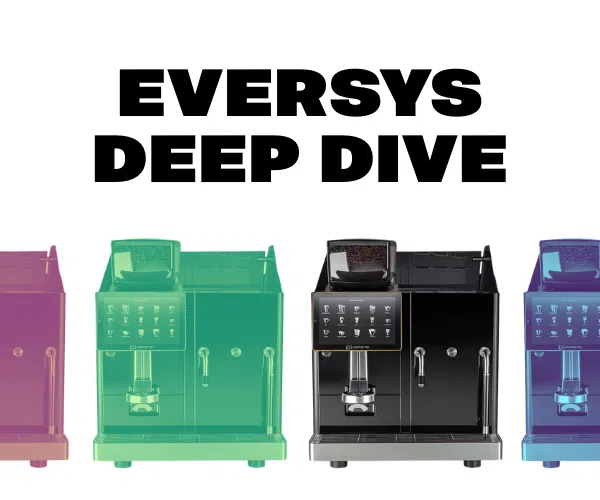

At HostMilano, espresso machine maker La Cimbali unveiled the Supera, a new fully automatic machine designed to merge high-volume efficiency with the artisanal values of contemporary specialty cafes.
The Supera makes a clear argument: Automation doesn’t have to mean compromising on quality, customization, or identity. Unlike other fully automatic systems, the Supera leans into an aesthetic typically reserved for semi-automatic setups, and offers significant flexibility.Or, as a La Cimbali rep described it, the Supera is “a barista’s sous chef.”
The system is modular and highly configurable (users can adjust the number of hoppers or the length and position of the group head and steam wands), and focused on minimizing downtime. Features include AI-assisted brewing, automatic milk texturing, and telemetry for predictive maintenance.
The Supera’s design also prioritizes energy efficiency, easy servicing, and real-time operational transparency, which aligns with larger shifts we saw toward sustainable, data-driven cafe management.
2. Mahlkönig Xenia: A New Chapter

At this year’s event, Mahlkönig officially unveiled its first espresso machine, the Xenia, alongside a new grinder, the E64 WS. The manufacturer debuted the new products at a side event held at Milan’s trendy Casa Gessi event space in the Navigli district. The launch marked a new chapter for the brand, which, until now, has been known almost exclusively for its grinders.
The Xenia carries Mahlkönig’s unmistakable, industrial signature, with its stainless-steel body and bold lines. The espresso machine is the first to debut from the Hemro Group, the parent company of Mahlkönig, since it acquired the Berlin-based Xenia Espresso earlier this year.
What truly sets the Xenia apart is connectivity. Using Grind-by-Sync technology, a system that merges grind-by-weight dosing with real-time data feedback between grinder and machine, the Xenia and E64 WS work together to make live adjustments. The grinder weighs and doses coffee and sends data to the espresso machine, and the machine adjusts extraction parameters on the fly.
Pricing hasn’t yet been announced, but pre-orders have already opened. One industry guest muttered at the party’s bar, as they watched the crowd photograph the Xenia, “I’ve never seen so many grown-ups taking pictures of a coffee machine.”
3. BaristaOne: Beyond Coffee

The creators of Latte Art Factory, a commercial milk frother that earned three consecutive Best New Product awards from the Specialty Coffee Association, unveiled the BaristaOne Touch Series at this year’s HostMilano. The fully automatic machine focuses not on coffee, but on what surrounds it: milk, powders, syrups, and the other components needed to make signature drinks.
The BaristaOne allows every detail of a drink to be dialed in—including temperature, air injection, and dispense time—all of which is programmable through its touchscreen interface. These parameters can be saved as custom recipes, streamlining operations and eliminating waste. The machine also has the same patented milk-texturing technology as the Latte Art Factory, and promises perfect texture with every drink.
An under-counter milk-cooling unit is offered as an optional accessory, keeping ingredients fresh and ready for continuous service. Cloud connectivity supports ingredient tracking, usage reports, and predictive maintenance, boosting uptime while reducing manual oversight.
While the BaristaOne doesn’t brew filter coffee, many operators at HostMilano described it as one of the most impactful systems they saw on the show floor.
“We don’t want to replace people,” said Kittipong Sophonhirunruk, international marketing manager for Latte Art Factory. “We want to help them—make their life easier.”
4. Modbar Pour-Over 2.0: Precision In Sight

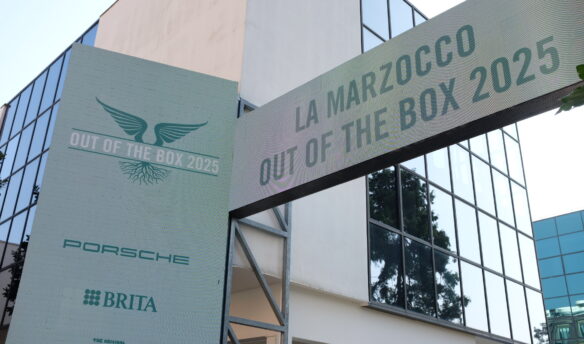
During HostMilano, La Marzocco held its own satellite event, Out of the Box. There, along with its new Jay Grinder, La Marzocco launched the Pour‑Over 2.0.
The first major update to its Modbar Pour-Over product in years, the new system features precise temperature control; programmable recipes; and a modular, in-counter design. Its updated interface includes a rotary knob, color display, and lever-based activation that makes it easy to toggle between pre-set profiles. Three swappable shower inserts even allow baristas to choose specific water flows for different brewers.
The Modbar Pour‑Over 2.0 is also the first in the Modbar line to sync with the La Marzocco app, letting operators remotely manage recipes, access usage data, and receive maintenance alerts.
As Javier Vidal Tellols, COO of Brewtalist Coffee Hub in Valencia, watched the Modbar in action, he commented that the machine feels “like the next natural step in La Marzocco’s evolution—precision and beauty, now fully connected. Everything talks to everything: the scales, the grinder, the machine. It’s like stepping into a new internet for coffee.”
The system also supports dual tap configurations, making it ideal for high-volume environments without crowding the counter.
5. Stronghold S2: Sample Smarter

Roaster manufacturer Stronghold showed off the new S2 at HostMilano, reinforcing the company’s push to make sample roasting more precise, connected, and accessible.
The S2 is a 200-gram smart sample roaster that brings the South Korean manufacturer’s hybrid heat-control system to a more compact and affordable format. Unlike traditional sample roasters, it’s fully integrated with RoastWare Studio—Stronghold’s cloud-based platform powered by AI and designed for repeatability, data logging, and network sharing.
Combining convection, conduction, and radiation heat, the S2 lets users replicate roast profiles with a precision margin of ±0.5 °F.
The S2 also includes a rapid cooling system (which cools beans in under 90 seconds), and a touchscreen interface. It’s all wrapped in a quiet design that doesn’t require external ventilation.
Correction: Previously, we said the BaristaOne “doesn’t brew coffee,” but that was ambiguous—it does brew espresso.