✉️ This story was featured in this week’s Coffee News Club
👋 Get the Coffee News Club newsletter in your inbox weekly—sign up.
It’s widely accepted that coffee is under threat due to climate change. A 2015 study found that 50% of the world’s coffee-growing land will become unsuitable for cultivation by 2050. A more recent 2022 study puts that percentage even higher.
One proposed solution to the threat of climate change is investing in agroforestry, or growing coffee under shade trees within a complementary ecosystem. Researchers have been studying the topic for decades, finding clear benefits such as increasing biodiversity and soil health, protecting plants from excessive heat and sunlight, and improving farmers’ incomes.
Over the years, hundreds of researchers worldwide have studied the impact of agroforestry on coffee, but their findings have been scattered across many journals. Now all that research is in one place thanks to a new collaboration between the non-profit Coffee Watch and the tropical research institute CATIE.
Announced on Jan. 19, the new e-library contains 1,317 references from the past 60 years of research on coffee agroforestry, including peer-reviewed scientific articles, technical reports, and manuals. The freely available database is designed to be a living document, with new research added over time.
“Anything that’s ever been written about agroforestry coffee is in this library,” Coffee Watch CEO Etelle Higonnet told Mongabay. “That way, companies don’t have to do a million stupid pilot projects and reinvent the wheel for 20 years that we don’t have. They can just hoover up all this knowledge quickly, easily.”
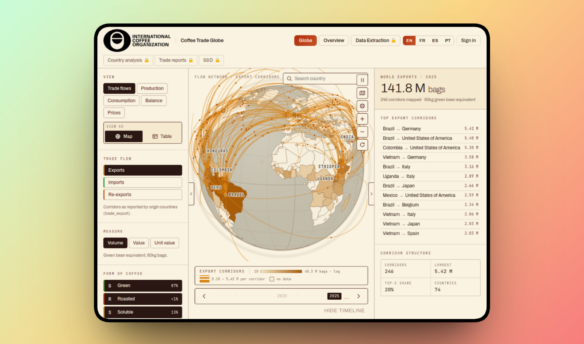
Collecting coffee sustainability information in a single database is obviously useful for many stakeholders. Other organizations have also prioritized creating central repositories of coffee knowledge: In June 2025, the International Coffee Organization launched the Coffee Sustainability Support Database.

The database features nearly 450 sustainability initiatives around the world, and aims to “consolidate scattered information and make it accessible to key stakeholders,” as ICO executive director Vanúsia Nogueira said in a press release at the time.
Read the full story on the free agroforestry research resource here.
Photo by PROJETO CAFÉ GATO-MOURISCO on Unsplash