This story was researched and written by Fresh Cup in partnership with our sponsor, UPOURIA.
Coffee shops have followed the same standard of preparing espresso-based beverages for decades. No matter if a customer wants a cappuccino or an iced latte, the workflow was always the same: pull an espresso shot, steam the milk or prepare the iced cup, and serve.
Baristas understand the complexities of crafting a great-tasting shot of espresso. Dialing in a recipe, monitoring extraction, and adjusting variables on the fly are all part of a barista’s daily workflow.
But with so many ways to brew, serve, and consume coffee today, does this same cumbersome workflow still best serve operators and customers? Some coffee businesses are seeking an answer by making the switch from espresso to cold brew concentrate in their beverages.
How Cold Brew Works as an Espresso Replacement
Creature Coffee Co is a mobile cart company and roaster with locations in Austin, Phoenix, and Seattle. Creature’s carts provide specialty coffee service for a wide variety of events, from corporate retreats and branded activations to weddings and outdoor events. The company runs two types of carts: some serve both hot and cold espresso drinks, while others are dedicated to cold beverages dispensed through a tap.
Each event can host anywhere from a few dozen to several hundred guests. With this high demand in mind, Creature’s baristas use a cold brew concentrate made with Creature’s Friend Blend to replace espresso in select cold beverages.
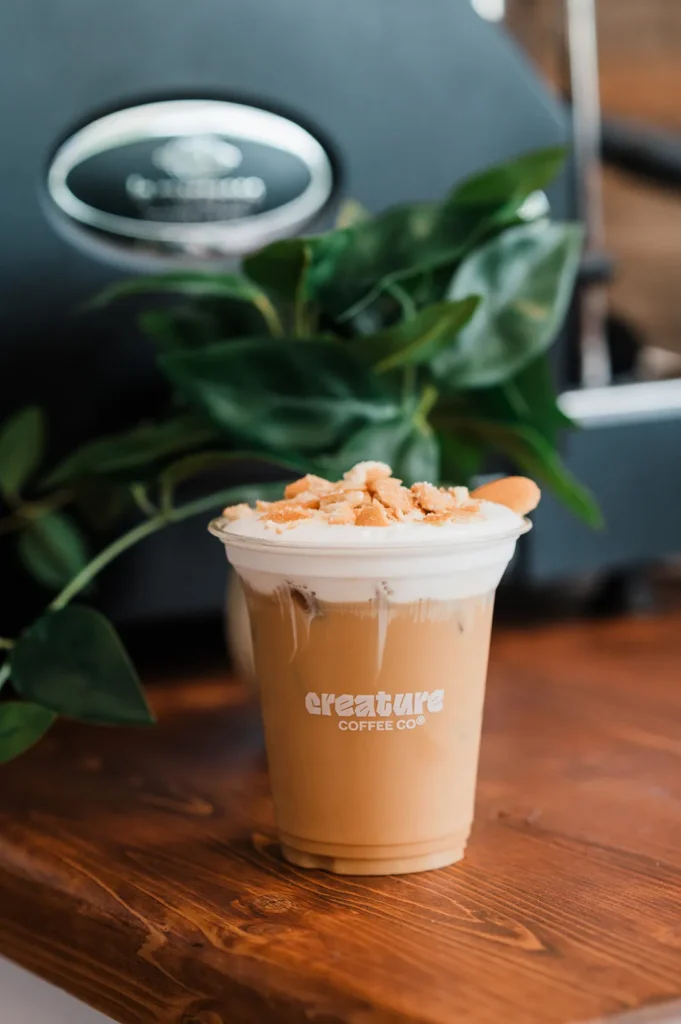
Emily Vaquera, Creature’s director of hospitality in Seattle, explains that this decision was driven by a desire to deliver a consistent flavor experience to each guest. “We use Linea Mini [espresso machines] in Phoenix and Seattle, which require baristas to manually start and stop the shot,” she says. “Considering human error with twenty or more people in line, being even one gram off can be tasted in the espresso. Having the cold brew concentrate going into every cold drink ensures we are confidently serving a delicious latte to guests every single time.”
Similarly in coffee shop settings, an espresso shot’s quality comes down to the barista and the training provided by the cafe. “Espresso quality lives and dies with the barista on the machine that day,” says Katie Schertler, brand manager at Sunny Sky Products, maker of Upouria cold brew concentrates. “Cold brew is easier and lowers the training burden. No calibration, no tamping technique, no espresso machine service contracts. Staff can be trained to build a consistent cold brew drink in a fraction of the time it takes to train a barista about the complexities of espresso.”
Skipping Operational Headaches
For Denise Murray, founder and owner of the mobile coffee bar company, Motor City Cup Co, the decision to focus on cold brew came out of operational necessity. After several years of experience in cafe operations, Murray says she understands how to deliver a high-quality espresso experience. “It isn’t simply buying an espresso machine and putting it on a table. You need the right machine, grinder, power, water, workflow and training, and I knew I didn’t want to build an espresso program halfway just for the sake of saying we had one.”
Building her menu around cold brew lets Murray keep the coffee program manageable and versatile. “It allowed me to concentrate on the coffee itself,” she says. “…choosing beans, adjusting the brew, developing the flavor profile, and figuring out how I wanted our Motor City Cup Co coffees to taste.”
Creature Coffee Co is also familiar with the challenges associated with espresso equipment, especially while working events. Depending on the event, Creature’s team may have to work around specific restrictions like location, power, and permitting. “Sometimes with events, we’re put in the middle of a field with a generator, or you encounter technical issues out of your control,” says Vaquera. “So even if service time is about to start and the machine’s not running, we can offer iced lattes using the cold brew concentrate base… and people are still happy to get some type of coffee beverage.”
Additionally, espresso equipment carries a hefty price tag. With a one or two-group espresso machine, at least one espresso grinder, and small necessities like tampers and pitcher rinsers, a basic professional espresso setup can easily cost between $10,000 and $30,000. The equipment also requires significant space on a mobile cart or cafe bar. “Cold brew shrinks the equipment footprint and capital bill,” explains Schertler. “It trades that for refrigeration, and it can be brewed in large batches.”
Coffee businesses can make cold brew using various brew methods. Creature Coffee uses large bucket systems that allow the coffee grounds and water to steep for hours at a time, as well as larger commercial brewers which can produce upwards of 50 gallons of concentrate.
Motor City Cup Co follows a similar approach. “I batch brew it ahead of the event using a coarse grind and a long steep,” says Murray. “Because we’re serving at events, consistency is really important. I want the first cold brew we serve to taste like the last one, so I’ve worked toward a repeatable batch process rather than making adjustments during service.”
For cafes or carts without access to a commercial kitchen, shelf-stable cold brew concentrates are another option. These concentrates are often delivered in sealed bottles or food-safe plastic Bag-in-Box (BIB) packaging, enabling them to be used in tap systems or other cold brew delivery methods.
Endless Drink Possibilities
Due to the vast differences in brewing variables such as brew time and grind size, espresso and cold brew have quite different flavor profiles.
“Cold brew’s smoother taste and perceived premium quality make it a major growth driver, and its versatility makes it an ideal base for new product development,” Schertler says. “Cold brew and drink customization also go hand in hand. With the smoother, less acidic flavor profile, beverage enhancers such as syrups and additives can go further.”
Both Creature Coffee Co and Motor City Cup Co find that cold brew’s distinct flavor profile lets them experiment with new ingredient and flavor combinations.
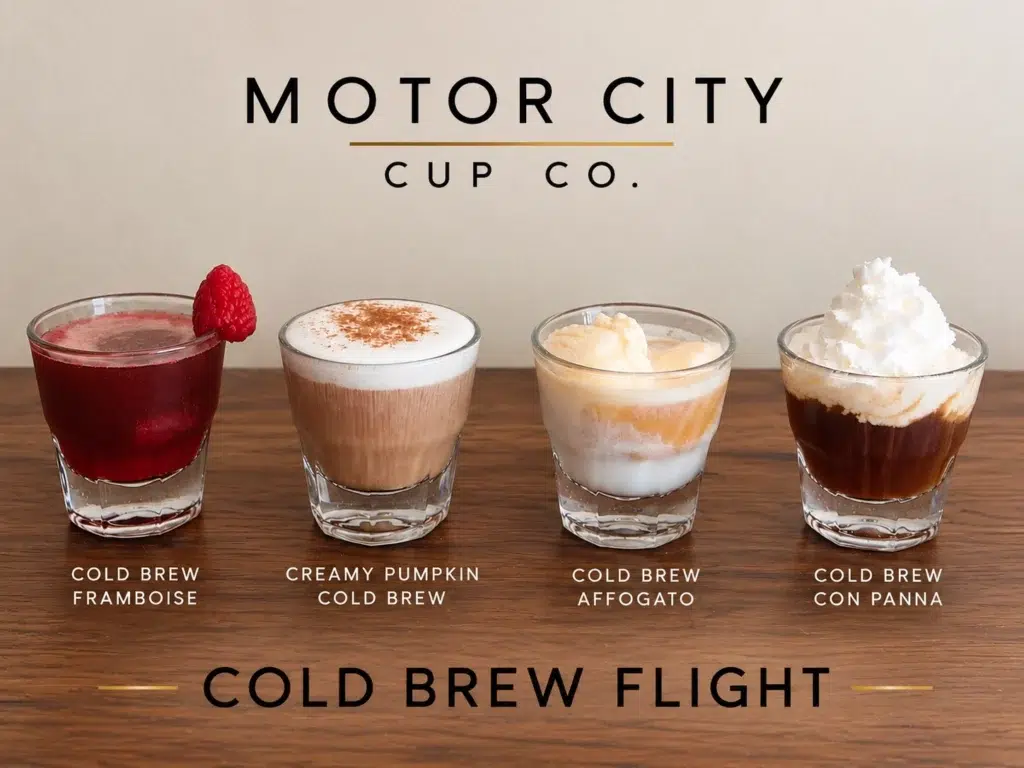
“Initially, I thought of cold brew primarily as the coffee offering: you could have it black, with sweet cream or flavored. But the more I worked with it, the more I realized it could function almost like a coffee base,” Murray shares. “I’m now experimenting with cold brew lattes, signature beverages, and looking at some of the things we traditionally associate with espresso drinks through a cold brew lens.”
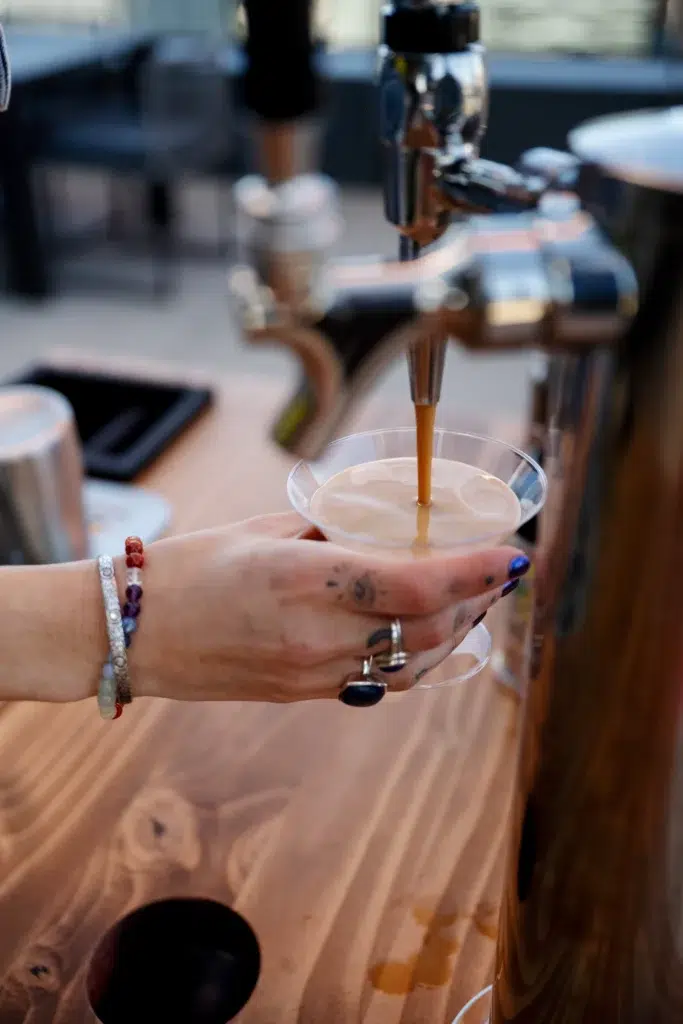
Creature Coffee Co makes all of its syrups in house, so that they work with either espresso or cold brew. “We make a house-made vanilla [syrup] with scraped vanilla beans,” says Vaquera. “So when we make a vanilla bean latte with the cold brew, it literally tastes like a graham cracker.”
Vaquera adds that Creature Coffee chooses whether to use cold brew concentrate or espresso based on the drink recipe. “Since we make all of our house-made syrups, they tend to be not as thick. We usually use those syrups [in] cold brew, so it’s easily mixed. But if it’s a sauce, like caramel or mocha, we’ll use a traditional espresso because we can use that to melt the [sauce].”
To that end, the company offers a variety of seasonal beverages at its mobile carts including a Banana Brulee latte and a honey lavender thyme syrup, which can be added to a cold brew latte.
Challenging Consumer Hesitation
Much like the pre-batched espresso discourse, some folks are skeptical about the cold brew swap in espresso-based beverages. “The biggest challenge is customer expectation… many [customers] automatically associate a latte with espresso,” Murray says. “This requires me to show people that [cold brew] can be more than a cup of black iced coffee. But that challenge has actually pushed me creatively. Instead of trying to make Motor City Cup Co. look exactly like every other cafe, I’ve been able to ask, ‘What can cold brew do?’”
Addison Turner, marketing director at Creature Coffee, explains that the continued demand for popular iced drinks requires coffee businesses to hone their cold brew concentrate recipe and properly train staff. “Doing a blind taste test with your team, you may find that people will be pleasantly surprised that they can’t tell the difference [from traditional iced lattes], or even prefer cold brew,” says Turner. “We’ve done those experiments with our staff, and many of them didn’t even realize it was cold brew.”
Vaquera adds that transparency with customers is key. “There can be a preference amongst people for espresso lattes or cold brew lattes, and if that cold brew is not dialed in to really match the quality of an espresso drink, it’s noticeable. You’ve got to nail that recipe for it to truly be a replacement for an espresso latte, and it has to be disclosed to customers.”
Photos courtesy of Creature Coffee Co. and Motor City Cup Co.

Sponsored by UPOURIA
UPOURIA helps cafes with ready-to-serve cold brew concentrates, flavored syrups, and creamers that let you quickly craft everything from viral strawberry matcha lattes to coffee mocktails—all while keeping consistency high and prep time low. Perfect for busy cafes looking to innovate without the extra labor.