✉️ This story was featured in this week’s Coffee News Club
👋 Get the Coffee News Club newsletter in your inbox weekly—sign up.
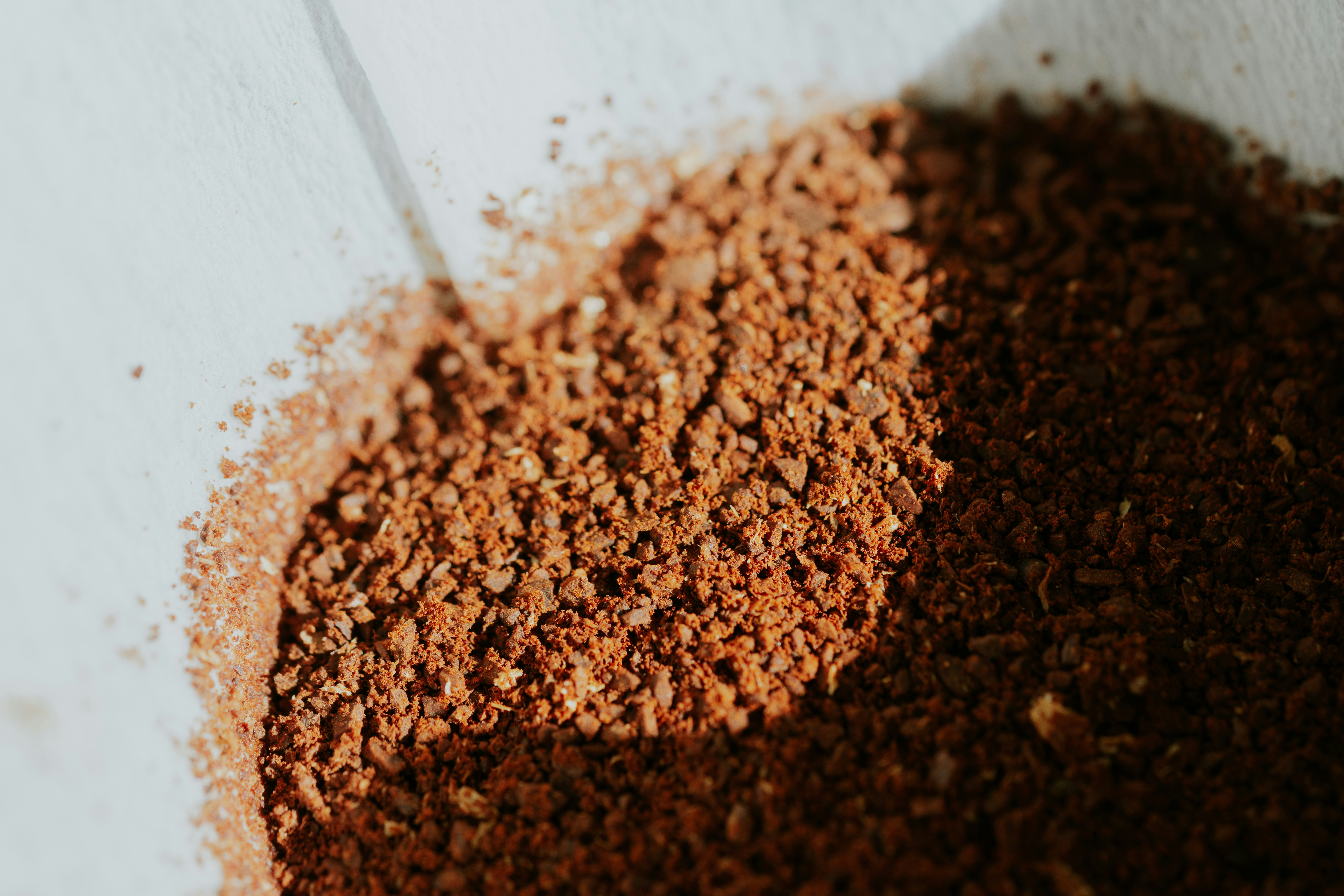
As you probably witness while brewing your morning cup, coffee creates a lot of waste. Worldwide, we produce between 15 million and 60 million tons of coffee grounds each year—although some is composted, much ends up in landfills. When in landfills, spent grounds release the potent greenhouse gas methane.
Researchers are constantly looking for ways to repurpose coffee grounds. Some have made biofuel and watches; others have used grounds to strengthen concrete.
In March, researchers found that coffee waste-derived biochar, a charcoal substance that acts like a filter, can remove a toxic herbicide from drinking water. Now, researchers are going further: two new studies have found that spent coffee grounds can remove toxic heavy metals from polluted water.
Both studies were conducted by researchers at the U.K.’s Loughborough University. The first, published in Biomass and Bioenergy, turned spent coffee grounds into biochar via pyrolysis, a chemical process that uses heat in the absence of oxygen. The biochar absorbed 98% of lead from a water sample.
In the second study, published in Clean Technologies, spent coffee grounds were used as-is, without any further processing, to remove copper and zinc from water samples. The researchers were able to remove 96% of the metals in samples with low metal concentrations. For higher concentration samples, the coffee performed better when mixed with biochar made from rice husks.
“Our studies show that what we often dismiss as waste, like spent coffee grounds, can actually become powerful materials in tackling environmental pollution,” said Dr Basmah Bushra, lead author on the second study. “This is a simple but effective illustration of circular-economy thinking in action.”

Read more on coffee’s purification possibilities from Interesting Engineering here.
Photo by Yohan Marion on Unsplash