The Coffee Tech Stack series is presented by our partner, Square.

We’ve published five editions of the Coffee Tech Stack series this year, and a common theme has been more. Higher costs create pressure for more efficiency, and new tools like smarter inventory platforms and AI create FOMO and an urgency to experiment. Plus, as businesses grow, there’s the assumption that more tech is simply required to manage it all.
But tech tools are not a one-size-fits-all solution. For some—like Gia Giambalvo, co-founder of Mnemonic Coffee in San Diego—there’s no sense of urgency in integrating new tech tools or finding ways to use AI. In contrast, they’re trying to think about tech as little as possible.
“I think we use tech in a way that feels like it serves us and the vision,” Giambalvo says. “But what we don’t want is for it to start to feel like we are doing all this extra work to make tech make sense for us.”
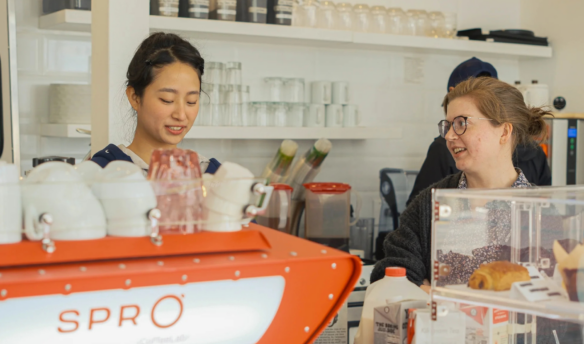
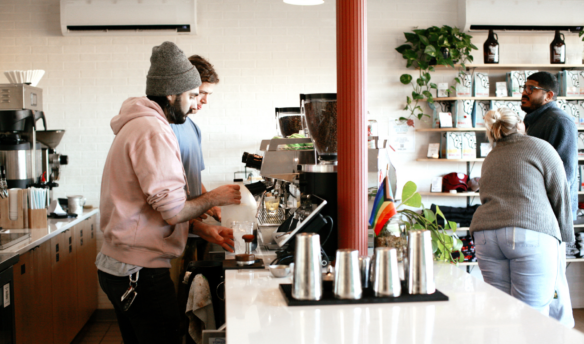
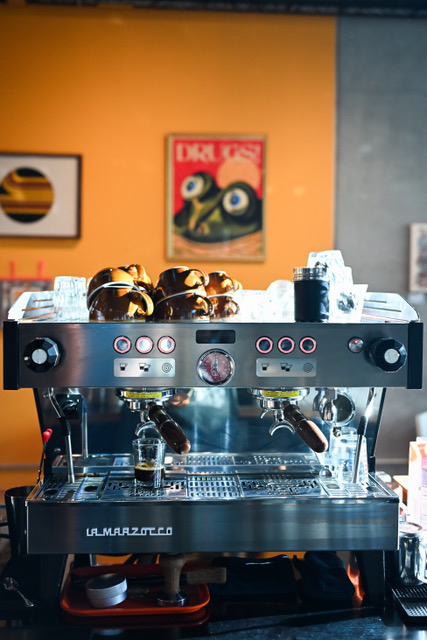
Giambalvo and their wife, Sarah Girdzius, opened Mnemonic in September 2023, in a location they share with a barber shop run by close friends. The space, the menu, and the drinks are colorful. Fresh flowers and plants decorate the interior of the shop. An orange La Marzocco Linea PB espresso machine sits atop the wraparound bar.
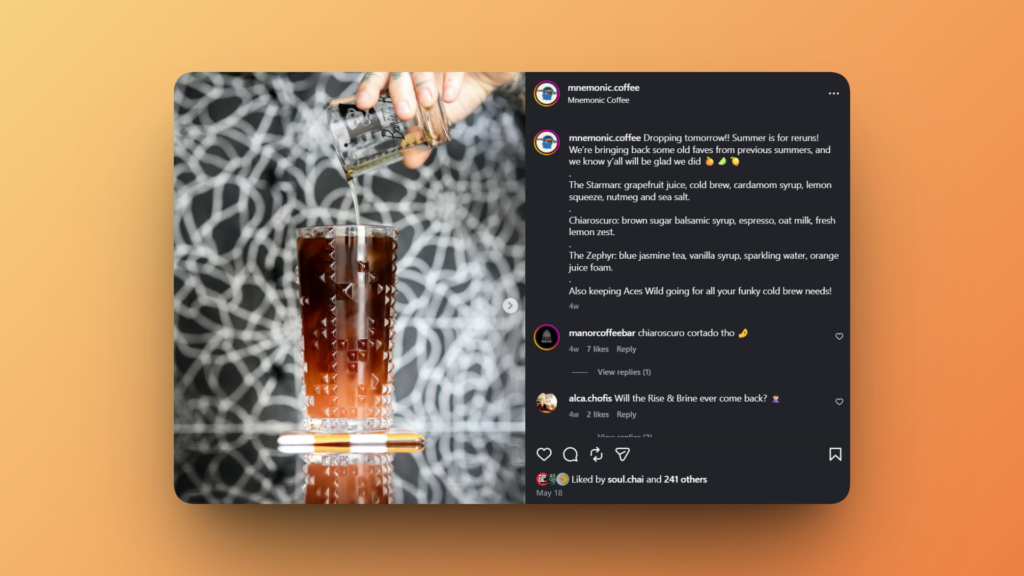
The multi-roaster shop serves coffees from Black & White Coffee Roasters, Little Wolf, and Slow Bloom. House-made syrups—like blackberry pomegranate, brown sugar balsamic, and cardamom—feature in seasonal drink specials. Mnemonic is known for its zero-proof drinks, which allow for experimentation with flavors and ingredients that wouldn’t typically work in a latte.
Despite that expansive vision, Mnemonic is run by just three people: Gia, Sarah, and one employee. And their tech stack, by design, is about as lean as it can get for a cafe.
How the Wraparound Bar Drove the First Tech Decisions
Mnemonic’s wraparound bar comes equipped with stool seating. That design choice lets customers see baristas at work, while the baristas have a clear view of everyone inside the space. The barista comes to the customer, rather than the other way around. The idea is for ordering to feel like a moment of genuine hospitality—“exemplary customer service,” as Gimbalvo says—rather than a queue.
“Maybe someone’s sitting at the bar, finishing their first drink, and they want to put another in,” Giambalvo explains. “They don’t have to get back up and walk to some specific spot. We can just say, ‘I got you,’ and bring it around.”
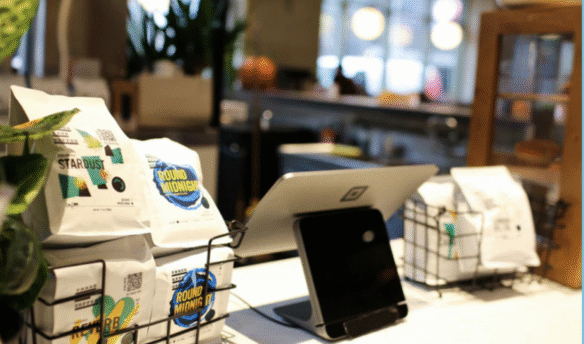
The couple were familiar with Square from previous coffee jobs. The platform’s mobile ordering unit supported this vision for baristas moving to serve guests seated around the bar.

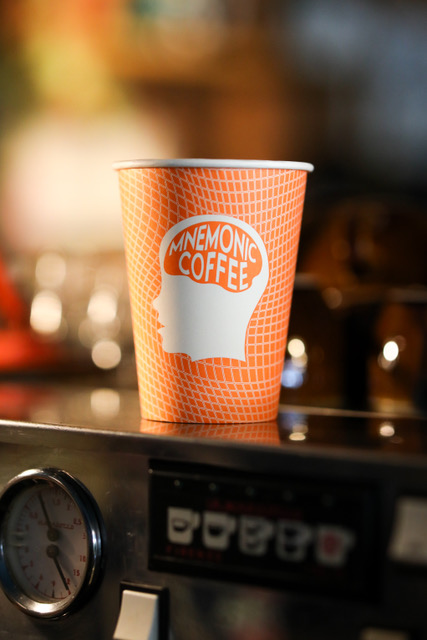
Mnemonic has a strong sense of sustainability baked into its operation, which also extends to its tech mentality. “I did a lot of work unpacking the amount of waste that goes into an individual coffee experience,” Giambalvo says. As a result, they find ways to minimize waste wherever they can—like charging for every to-go cup and donating that money to a clean oceans organization, or eliminating paper cup stickers and receipts.
The company uses Fresh KDS, a kitchen display system, that routes tickets to an iPad so the team can avoid printing paper tickets for every order. “We don’t need to do that. [Paper tickets] just go in the garbage,” Giambalvo explains.
Minimalism in Payroll, Scheduling, and Bookkeeping Tech
Giambalvo is honest about which parts of running a business she and Girdzius are not interested in getting good at. Bookkeeping is at the top of that list.
Mnemonic opened in September 2023, and by December—just three months in—the couple hired an accountant. “She’s worth any amount of money,” Giambalvo says. “She is the best investment we’ve made in Mnemonic.” Girdzius had been going into QuickBooks to check the shop’s finances and cross-reference against Square data, and was getting overwhelmed.
Square and QuickBooks work together, which is, in Giambalvo’s words, “critical.” Square handles the point of sale and captures the sales data; then, QuickBooks pulls that data into the broader financial picture their accountant manages.
For payroll and 401(k) plans, they use Gusto. Their accountant recommended it when they were setting up payroll for their first hire, partly because it syncs with both Square and QuickBooks. For scheduling, they use Homebase, a platform Giambalvo was familiar with from her years managing a team of 45 at a previous shop.
She notes that they could probably consolidate some of their tools. “But Homebase was comfortable [for scheduling] because we’d used it before,” she says. For a team of three, it’s not expensive, so there’s no urgency to switch tools.
Is There a Mnemonic Online Store? Sort Of
Mnemonic runs a classic buy-10-get-one-free loyalty program. But unlike many shops today, it’s still using old-school punch cards rather than a program run through the point of sale.
Giambalvo says digital loyalty programs can feel passive, and the analog experience of the physical punch card is more aligned with their vision for hospitality. “Let’s feel grounded, let’s hold the thing, let’s engage in the space with a little more intentionality,” she says.

The same logic is present in how they approach marketing. Giambalvo says there’s no paid advertising, no email list, and no social media scheduling tool. Girdzius is a photographer, and shoots and edits all the photos for Instagram. Giambalvo writes the captions, posts the stories, and responds to DMs. They keep their Google and Yelp pages current. The website exists but isn’t a priority. If someone asks how to stay updated on new menus, Giambalvo points them to Instagram.
But Mnemonic’s website, which is powered by Square, has still had its uses. For a stretch of time, the team used Square Appointments to sell tickets to in-person latte art classes. Giambalvo says they preferred this over a new tool, because the Square feature “was really helpful and a lot more streamlined than it would have been if we tried to do [some other ticketing software]”. Classes are currently on hold for about six months, but when they come back, Giambalvo expects they’ll use the same setup.
The online store is technically operational, but rarely used. When there’s extra merch sitting around, or when they do a special collaboration with an artist friend who has a non-local following, Giambalvo says they will push people to the online store to sell and ship those items. Otherwise, Mnemonic doesn’t use its online store to sell coffee or drinks for pickup.
The Minimum Viable Tech Stack
Mnemonic Coffee runs with very few tools, and its founders avoid over-engineering their tech stack. As Giambalvo explains, they see technology purely as a means to an end for their vision of the coffee shop.
Giambalvo says Square and Fresh KDS are the two core systems they could not live without. Following those, QuickBooks is the clear next essential tool. But nearly everything else—Gusto for payroll, Homebase for scheduling, Google Sheets for inventory, Google Docs for recipe documents—is a nice-to-have, but not critical.
That said, Giambalvo expects the tech stack to grow eventually. “I think the biggest change that I would foresee in three years … is team communication.” Right now, the three of them text each other, and that works fine.
For now, the minimum is enough. “The tech that we use is critical,” Giambalvo says. “What it does is critical. We just want it to work.”
Mnemonic Coffee Tech Stack: At a Glance
- Point of Sale: Square
- Kitchen Display: Fresh KDS (plus iPad)
- Bookkeeping: QuickBooks
- Payroll & HR: Gusto
- Scheduling: Homebase
- Knowledge Management: Google Drive / Docs
- File Storage: Google Drive
- Roast Profiling: Roaster Dynamics
- Inventory Management: Google Sheets
- Internet: Unifi
- Email Intake: Jotform
- AI: ChatGPT
- Project Management: Monday

Sponsored by SQUARE
The Coffee Tech Stack series is presented by Square. Square is a point of sale technology provider and longtime innovator that now offers a comprehensive suite of tools built specifically to help coffee shops and roasters operate smoothly and profitably.