✉️ This story was featured in this week’s Coffee News Club
👋 Get the Coffee News Club newsletter in your inbox weekly—sign up.
One of the “facts” about coffee is that plants grown at higher elevations will be of higher quality than those grown at lower elevations. But is that actually true, or just a widely-circulated claim within the coffee industry?
The theory goes that, at higher elevations, coffee cherries mature more slowly because of cooler temperatures. Slowing down the ripening phase is said to create more complex sugars and organic acids, which leads to better-tasting coffee.
The science backs up this claim. One study found that higher altitudes are associated with “coffees containing higher acidity and better aroma characteristics.” Another found that chlorogenic acid and fatty acids, compounds associated with coffee flavor and aroma, increased along with altitude.
New research from Poland adds to these findings, reports Nick Brown for Daily Coffee News. Published in Scientific Reports, the study analyzed the chemical compounds and sensory properties of four coffees of the Typica variety from Ethiopia (grown at 2,065 meters above sea level), Guatemala (1,650 masl), Peru (1,600 masl), and Costa Rica (1,540 masl).
Using an electronic nose—a sensing device used to detect aromas and flavors—the researchers found that the Ethiopian coffee had the “most intense” aroma strength. This, the authors wrote, “indicates high aromatic potential and diversity of the aroma of the Ethiopian Sidamo coffee, compared to the other coffee types.”
Additionally, the study examined the phenolic content of the coffees. Polyphenols, such as chlorogenic acid, have antioxidant properties and are considered part of the reason for coffee’s health benefits. Once again, the Ethiopian coffee had the most phenolic compounds.

The authors note that factors other than altitude may have played a role in the coffee’s phenolic content, such as processing or the impact of shade trees. Nevertheless, they write, “a significant positive correlation was found between the increasing altitude and the total phenolic content.”
Read the full story on the elevated findings from Daily Coffee News here.
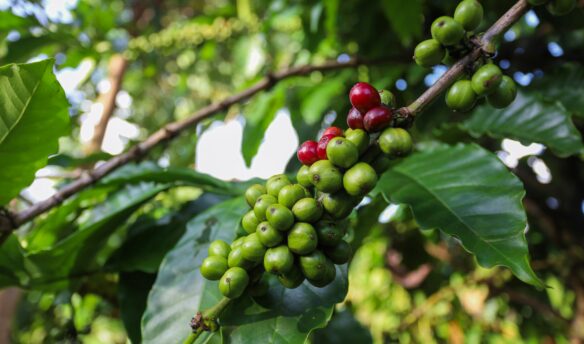
Photo by Nguyen Tong Hai Van on Unsplash